Quick answer: Yes, prediabetes can often be reversed. In the UK it means an HbA1c of 42 to 47 mmol/mol, and reversing it means bringing that number back below 42. If you are overweight, losing weight is likely to make the biggest difference, alongside changes to food and activity. There is no guarantee, and no herb or supplement does the job on its own. Ayurvedic habits and kitchen herbs can support the changes, but they do not replace them or any medication you are prescribed.
Key facts
- Prediabetes: HbA1c 42 to 47 mmol/mol (6.0% to 6.4%). Doctors also call it non-diabetic hyperglycaemia
- Normal: below 42 mmol/mol. Type 2 diabetes range: 48 mmol/mol or above
- Diabetes UK estimates about 6.3 million people in the UK have prediabetes
- It usually has no symptoms and is found by a blood test
- Biggest lever if you are overweight: weight loss
- Free help in England: the Healthier You NHS Diabetes Prevention Programme (nine months, GP referral)
What prediabetes means in the UK
Prediabetes means your blood sugar is higher than normal but not high enough for a diagnosis of type 2 diabetes. In the UK it is measured with an HbA1c blood test, which shows your average blood sugar over the last two to three months.
| HbA1c result | In percent | What it means |
|---|---|---|
| Below 42 mmol/mol | Below 6.0% | Normal |
| 42 to 47 mmol/mol | 6.0% to 6.4% | Prediabetes |
| 48 mmol/mol or above | 6.5% or above | Type 2 diabetes range |
Prediabetes rarely causes symptoms, which is why many people do not know they have it. It does not go away on its own, and without changes many people go on to develop type 2 diabetes.
Can it really be reversed?
Yes. Diabetes UK is clear that it is possible to bring your HbA1c back below 42 mmol/mol, although nobody can promise it will work for you. The evidence points the same way: structured programmes built around food and activity help many people return to normal blood sugar, and in one study about half of participants did so.
What works is not a secret. If you are living with overweight or obesity, losing weight is likely to have the biggest effect. If your weight is already healthy, or weight loss is difficult, changes to what you eat and how much you move can still help.
Be wary of deadlines. Diabetes UK says aiming to reverse prediabetes within three months is unlikely to be realistic, especially if you want the result to last. Think in terms of six to twelve months of steady habits, then keeping them.
Six steps that matter most
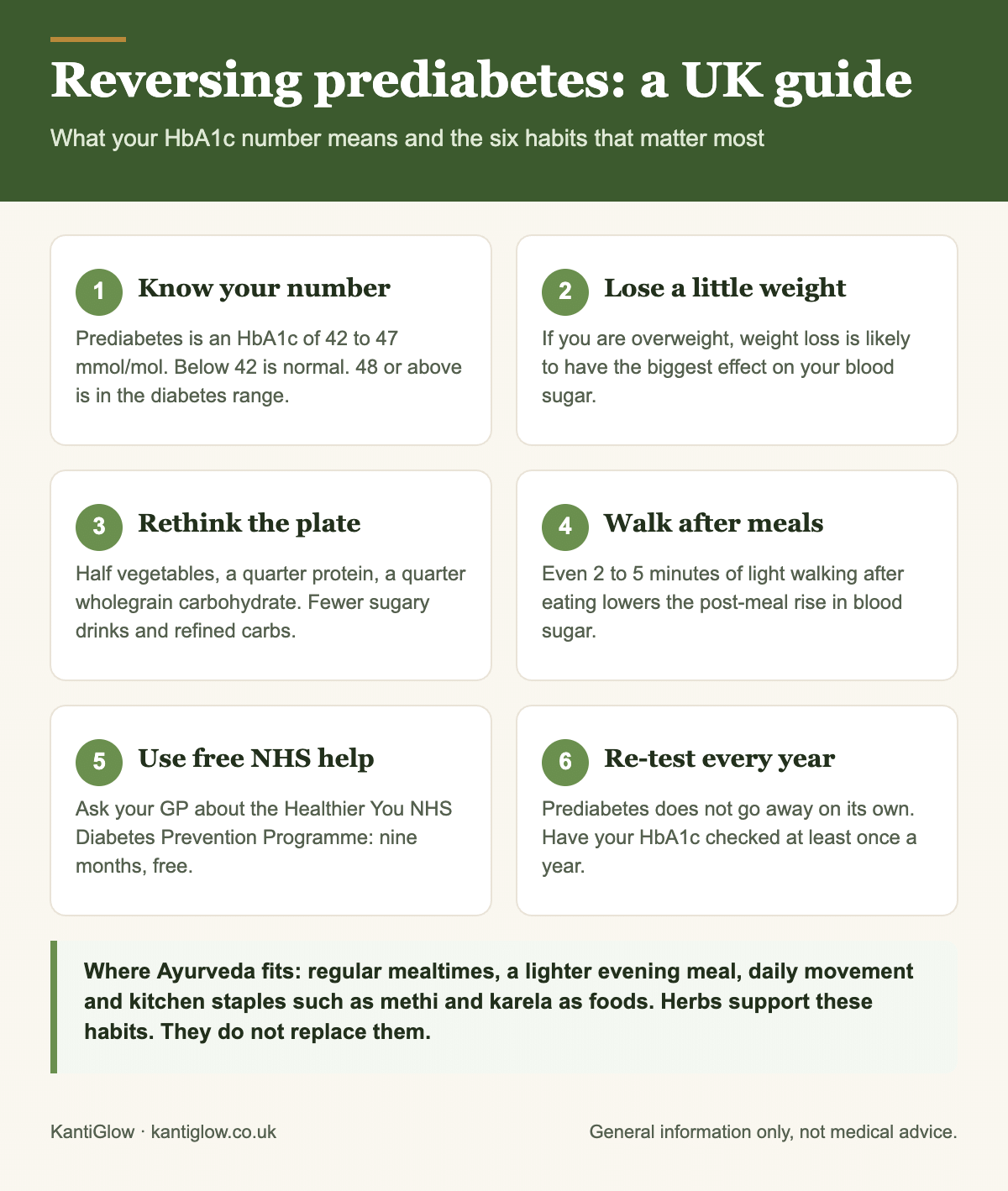
- Know your number. Ask your GP surgery for your exact HbA1c result and the date, and write it down.
- Lose some weight if you need to. People who completed the NHS prevention programme lost 3.3 kg on average and lowered their HbA1c by about 2 mmol/mol.
- Change the plate, not just the sugar. More vegetables, pulses and wholegrains, fewer refined carbohydrates and sugary drinks, sensible portions of rice, bread and chapati.
- Walk after you eat. A review of seven studies found that even two to five minutes of light walking after a meal reduced the rise in blood sugar compared with sitting.
- Take the free help. In England, your GP can refer you to the Healthier You NHS Diabetes Prevention Programme.
- Re-test. Have your HbA1c checked at least once a year so you know whether your changes are working.
Where Ayurveda honestly fits
Ayurveda has described a condition of sweet urine, madhumeha, for more than two thousand years, and its advice has always started with daily routine rather than a remedy: regular mealtimes, a lighter evening meal, less sweet and heavy food, and movement every day. Those habits sit comfortably beside what the NHS recommends.
Several Ayurvedic kitchen herbs have also been studied. Fenugreek seed (methi) has the most trial evidence: a 2023 review of ten trials concluded it improved blood sugar markers, and in one three-year study people with prediabetes who took 5 g of fenugreek powder twice a day were less likely to progress to type 2 diabetes. The trials are small and of mixed quality, so treat this as promising rather than proven. Evidence for karela, cinnamon, amla and gurmar is weaker or mixed. Our berberine guide covers daruharidra separately.
Diabetes UK does not recommend herbal supplements for diabetes because there is not enough evidence that they are safe and effective. Our view is simple: use these herbs as foods and as support for the six steps above, never instead of them, and tell your GP or pharmacist what you take.
Free NHS help you can ask for
- Healthier You NHS Diabetes Prevention Programme (England): a free nine-month programme for adults with an HbA1c of 42 to 47 mmol/mol. You need a referral from your GP surgery and must not be pregnant.
- NHS Health Check (England): offered every five years to people aged 40 to 74, and includes a check of your diabetes risk.
- Diabetes UK Know Your Risk tool: a short online questionnaire you can complete before speaking to your GP.
Scotland, Wales and Northern Ireland run their own prevention services, so ask your GP surgery what is available locally.
When to see your GP
Book an appointment if you are very thirsty, passing urine more than usual, unusually tired, losing weight without trying, have blurred vision, or cuts that are slow to heal. These can be signs that blood sugar has risen into the diabetes range. If you already take medication for any condition, speak to your GP or pharmacist before starting a herbal supplement.
Frequently asked questions
What is prediabetes?
Prediabetes means your blood sugar is higher than normal but not high enough to be diagnosed as type 2 diabetes. It raises your risk of developing type 2 diabetes later.
What HbA1c level is prediabetes in the UK?
An HbA1c of 42 to 47 mmol/mol, which is 6.0% to 6.4%. Below 42 is normal and 48 or above is in the diabetes range.
Can prediabetes be reversed?
Yes, often. Reversing it means bringing your HbA1c back below 42 mmol/mol through weight loss, food changes and more activity. There is no guarantee it will work for everyone.
How long does it take to reverse prediabetes?
It varies. HbA1c reflects the last two to three months, so real change usually shows after several months of steady habits. Many people need six to twelve months.
Can I reverse prediabetes in three months?
Some people see their number fall in three months, but Diabetes UK says setting that as a goal is unlikely to be realistic if you want the change to last.
Does prediabetes always turn into type 2 diabetes?
No. Without changes many people do progress, and estimates suggest roughly 5 to 10 in every 100 do so each year. Changing your habits lowers that risk.
What are the symptoms of prediabetes?
Usually there are none. Most people find out from a routine blood test. Thirst, frequent urination and tiredness suggest blood sugar may already be in the diabetes range.
How is prediabetes diagnosed?
With a blood test, most often HbA1c. Some surgeries use a fasting plasma glucose test, where 5.5 to 6.9 mmol/L is the range used for referral to the NHS prevention programme.
Do I need to fast before an HbA1c test?
No. HbA1c measures your average blood sugar over two to three months, so you can eat and drink normally before the test.
What is non-diabetic hyperglycaemia?
It is the medical term UK doctors often use for prediabetes. You may see it, or the letters NDH, on your records or a referral letter.
How many people in the UK have prediabetes?
Diabetes UK estimates about 6.3 million people. Many of them do not know, because prediabetes rarely causes symptoms.
What causes prediabetes?
The body becomes less responsive to insulin, so sugar stays in the blood for longer. Excess weight, especially around the waist, inactivity, family history, age and ethnicity all play a part.
Who is most at risk of prediabetes?
People who are overweight, have a close relative with type 2 diabetes, are over 40, or over 25 if from a South Asian, Chinese, Black African or Black Caribbean background.
Can slim people get prediabetes?
Yes. Weight is the largest risk factor but not the only one. Family history, ethnicity and where the body stores fat also matter.
How much weight do I need to lose?
There is no single target. People completing the NHS prevention programme lost 3.3 kg on average and still lowered their HbA1c. Agree a realistic goal with your GP or nurse.
What is the best diet for prediabetes?
There is no single best diet. Approaches that cut refined carbohydrates and sugary drinks, raise fibre and help you lose weight all work. Choose one you can keep to.
Do I have to give up carbohydrates?
No. Portion size and type matter more than cutting carbohydrates out. Wholegrains, pulses and vegetables are better choices than white bread, sweets and sugary cereals.
Can I still eat fruit?
Yes. Whole fruit contains fibre and is part of a healthy diet. Spread it through the day and keep to sensible portions.
Is fruit juice OK with prediabetes?
Keep it small. Juice delivers sugar quickly without the fibre of whole fruit, so UK advice is to limit juice and smoothies to 150 ml a day.
Which drinks should I avoid?
Sugar-sweetened soft drinks, energy drinks and sweet tea or coffee are the first things to cut. Water, unsweetened tea and coffee, and sugar-free drinks are better choices.
Can I eat rice and chapati?
Yes, in smaller portions. Fill half the plate with vegetables and dal first, choose wholemeal flour for chapati, and keep rice to a few tablespoons rather than a plateful.
Does walking help prediabetes?
Yes. Regular walking helps with weight and insulin sensitivity, and even two to five minutes of light walking after a meal reduces the post-meal rise in blood sugar.
How much exercise do I need?
UK guidance for adults is at least 150 minutes of moderate activity a week, such as brisk walking, plus muscle-strengthening activity on two days.
Does stress raise blood sugar?
It can. Stress hormones raise blood sugar in the short term, and stress often affects sleep, eating and activity. Managing it supports the other changes you make.
What is the NHS Diabetes Prevention Programme?
Healthier You is a free nine-month NHS programme in England that supports people with prediabetes to change their diet, weight and activity, in groups or digitally.
Who can join the NHS Diabetes Prevention Programme?
Adults aged 18 or over in England with an HbA1c of 42 to 47 mmol/mol or a qualifying fasting glucose result, who are not pregnant. Your GP surgery makes the referral.
Does the NHS programme work?
Evaluation found people who completed it lost 3.3 kg on average and reduced their HbA1c by about 2 mmol/mol. Results depend on attending and keeping the changes going.
Will my GP prescribe metformin for prediabetes?
Sometimes. Lifestyle change is the first step, but a GP may offer metformin if your blood sugar keeps rising despite it. That decision is individual.
How often should I be re-tested?
At least once a year. Your GP surgery should invite you for a yearly review that includes HbA1c, weight and a look at your wider heart risk.
Can Ayurveda reverse prediabetes?
No system of medicine can promise that. Ayurvedic routine, such as regular meals, lighter evenings and daily movement, supports the changes that are proven to help.
Which Ayurvedic herbs have been studied for blood sugar?
Fenugreek (methi), bitter melon (karela), gurmar, amla, cinnamon and berberine-containing daruharidra. Fenugreek has the most trial evidence. None is a substitute for lifestyle change.
Does fenugreek help with prediabetes?
In one three-year study, people with prediabetes taking 5 g of fenugreek powder twice daily were less likely to progress to diabetes. It is a single study, so more research is needed.
Is karela good for prediabetes?
Karela is a healthy vegetable, but trial results on blood sugar are mixed, and some reviews found no clear effect. Enjoy it as food rather than relying on it.
Does cinnamon lower blood sugar?
Some studies show a small fall in fasting blood sugar, but a Cochrane review found no effect on HbA1c. Cassia cinnamon in large amounts may also affect the liver.
Should I take supplements for prediabetes?
Diabetes UK does not recommend herbal remedies or supplements for diabetes because evidence on safety and effectiveness is limited. Food, weight and activity come first.
Are herbal supplements safe with my medication?
Not always. Herbs that lower blood sugar can add to the effect of some diabetes medicines. Tell your GP or pharmacist about anything you take.
What does Ayurveda call diabetes?
Classical texts describe prameha, a group of urinary conditions, and madhumeha, meaning sweet urine. The descriptions resemble what we now call diabetes.
What eating routine does Ayurveda suggest?
Eat at regular times, make lunch the main meal, keep the evening meal light and early, and avoid grazing. These habits also help with portion control.
Can prediabetes come back after I reverse it?
Yes. If weight returns or habits slip, blood sugar can rise again. That is why yearly testing and keeping the changes going both matter.
Does prediabetes affect the heart?
It is linked with higher cardiovascular risk. One study in The Lancet found people who reversed prediabetes had a 58% lower risk of dying from heart disease or being hospitalised with heart failure.
Is prediabetes the same as insulin resistance?
Not exactly. Insulin resistance is the underlying process, where cells respond poorly to insulin. Prediabetes is the stage at which blood sugar has risen as a result.
Can I check my diabetes risk online?
Yes. Diabetes UK offers a free Know Your Risk tool. If it shows moderate or high risk, book a blood test with your GP surgery.
Do I need a blood glucose monitor?
Usually not. Home finger-prick testing is not routinely advised for prediabetes. Your yearly HbA1c test is the measure that matters, unless your GP suggests otherwise.
When should I see my GP?
See your GP if you are very thirsty, passing urine often, very tired, losing weight without trying, or have blurred vision. Also ask before starting any herbal supplement alongside medication.
Sources
- Diabetes UK: How to reverse prediabetes
- NHS: Symptoms of type 2 diabetes and how it is diagnosed
- Diabetes UK: How many people in the UK have diabetes?
- Evaluation of the Healthier You NHS Diabetes Prevention Programme
- British Heart Foundation: Can you reverse type 2 diabetes?
- Fenugreek in type 2 diabetes and prediabetes: systematic review and meta-analysis (2023)
- Diabetes UK: Herbal and food supplements
This guide is general information, not medical advice. It does not replace advice from your GP, pharmacist or diabetes team. Do not stop or change prescribed medication without speaking to them. Food supplements are not intended to diagnose, treat, cure or prevent any disease.