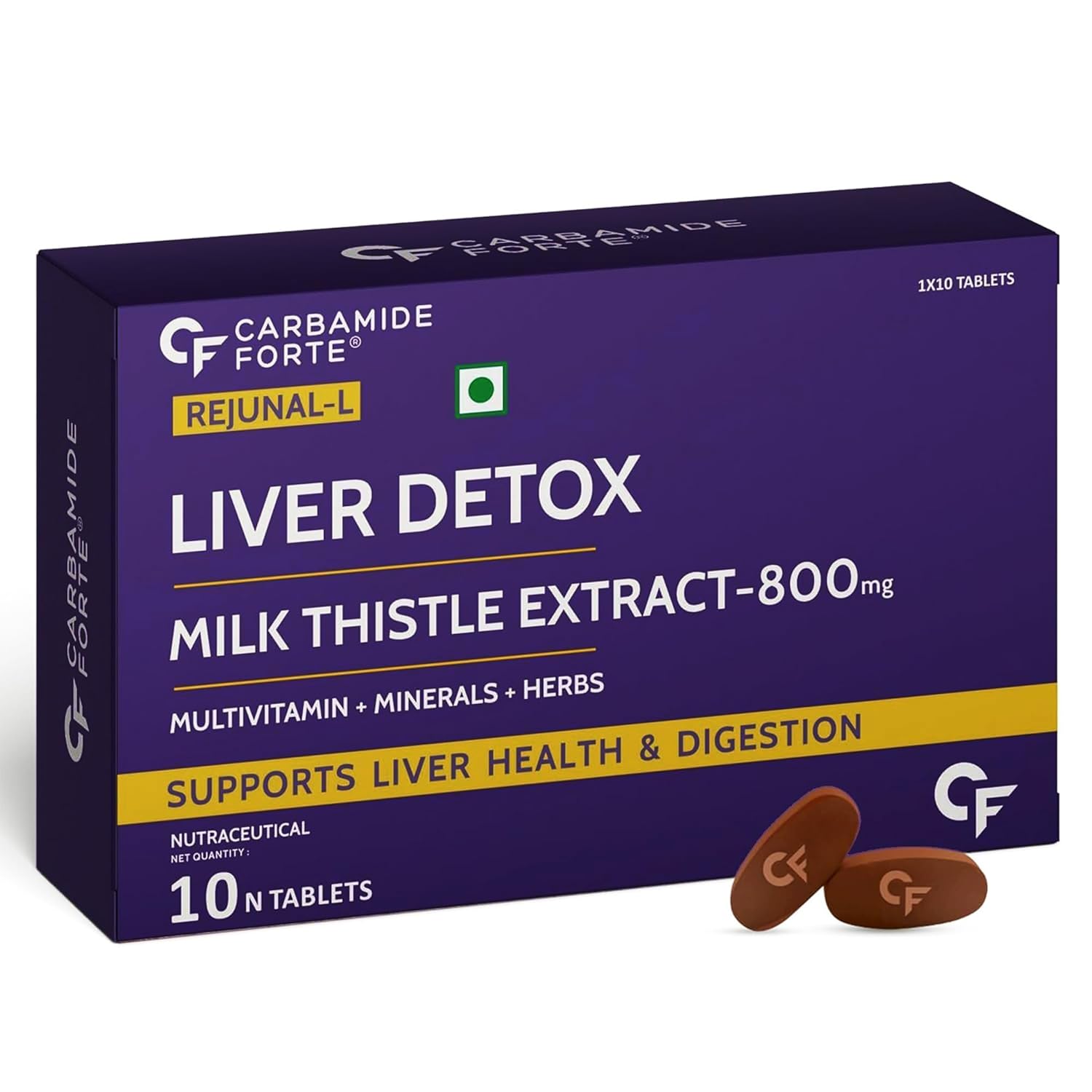
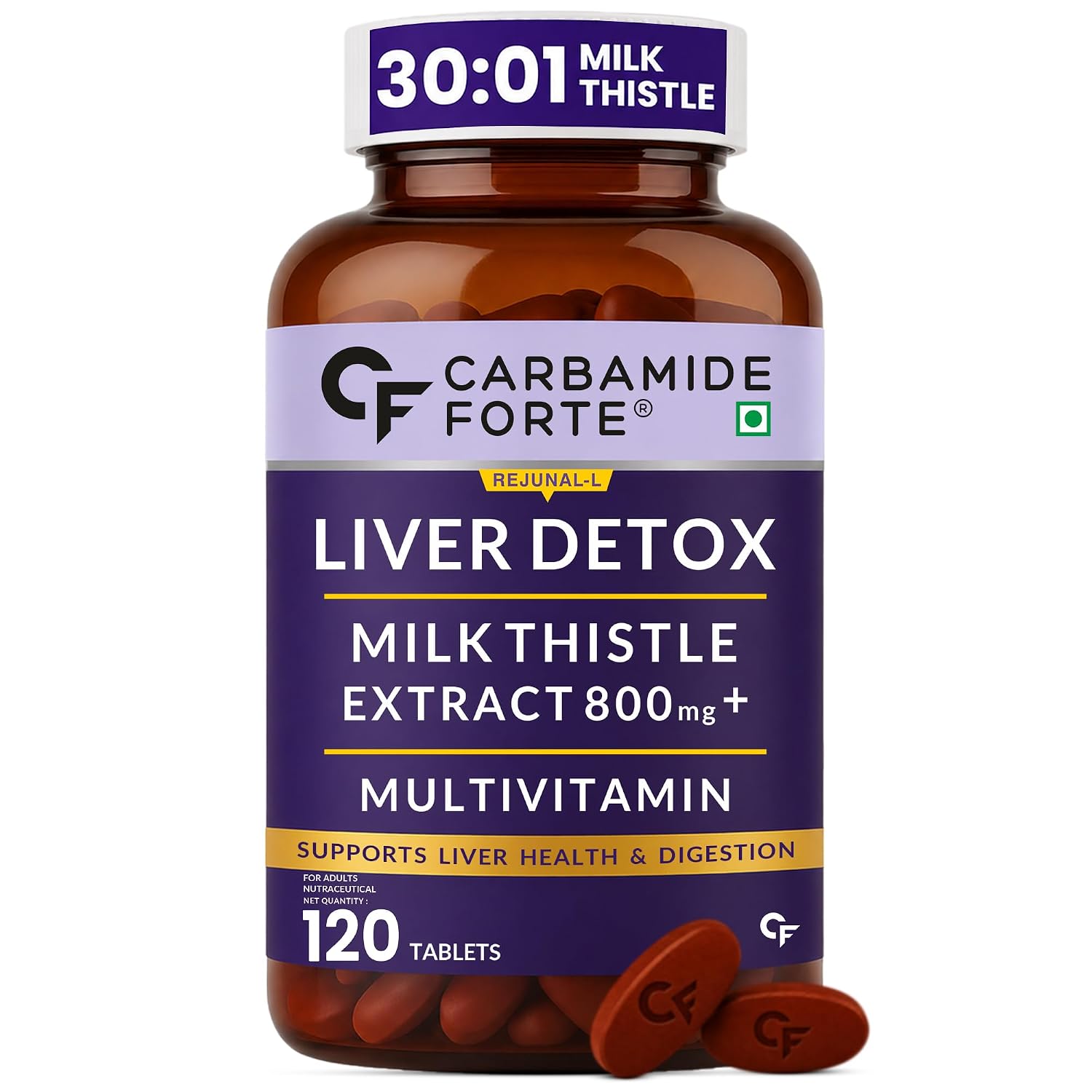
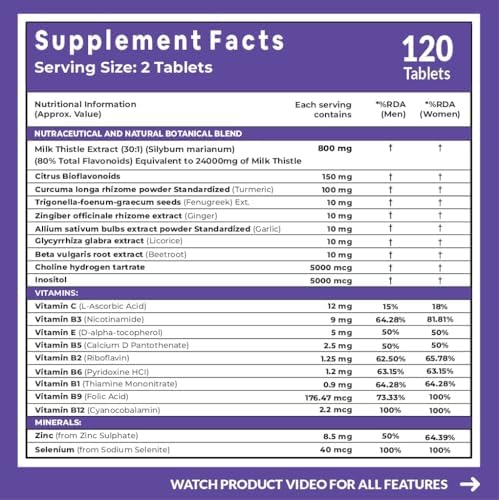
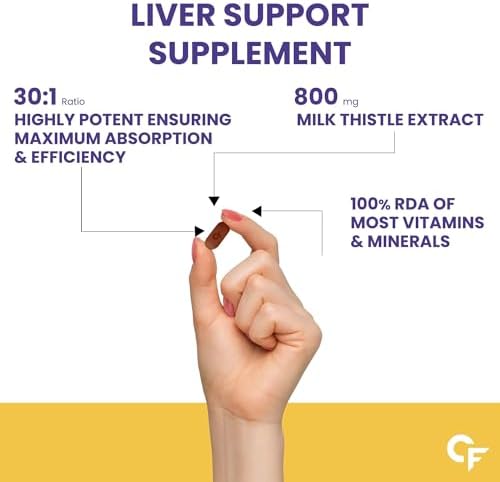
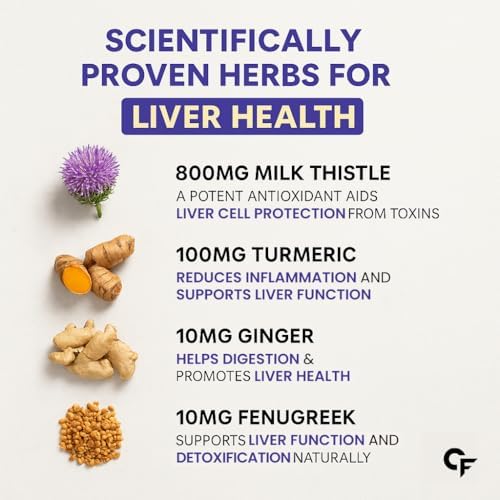


Carbamide Forte Milk Thistle 800 mg is a 120-tablet pack providing 800 mg of concentrated milk thistle (Silybum marianum) extract per two-tablet serving, standardised to 80% silymarin flavonoids at a 30:1 extract ratio. That works out at 60 servings — two months at the label direction. It is the sealed manufacturer pack, shipped direct from India to your UK address.
At a glance
| Brand | Carbamide Forte |
|---|---|
| Botanical name | Silybum marianum |
| Part used | Seed |
| Strength | 800 mg extract per two-tablet serving (400 mg per tablet) |
| Extract ratio | 30:1 concentrated extract |
| Standardisation | 80% silymarin flavonoids |
| Format | Tablets |
| Pack size | 120 tablets — 60 servings |
| Typical pack life | Two months at the label direction |
| Cost per serving | Around 37p |
| Suitability | Suitable for vegetarians |
| Ships from | United Kingdom |
How to take it
The label direction is two tablets a day with water. Read that carefully when comparing products: the 800 mg figure on the front of this pack is the amount in a two-tablet serving, so each individual tablet carries 400 mg of extract. Several competing listings quote a headline milligram figure that is also a serving rather than a tablet, and a few quote it per tablet — which is why two packs advertised at the same strength can differ by a factor of two in practice.
Take the tablets with or after food rather than on an empty stomach. Most people take both together after their main meal; splitting them between two meals is equally fine. Because the pack holds a full 60 servings, it is sized for a sustained two-month run rather than occasional use.
Do not exceed the stated dose. This is a food supplement, not a medicine. If you are pregnant or breastfeeding, take prescription medication, or have a diagnosed condition, speak to your GP or pharmacist before starting it. Milk thistle is known to interact with some prescription medicines, so the pharmacist check matters here more than with most botanicals.
Nutrition information
No health claim for milk thistle is currently authorised on the GB Nutrition and Health Claims Register — the botanical claims for this plant remain on hold pending assessment — and we therefore make none. The words in the manufacturer’s product name are part of that brand’s name as printed on the pack; they are not a claim by us about what the product does, and nothing on this page should be read that way.
What we can tell you is what is measurably in the pack: 800 mg of 30:1 milk thistle seed extract per two-tablet serving, standardised so that 80% of that extract is silymarin flavonoids. Those are composition figures, not health claims, and they are the numbers worth comparing between brands.
In detail
The plant
Milk thistle is a tall biennial of the daisy family, native to the Mediterranean and now naturalised across Europe, including Britain, and much of the temperate world. It is easy to identify: glossy deep green leaves veined with an unmistakable milky-white marbling, spiny margins, and a solitary purple thistle head. The white veining is the origin of both the common name and the old legend attached to it.
It is the seed, not the leaf or root, that is used. The seeds are pressed and extracted to concentrate the flavonolignan fraction known collectively as silymarin — principally silybin, silydianin and silychristin.
What 30:1 and 80% actually mean
These two numbers do different jobs and both matter. The 30:1 ratio means thirty parts of raw seed were reduced to one part of finished extract, so 800 mg of this extract derives from roughly 24 g of seed. The 80% standardisation means that of the 800 mg of extract, around 640 mg is silymarin flavonoids. A product quoting a large milligram figure with no extract ratio and no standardisation is usually quoting raw milled seed, which is a substantially weaker preparation at the same headline number.
Milk thistle in Ayurvedic and Western practice
Milk thistle is unusual in this catalogue in that it is a European plant with a long Western herbal history rather than a classical Ayurvedic herb. It entered the Indian supplement market through the modern nutraceutical trade, which is why brands like Carbamide Forte manufacture it to a Western extract specification — standardised, ratio-declared — rather than as a traditional churna. In Sanskrit-language sources it has no classical name, and any listing that gives it one is inventing it.
About Carbamide Forte
Carbamide Forte is an Indian nutraceutical brand working in standardised extracts rather than traditional whole-herb preparations. Its packs consistently declare extract ratio and standardisation percentage on the label, which is more than many competitors in this price bracket do and makes genuine like-for-like comparison possible. Packs carry a batch number and expiry date.
Buying this in the UK
We ship this pack from India directly to your UK address. Orders are dispatched within 24 to 72 hours and take 5 to 7 working days in transit, so most arrive 6 to 10 working days after you order. UK delivery is £4.99 flat, and free on orders over £100.
We are registered for UK VAT, so on orders up to £135 the VAT is charged at checkout and there is nothing further to pay when your parcel arrives. On orders above £135, import VAT, any duty and a carrier handling fee are payable by you on delivery — our shipping policy sets out exactly how that works.
What arrives is the sealed manufacturer retail pack with the batch number and expiry date printed on it, which is worth checking the moment it turns up.
Questions people ask
Is the 800 mg per tablet or per serving?
Per serving. A serving is two tablets, so each tablet carries 400 mg of milk thistle extract and the 800 mg figure applies to the daily two-tablet dose. This is worth checking on any milk thistle product you compare it against, because brands differ in which figure they put on the front of the pack.
How much silymarin does that give?
The extract is standardised to 80% silymarin flavonoids, so an 800 mg serving provides approximately 640 mg of silymarin. Silymarin is the collective name for the flavonolignan group found in milk thistle seed, principally silybin, silydianin and silychristin.
What does 30:1 extract mean?
It means thirty parts of raw milk thistle seed were concentrated down to one part of finished extract. An 800 mg serving of a 30:1 extract therefore derives from roughly 24 g of seed. A product listing a milligram figure without an extract ratio is normally quoting raw milled seed rather than a concentrate.
How long does one pack last?
Two months. There are 120 tablets in the pack and the label direction is two tablets a day, giving 60 servings. At around 37p per serving it is one of the lower cost-per-serving standardised milk thistle products we stock.
Do you ship milk thistle anywhere in the UK?
Yes, to any UK address including Scotland, Wales, Northern Ireland and the Channel Islands. We ship from India, so allow 24 to 72 hours for dispatch and 5 to 7 working days in transit. Delivery is £4.99 flat and free on orders over £100. On orders up to £135 there is nothing to pay on delivery; above £135 import charges apply.
Suitability, storage and allergens
Suitable for vegetarians. Milk thistle belongs to the daisy family (Asteraceae) — if you have a known sensitivity to plants in that family, such as ragweed, marigold or chamomile, do not take it. Store in a cool, dry place away from direct sunlight with the container closed. Keep out of the reach of children. Use by the date printed on the pack.
Important information
Food supplement. Not a substitute for a varied, balanced diet and a healthy lifestyle. Do not exceed the recommended daily dose. Milk thistle may interact with certain prescription medicines; if you take any regular medication, seek advice from your GP or pharmacist before use. Not recommended during pregnancy or breastfeeding, or for children, unless advised by a qualified healthcare professional. This product is not intended to diagnose, treat, cure or prevent any disease.
Reviews
There are no reviews yet.