Search ‘is Ayurveda safe’ and you will find news stories about lead in imported pills alongside brands promising miracles. Both extremes miss the practical answer. Ayurvedic herbal products from licensed, GMP-certified Indian manufacturers, sold as UK food supplements, sit inside the same food-safety framework as any other supplement. The risk comes from a specific and avoidable category, and from sellers who ignore UK rules. This FAQ explains what to look for.
Key facts
- Herbal (plant-only) Ayurvedic products: sold in the UK as food supplements under FSA and Trading Standards rules
- ‘Rasa shastra’ / bhasma products: contain processed metals or minerals — not sold by KantiGlow
- Novel foods: ingredients without a UK history of use before 1997 need FSA authorisation
- Health claims: only GB-register claims allowed; no medicinal claims for supplements
Quick answers
- Why do Ayurvedic products sometimes contain heavy metals?
- Does KantiGlow sell bhasma or metal-containing products?
- What is lab testing and what should a seller be able to show?
- What are the UK novel-foods rules and why do they matter for Ayurveda?
- Are Ayurvedic supplements regulated by the MHRA?
- Can I take Ayurvedic herbs with prescription medication?
- How do I buy Ayurvedic products safely in the UK — a checklist
Why do Ayurvedic products sometimes contain heavy metals?
Classical Ayurveda has two branches. Herbal (kashtha aushadhi) products are made from plants. A separate branch, rasa shastra, deliberately uses purified metals and minerals — bhasmas of iron, zinc, and historically mercury or lead — in tiny amounts, prepared by traditional methods. Almost every regulatory alert in the UK, US and Australia over the last twenty years has concerned rasa shastra products or products contaminated during poor manufacturing, not properly made herbal supplements. The practical rule: buy plant-only products from licensed manufacturers and avoid any product whose label lists a bhasma or metal.
Does KantiGlow sell bhasma or metal-containing products?
No. We stock herbal supplements only, from GMP-certified Indian manufacturers such as Himalaya, Dabur, Kapiva, Organic India, Zandu and Baidyanath, and we ask for batch testing documentation. Products are dispatched directly from India.
What is lab testing and what should a seller be able to show?
Reputable manufacturers test each batch for heavy metals (lead, arsenic, cadmium, mercury), microbial contamination and, for extracts, marker compounds such as withanolides. A UK seller should be able to tell you which manufacturer made a product and confirm that batch certificates exist. Be cautious of sellers who cannot name the manufacturer at all.
What are the UK novel-foods rules and why do they matter for Ayurveda?
Under retained EU law, any food ingredient without a significant history of consumption in the UK or EU before May 1997 is a ‘novel food’ and cannot be sold without authorisation from the Food Standards Agency. Several Ayurvedic ingredients fall into this category. A responsible retailer checks each ingredient against the FSA’s catalogue and removes products that fail — we did exactly that during our 2026 range audit. Widely used herbs such as ashwagandha, turmeric, triphala, amla, brahmi, shatavari and tulsi have established UK use.
Are Ayurvedic supplements regulated by the MHRA?
Food supplements are regulated as food, not medicine. The MHRA becomes involved only if a product makes medicinal claims (to treat, prevent or cure a condition) or contains a medicinal ingredient — at which point it would be an unlicensed medicine. That is why a compliant UK seller describes traditional use and never promises health outcomes. A small number of Ayurvedic products hold MHRA Traditional Herbal Registration (THR) as medicines; those are a different, licensed category.
Can I take Ayurvedic herbs with prescription medication?
Ask your pharmacist or GP before combining any supplement with prescribed medicine — some herbs are known to interact with medication for thyroid, blood pressure, diabetes and sedation, and the safe answer is always to check. Do not take ashwagandha during pregnancy. Stop and seek advice if you feel unwell.
How do I buy Ayurvedic products safely in the UK — a checklist
1) Plant-only ingredients, with Latin names on the label. 2) A named, GMP-certified Indian manufacturer with a batch number and dates. 3) A UK-registered seller with a company number, address and phone number on the website. 4) UK-compliant food supplement labelling, including the standard disclaimer. 5) No medicinal claims — if a listing promises to cure anything, walk away. 6) Sensible prices: authentic Himalaya or Dabur products cost £5–£15; ‘too cheap’ often means expired or counterfeit stock.
KantiGlow is operated by ICOMCHAIN LTD (Company No. 13191919), Aldow Enterprise Park, Manchester M12 6EJ. Questions about a specific product’s sourcing or testing: [email protected].
Shop related products at KantiGlow
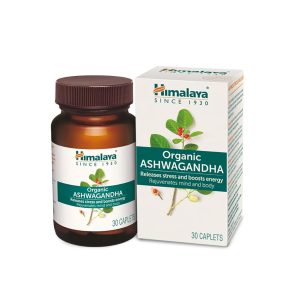
- Himalaya Organic Ashwagandha 670mg
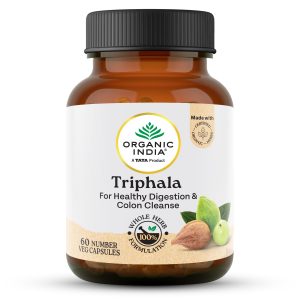
- Organic India Triphala Capsules
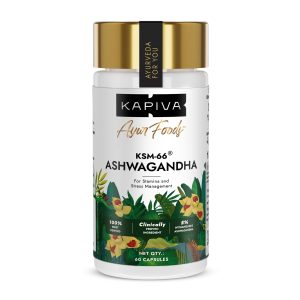
- Kapiva KSM-66 Ashwagandha Capsules
- Dabur Chyawanprakash Sugar Free
All products are authentic Indian brands, sourced directly from India and dispatched within 24–72 hours (UK delivery typically 5–7 working days).
Related guides
Food supplements are not a substitute for a varied, balanced diet and a healthy lifestyle. Do not exceed the recommended daily dose. Keep out of reach of young children. If you are pregnant, breastfeeding, taking medication or under medical supervision, consult a healthcare professional before use. This guide describes traditional Ayurvedic use and UK labelling rules; it is not medical advice.
Shop the products in this guide
- Dabur Ashwagandha Capsules 20 — £3.99
- Dabur Triphala Churna Powder 120g — £3.99
Lab-tested, vegetarian, shipped from India. Food supplements should not replace a varied diet.
Pingback: Ashwagandha vs Magnesium – Which Should You Take? UK | KantiGlow
Pingback: Budget Ayurveda: Full Routine for £25/Month (UK) | KantiGlow