Ayurveda has a word for seasonal routine — ritucharya — and autumn is the season it takes most seriously, because the shift from warm to cold and damp is when the tradition says the body needs the most consistency. In India that means starting the chyawanprash jar in October. In Britain, where autumn is longer and wetter, the same habits work from late September through November. This 30-day plan lays them out week by week.
The plan at a glance
- When: late September to end of November
- Core herbs: chyawanprash (morning), tulsi tea (daytime), giloy (as directed)
- Food: warm, cooked, lightly spiced; fewer cold salads and iced drinks
- Routine: earlier dinner, oil for dry skin, consistent bedtime
- Kit option: The Winter Kit (chyawanprash + giloy + tulsi)


Quick answers
- What does the 30-day autumn plan look like week by week?
- Why chyawanprash in autumn?
- What is giloy and how is it taken?
- What should I eat in autumn according to Ayurveda?
- Can I add vitamin D?
- Is this plan suitable for children or older adults?
- What does an autumn day on the plan actually look like?
- How does this differ from the Ayurvedic winter routine?
What does the 30-day autumn plan look like week by week?
Week 1 — warm up the kitchen. Swap cold breakfasts for porridge or warm cooked grains, add ginger and cinnamon, and start a daily tulsi tea. Week 2 — start chyawanprash. One to two teaspoons each morning followed by warm milk, as the jar directs. Week 3 — add giloy. Giloy (guduchi) tablets or capsules with breakfast, per the pack. Week 4 — protect the evening. Dinner by 7.30pm, sesame or coconut oil on dry hands and feet, screens off half an hour before bed. Keep all four going until spring.
Why chyawanprash in autumn?
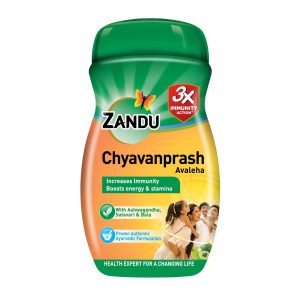
Chyawanprash is the classical Ayurvedic jam built on amla with 30–50 herbs, and it is traditionally a cold-season food: Indian families open the jar in October. Amla is naturally rich in vitamin C; where a jar declares at least 12mg of vitamin C per serving the maker may state that vitamin C contributes to the normal function of the immune system — that claim belongs to the vitamin, not the jam. Our chyawanprash guide compares Dabur, Zandu and sugar-free options.
What is giloy and how is it taken?
Giloy (guduchi, Tinospora cordifolia) is a climbing vine whose stem is one of the most used herbs in classical Ayurveda, described in the texts as amrita (‘nectar’). It is sold as tablets, capsules and juice, and traditionally taken in the morning. It has no authorised UK health claim, so we describe traditional use only. See the giloy guide.
What should I eat in autumn according to Ayurveda?
Warm, moist, cooked food: soups, dals, stews, porridge, roasted root vegetables, ghee or olive oil, and warming spices such as ginger, cinnamon, black pepper and cumin. Ayurveda suggests reducing raw salads, iced drinks and dry snacks in autumn, and eating the main meal at lunchtime. This is about routine and comfort, not restriction.
Can I add vitamin D?
Yes, and it is the one supplement UK public health advice suggests everyone consider between October and March, because sunlight is too weak for the skin to make it. Vitamin D contributes to the normal function of the immune system and to the maintenance of normal bones (authorised claims, on products supplying at least 0.75µg per serving). It pairs well with the plan; see our winter warm-up plan.
Is this plan suitable for children or older adults?
The food and routine habits are family-friendly. Chyawanprash is traditionally given to children in India in smaller amounts, but always follow the jar’s age guidance. For anyone on medication, pregnant, breastfeeding or over 70 with health conditions, check with a pharmacist before adding herbs.
What does an autumn day on the plan actually look like?
7am: warm water, then tongue scraping. 7.30am: porridge with ginger and cinnamon; a spoon of chyawanprash followed by warm milk; giloy tablet. 10.30am: tulsi tea rather than a second coffee. 1pm: the main meal — dal, rice, roasted squash, a little ghee. 4pm: ginger tea and a ten-minute walk in whatever daylight is left. 7pm: soup or a light stew. 9pm: oil on dry hands and feet, screens off, ashwagandha with warm milk if it is in your routine. 10pm: bed. The Sunday job is batch-cooking a dal and a soup so weekday evenings are easy.
How does this differ from the Ayurvedic winter routine?
Autumn (sharad into hemanta) is the transition season, so the plan is about consistency — regular meals, warm food, starting the chyawanprash jar, an earlier evening. Winter deepens it: heavier, oilier food, more spice, daily rather than weekly oil massage, vitamin D, and golden milk every night. When the clocks go back at the end of October, move on to the winter warm-up plan, keeping everything from this one running underneath it.
Shop this plan at KantiGlow
- The Winter Kit (chyawanprash + giloy + tulsi)
- Dabur Chyawanprakash Sugar Free
- Zandu Chyawanprash Avaleha
- Zandu Giloy Tablets
- Jiva Giloy Capsules
- Himalaya Tulasi (Holy Basil)
All products are authentic Indian and UK-labelled brands, sourced directly from India and dispatched within 24–72 hours (UK delivery typically 5–7 working days).
Related guides
Food supplements are not a substitute for a varied, balanced diet and a healthy lifestyle. Do not exceed the recommended daily dose. Keep out of reach of young children. If you are pregnant, breastfeeding, taking medication or under medical supervision, consult a healthcare professional before use. This guide describes traditional Ayurvedic routines and UK labelling rules; it is not medical advice, and nutrient claims apply only to products whose labels show the qualifying amount.
Shop the products in this guide
- Zandu Giloy (Guduchi) Tablets 60 — £4.99
- Sitaram Chyawanprash Tablets — £8.99
- Himalaya Tulsi Tablets 60 — £7.99
- Dry Ginger Powder 100g — £4.99
Lab-tested, vegetarian, shipped from India. Food supplements should not replace a varied diet.
Pingback: Ayurvedic Winter Warm-Up Plan (UK, Nov–Feb) | KantiGlow
Pingback: Vata Daily Routine Plan (UK Ayurveda Guide) | KantiGlow