Quick answer: Chyawanprash is a traditional Ayurvedic herbal jam made from amla (Indian gooseberry) cooked with 30–50 herbs and spices, ghee, sesame oil and honey or sugar. It is traditionally eaten every day from autumn to spring as a rasayana (rejuvenating tonic) for the whole family. The usual amount for adults is 1–2 teaspoons a day, on its own or with warm milk. Most jars are high in sugar, so choose a sugar-free version or tablets if you watch your sugar intake.
Key facts
- Type: Ayurvedic avaleha (herbal jam)
- Base: amla pulp + ghee + sesame oil + sweetener + 30–50 herbs and spices
- Traditional season: October to March
- Usual amount: 1–2 teaspoons a day for adults; about ½ teaspoon for children (check the label)
- Formats: classic jar, sugar-free versions, tablets
- UK status: sold as a food; no authorised health claims
What is chyawanprash?
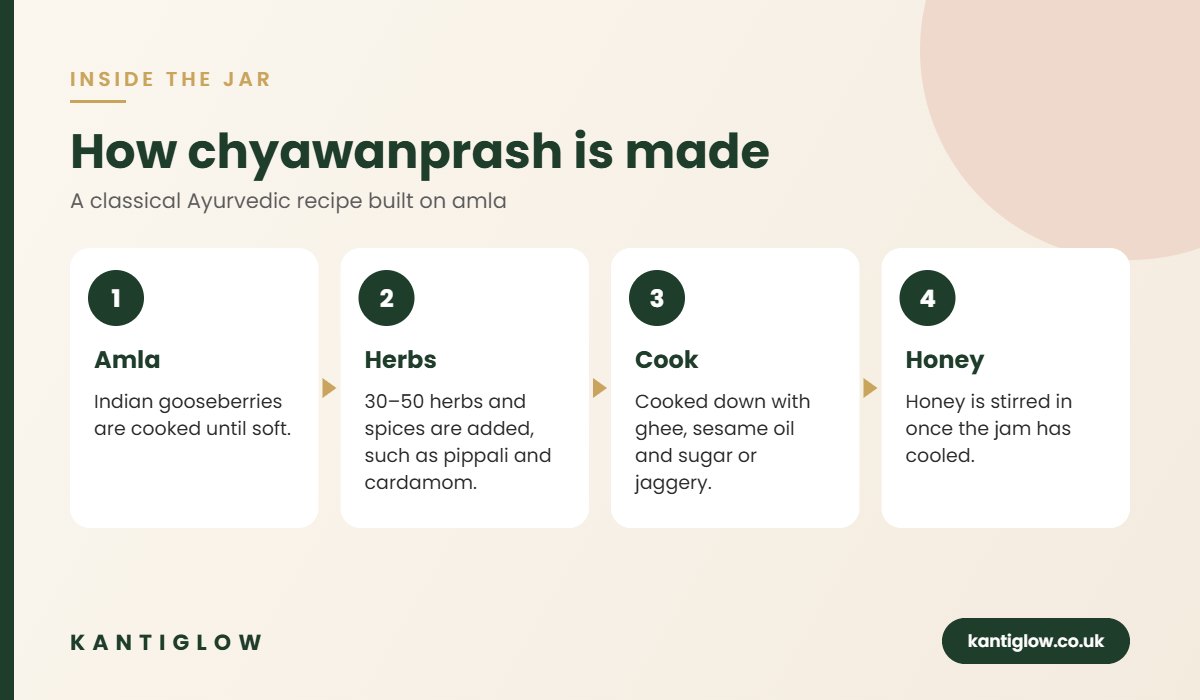
Chyawanprash is one of Ayurveda’s best-known preparations. Its recipe is recorded in classical texts such as the Charaka Samhita and, by legend, it is named after the sage Chyawan, who was said to have regained his youth by eating it. It is made by cooking amla until soft, then combining it with herbs and spices such as ashwagandha, pippali (long pepper), cardamom and cinnamon, and cooking it with ghee, sesame oil and sugar or jaggery. Honey is added once it cools. The result is a dark, sweet-sour, spicy jam.
What is chyawanprash good for?
In Ayurveda, chyawanprash is a rasayana traditionally eaten to support strength, vitality and wellbeing through the colder months, and many Indian families give it to children and adults every winter. Modern research is limited: a 2024 scientific review described its evidence from human clinical trials as “meager” and called for better studies. Chyawanprash has no authorised health claims in the UK, so enjoy it as a traditional food rather than a medicine. Learn more about its main ingredient in our amla guide.
How do I eat chyawanprash?
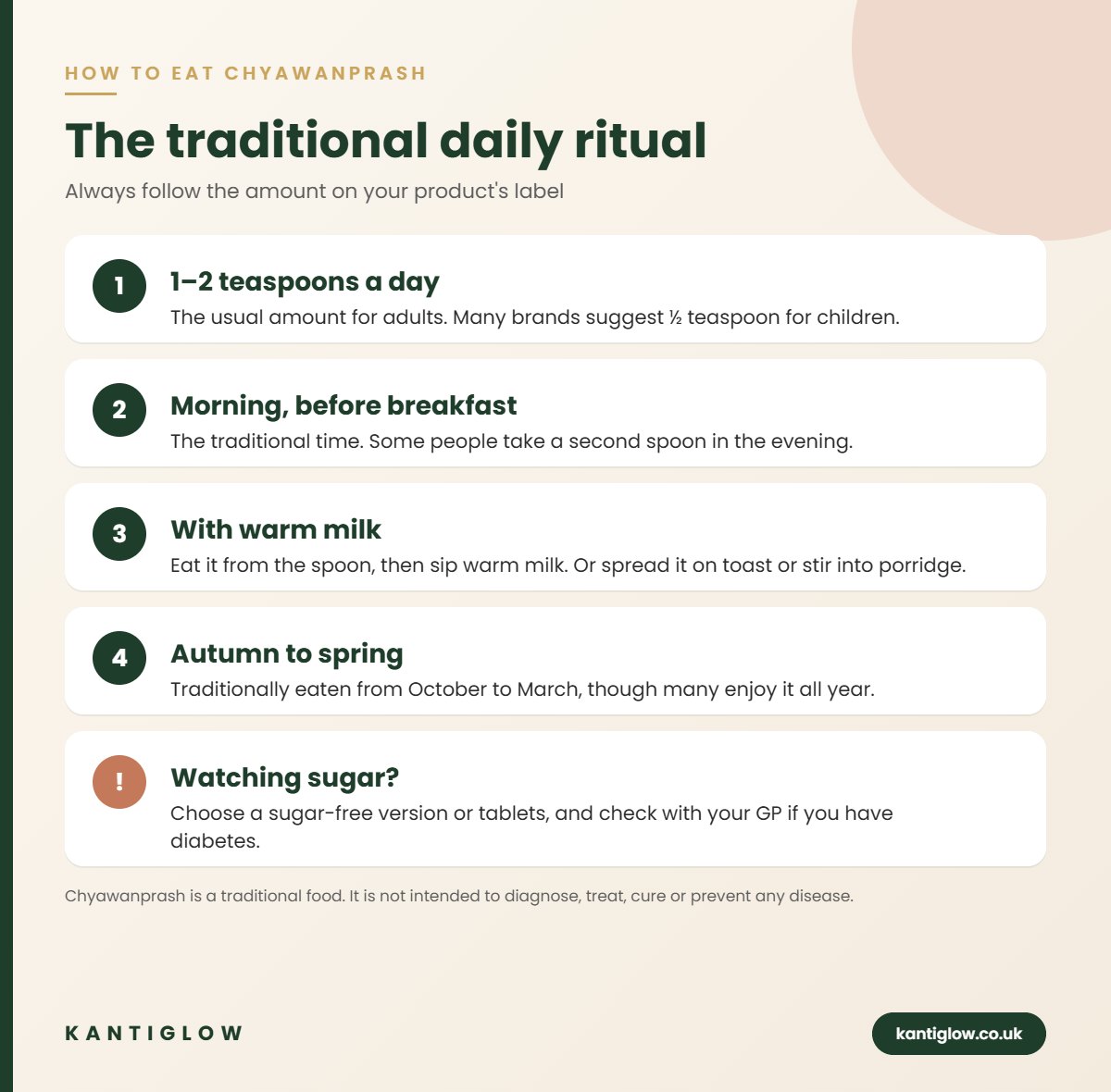
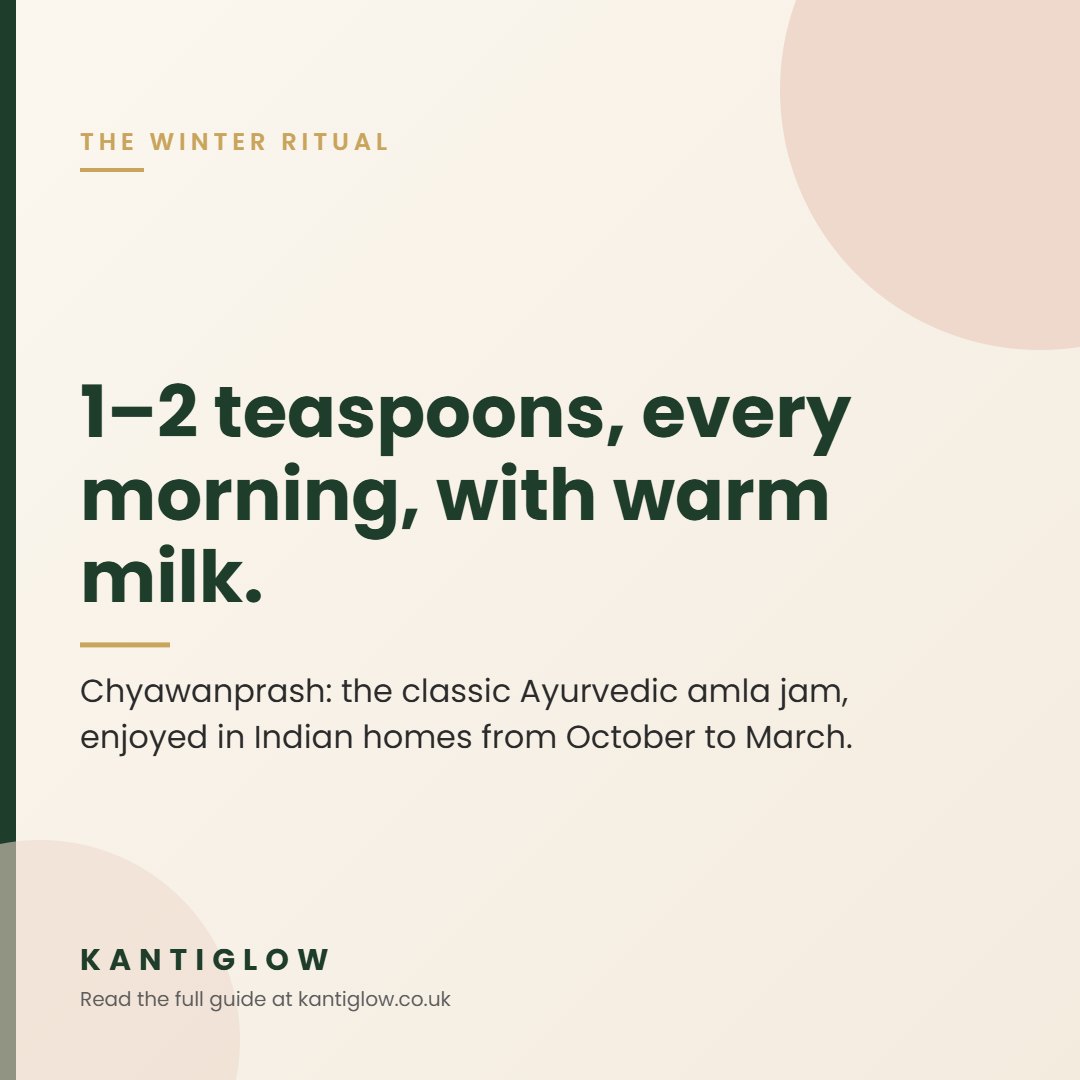
- Adults: 1–2 teaspoons a day, or as your label directs.
- When: traditionally in the morning, before or with breakfast. Some take a second spoon in the evening.
- How: eat it from the spoon, then drink warm milk. Or stir it into warm milk, spread it on toast or mix it into porridge.
- Children: many brands suggest about half a teaspoon; check the label for the minimum age.
Our chyawanprash picks
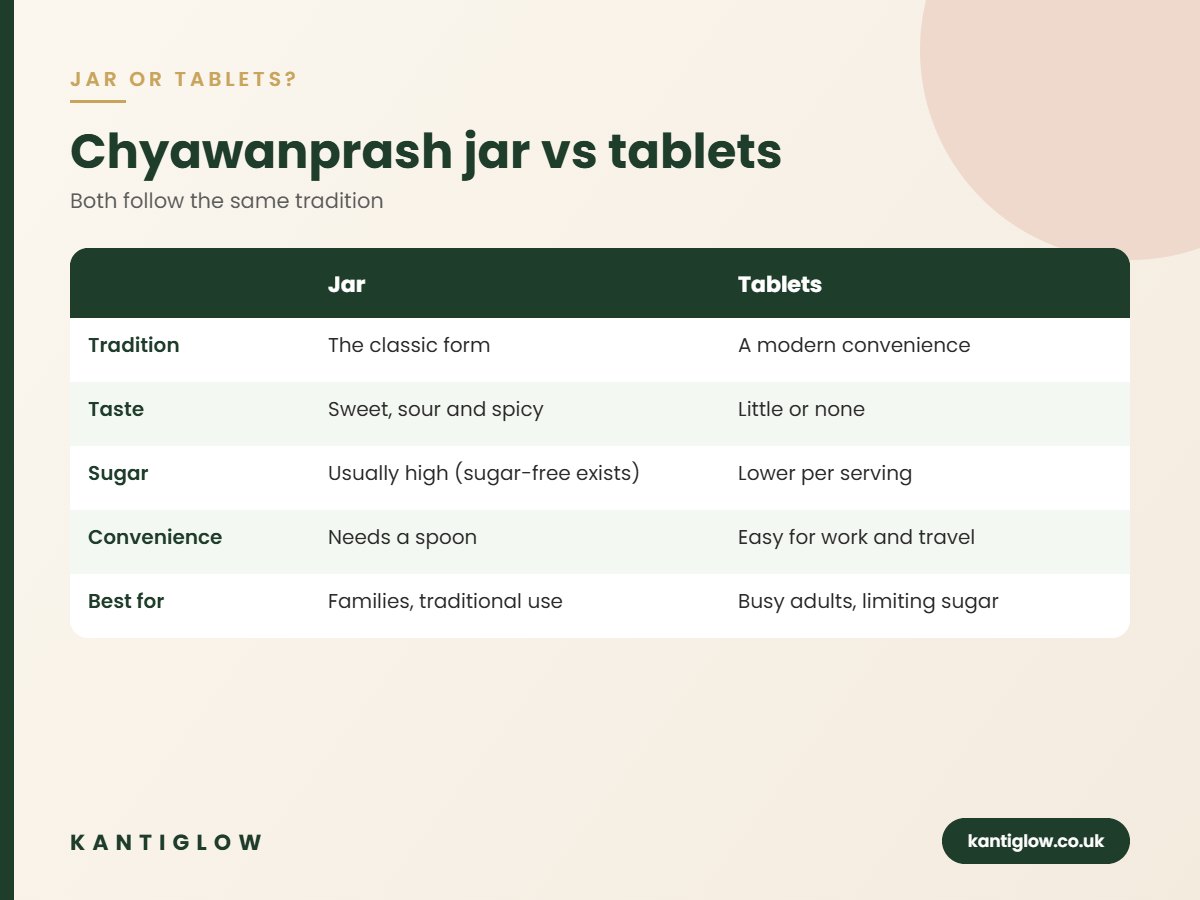
Chyawanprash jar vs tablets
| Jar | Tablets | |
|---|---|---|
| Tradition | The classic form | A modern convenience |
| Taste | Sweet, sour and spicy | Little or none |
| Sugar | Usually high (sugar-free versions exist) | Lower per serving; check the label |
| Convenience | Needs a spoon | Easy for work and travel |
| Best for | Families, traditional use | Busy adults, people limiting sugar |
Read the full comparison: Chyawanprash tablets vs jar.
Is chyawanprash safe? Who should be careful?
- Diabetes or watching sugar: most chyawanprash is high in sugar. Choose a sugar-free option and check with your GP or diabetes nurse.
- Pregnancy or breastfeeding: speak to your midwife, GP or pharmacist first.
- Regular medication: ask your pharmacist, as chyawanprash contains many herbs.
- Vegan or dairy-free: most recipes contain ghee and honey.
- Weight: it is calorie-dense, so count it as part of your daily food.
Which chyawanprash brand is best?
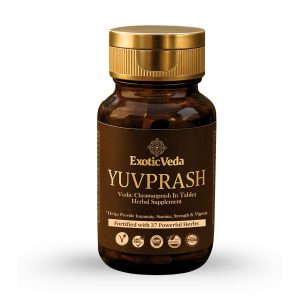
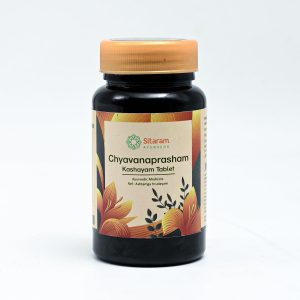
The best choice depends on taste, sugar content and budget. ExoticVeda Yuvprash is a classic-style jar; Zandu and Krishna’s also make classic jars and Dabur makes a sugar-free Chyawanprakash (check current stock); Sitaram Ayurveda, a Kerala house, makes chyawanprash tablets; and our Winter Kit pairs chyawanprash with other seasonal favourites. If you’re new to it, start with a classic jar from a well-known brand. See also our winter warm-up plan.
Frequently asked questions
What is chyawanprash?
Chyawanprash is a traditional Ayurvedic herbal jam made from amla (Indian gooseberry) cooked with 30–50 herbs and spices, ghee, sesame oil and sugar or jaggery, with honey added at the end.
Where does the name chyawanprash come from?
By legend it is named after the sage Chyawan, who was said to have regained his youth by eating it. The recipe is recorded in classical Ayurvedic texts.
What is chyawanprash made of?
Amla is the main ingredient, cooked with herbs and spices such as ashwagandha, pippali, cardamom and cinnamon, plus ghee, sesame oil, sweetener and honey.
What is chyawanprash good for?
It is traditionally eaten in Ayurveda as a rejuvenating tonic, especially in winter. Modern research is limited and there are no authorised health claims in the UK.
How much chyawanprash should I eat a day?
Most adults take 1–2 teaspoons a day. Follow the label on your product.
When is the best time to eat chyawanprash?
Traditionally in the morning, before or with breakfast, often followed by warm milk.
Should I eat chyawanprash on an empty stomach?
Many people take it first thing in the morning. If you prefer, have it with breakfast instead.
Can I eat chyawanprash at night?
Yes. Some people take a second spoon in the evening with warm milk.
How do I eat chyawanprash?
Eat it straight from the spoon and follow with warm milk, or stir it into warm milk, spread it on toast or mix it into porridge.
Can I eat chyawanprash with water instead of milk?
Yes. Warm milk is traditional, but warm water or eating it on its own is fine.
Can I eat chyawanprash with cold milk?
You can, but warm milk is traditional and helps it mix in.
Can children eat chyawanprash?
Yes, it is a traditional family food. Many brands suggest about half a teaspoon for children; check the label for the minimum age.
Can diabetics eat chyawanprash?
Regular chyawanprash is high in sugar. People with diabetes should choose a sugar-free option and check with their GP or diabetes nurse.
Is there a sugar-free chyawanprash?
Yes. Dabur makes a sugar-free Chyawanprakash, and tablets are usually lower in sugar per serving. Check each label.
Can I eat chyawanprash in summer?
Yes. It is traditionally linked with winter, but many people eat it all year, sometimes in a smaller amount in hot weather.
How long should I take chyawanprash for?
Many families eat it daily through autumn and winter. Follow the label and take breaks if you wish.
Can I eat chyawanprash while pregnant?
Speak to your midwife, GP or pharmacist first.
Is chyawanprash safe?
It is a traditional food that most people eat without problems. Take care with the sugar content, and check with a pharmacist if you take medication.
What are the side effects of chyawanprash?
Some people find it too rich or warming, especially in large amounts. Reduce the amount if it upsets your stomach.
Can chyawanprash cause weight gain?
It is calorie-dense because of the sugar and ghee, so count it as part of your daily food.
Is chyawanprash vegan?
Usually not, because most recipes contain ghee and honey. Check the label.
Is chyawanprash gluten-free?
Traditional recipes don’t include wheat, but check the label for allergen information.
Does chyawanprash contain vitamin C?
Amla is naturally rich in vitamin C, but cooking reduces it. Only rely on a vitamin C figure printed on the label.
Does chyawanprash contain ashwagandha?
Many recipes include ashwagandha among their herbs. Check the ingredient list on your jar.
Can I take chyawanprash with other supplements?
Most people can. If you take medication or other herbal products, ask a pharmacist first.
Chyawanprash jar or tablets: which is better?
The jar is the traditional form. Tablets are more convenient and usually lower in sugar per serving.
Which chyawanprash brand is best?
It depends on taste, sugar and budget. Zandu and Krishna’s make classic jars, Dabur offers a sugar-free option and Sitaram makes tablets.
What is the difference between Dabur and Zandu chyawanprash?
Both are established Indian brands with their own recipes. Compare the ingredient list, sugar content and taste. See our Kapiva vs Himalaya vs Dabur guide for more on the brands.
How long does an opened jar of chyawanprash last?
Use it by the date on the pack. Keep the lid tightly closed and always use a clean, dry spoon.
Should chyawanprash be kept in the fridge?
No. Store it in a cool, dry cupboard; it can become too hard to scoop in the fridge.
Why is my chyawanprash hard or grainy?
It thickens in cold weather and sugar can crystallise. Stir it or let the jar warm to room temperature.
What does chyawanprash taste like?
Sweet, sour, spicy and slightly bitter, with a jammy texture.
Can I cook with chyawanprash?
Yes. Stir it into porridge, spread it on toast or mix it into warm milk or yoghurt.
Is chyawanprash legal in the UK?
Yes. It is sold in the UK as a food. It has no authorised health claims.
Where can I buy chyawanprash in the UK?
KantiGlow stocks ExoticVeda Yuvprash chyawanprash, Sitaram chyawanprash tablets and our Winter Kit, delivered across the UK. Zandu, Krishna’s and Dabur chyawanprash are restocked regularly.
This guide is for general information only and is not medical advice. Food supplements are not intended to diagnose, treat, cure or prevent any disease and should not replace a varied, balanced diet and healthy lifestyle. Speak to your GP or pharmacist before taking a supplement if you are pregnant, breastfeeding, taking medication or have a medical condition. Last updated: 14 October 2026.
Pingback: Ayurvedic Morning Routine (Dinacharya) UK Guide | KantiGlow
Pingback: 30-Day Ayurvedic Autumn Wellness Routine (UK) | KantiGlow
Pingback: Ayurvedic Gift Guide 2026: Diwali & Christmas (UK) | KantiGlow
Pingback: Amla UK Guide: Powder vs Juice vs Tablets | KantiGlow