Quick answer: Magnesium glycinate (also called magnesium bisglycinate) is magnesium bound to the amino acid glycine. It is popular because it is generally gentle on the stomach. UK adults need about 270–300 mg of magnesium a day, mostly from food, and taking 400 mg or less a day from supplements is unlikely to cause harm. Always check the label for elemental magnesium: 2,000 mg of magnesium glycinate gives roughly 280 mg of magnesium. Magnesium contributes to a reduction of tiredness and fatigue, to normal muscle function and to normal psychological function.
Key facts
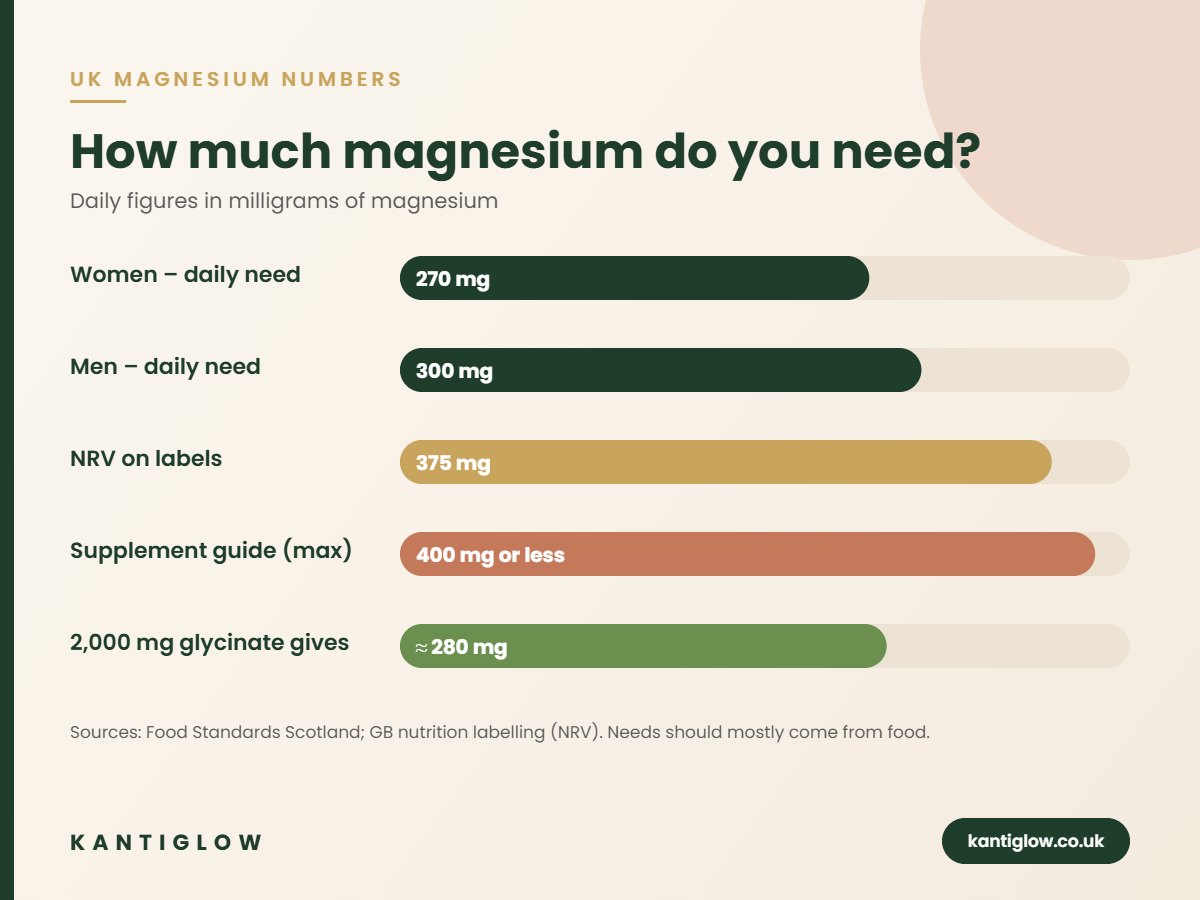
- UK daily need: men 300 mg, women 270 mg (Food Standards Scotland)
- Supplements: 400 mg a day or less is unlikely to cause harm
- Nutrient Reference Value (NRV): 375 mg
- Elemental magnesium in glycinate: about 14% of the compound’s weight
- Best time: evening or with a meal, whichever you’ll stick to
- Main side effect at high doses: loose stools
What does magnesium do?
Magnesium is an essential mineral. These health claims are authorised for magnesium in Great Britain, for supplements providing at least 15% of the NRV per daily dose:
- Magnesium contributes to a reduction of tiredness and fatigue.
- Magnesium contributes to normal psychological function.
- Magnesium contributes to normal functioning of the nervous system.
- Magnesium contributes to normal muscle function.
- Magnesium contributes to normal energy-yielding metabolism.
- Magnesium contributes to electrolyte balance.
- Magnesium contributes to the maintenance of normal bones and teeth.
Magnesium glycinate vs citrate vs malate vs oxide
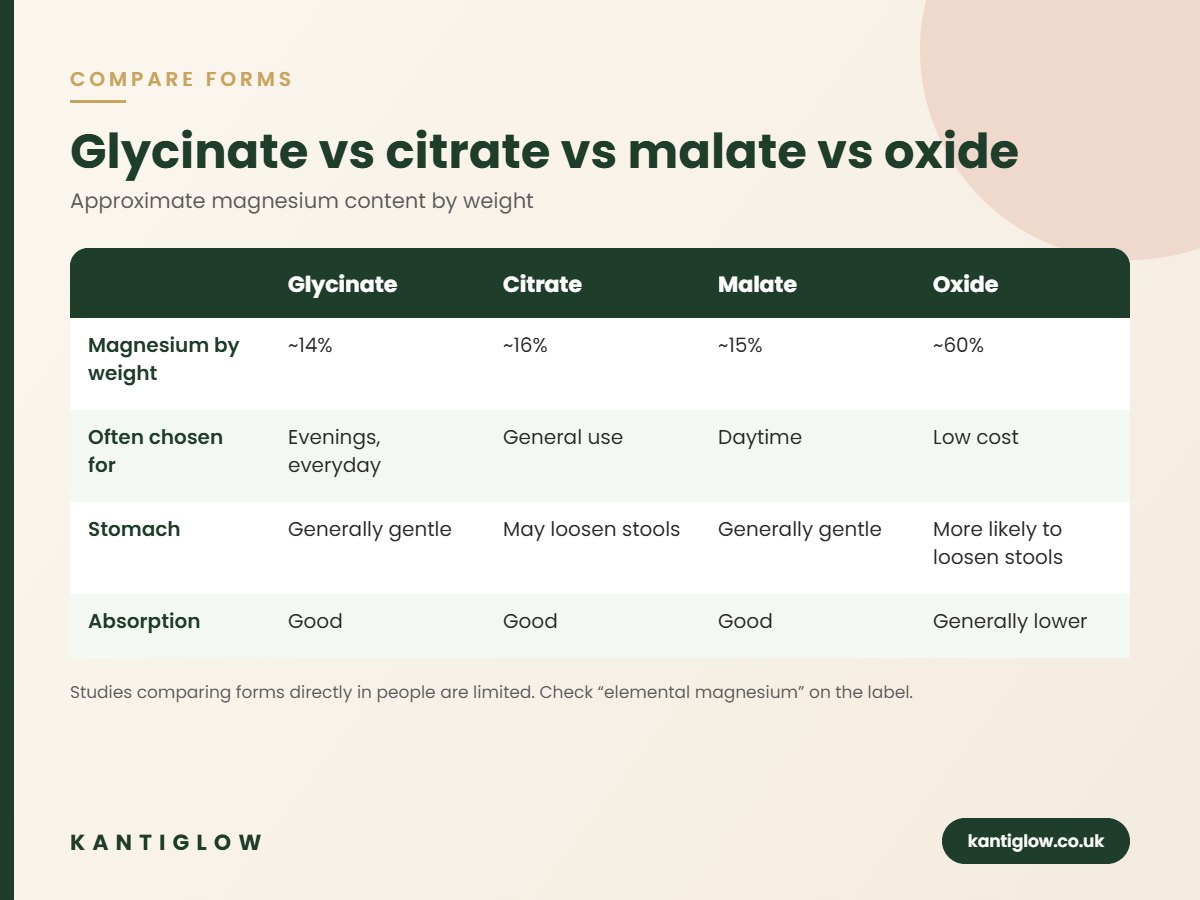
| Form | Approx. magnesium by weight | Often chosen for | Notes |
|---|---|---|---|
| Glycinate (bisglycinate) | ~14% | Everyday and evening routines | Generally gentle on the stomach |
| Citrate | ~16% | General use | Dissolves well; more likely to loosen stools |
| Malate | ~15% | Daytime use | Bound to malic acid |
| Oxide | ~60% | Low cost, small tablets | Lots of magnesium per tablet but generally less well absorbed |
Glycinate is often recommended for people who find other forms upset their stomach. Studies directly comparing forms in people are limited, so choose the form that suits you and stick to a consistent dose.
How do I read a magnesium glycinate label?
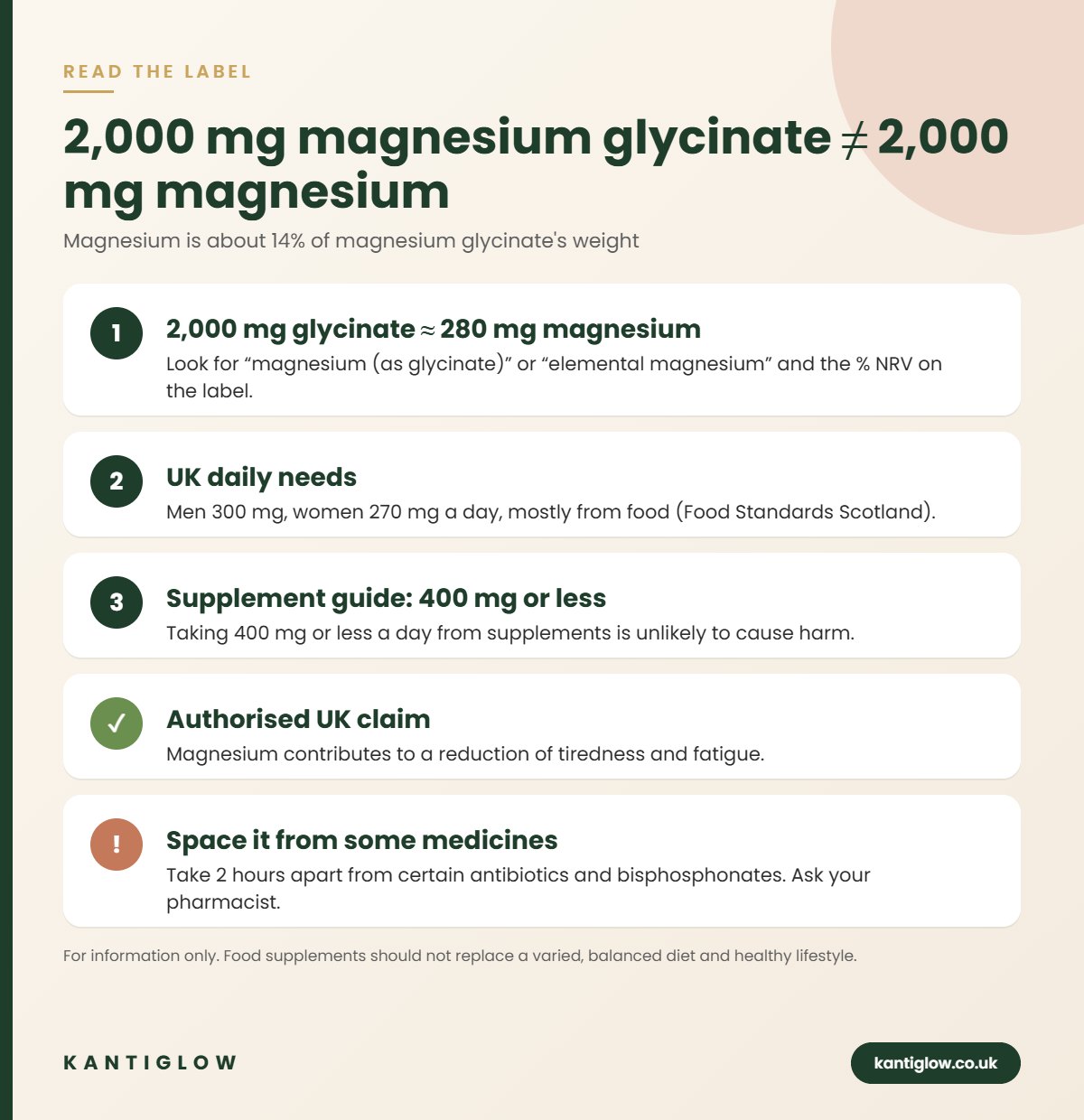
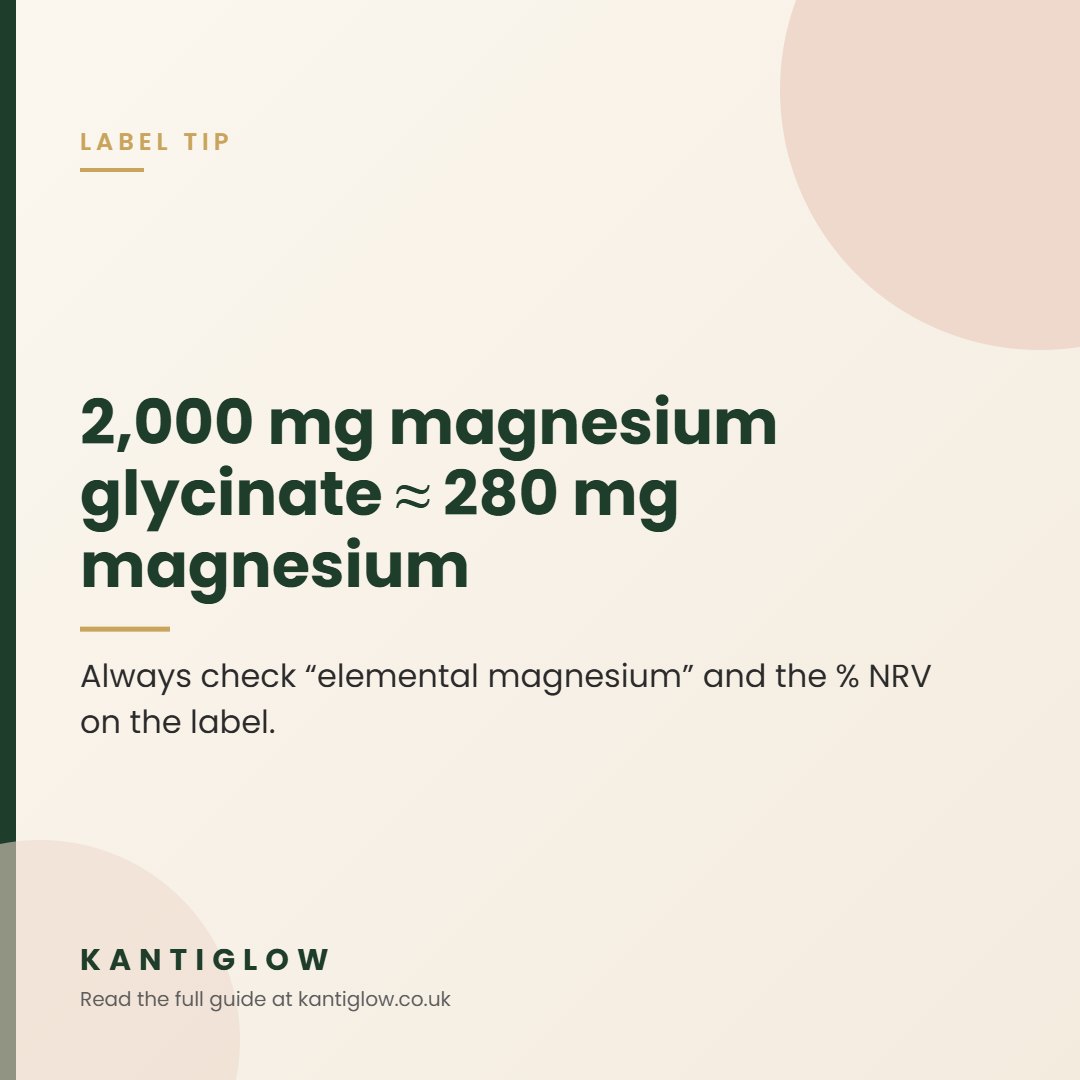
A tablet labelled “2,000 mg magnesium glycinate” does not contain 2,000 mg of magnesium. Because magnesium is only about 14% of the compound, 2,000 mg of magnesium glycinate gives roughly 280 mg of magnesium. Look for a line such as “magnesium (as glycinate)” or “elemental magnesium” and a % NRV, and add up magnesium from any other products you take, such as a multivitamin.
Our magnesium glycinate picks
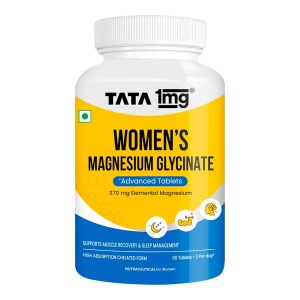
£13.99
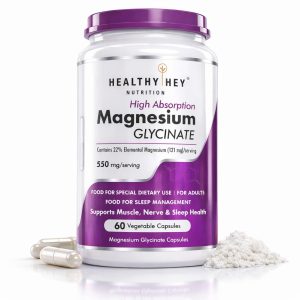
£16.99
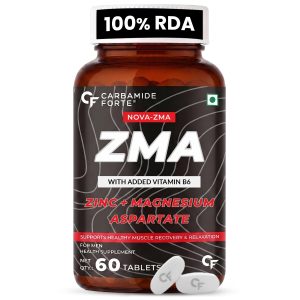
£14.99
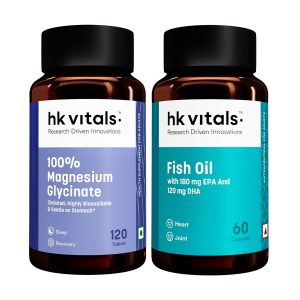
£18.99
When is the best time to take magnesium glycinate?
There is no single best time. Many people take it in the evening as part of a wind-down routine, or with dinner to avoid stomach upset. Consistency matters more than timing. See our evening wind-down plan for a simple routine.
Who should be careful with magnesium supplements?
- People with kidney disease should only take magnesium if their doctor advises it.
- Take magnesium at least 2 hours apart from certain antibiotics (tetracyclines, quinolones) and osteoporosis medicines (bisphosphonates), and ask your pharmacist.
- Pregnant or breastfeeding women should take supplements only on a healthcare professional’s advice.
- If you already take a multivitamin or another magnesium product, add the doses together and stay within 400 mg a day from supplements.
Magnesium glycinate or ashwagandha?
Magnesium is an essential mineral with authorised claims; ashwagandha is a traditional herb with no authorised claims and is under UK safety review. Read Ashwagandha vs magnesium and Is ashwagandha safe? before choosing.

£109.00
£14.99
Frequently asked questions
What is magnesium glycinate?
Magnesium glycinate (or bisglycinate) is magnesium bound to the amino acid glycine. It is a popular supplement form because it is generally gentle on the stomach.
What is magnesium glycinate good for?
Magnesium contributes to a reduction of tiredness and fatigue, normal muscle function, normal psychological function and normal functioning of the nervous system.
How much magnesium do I need a day in the UK?
Men need 300 mg and women 270 mg a day. Most of this should come from a varied diet.
How much magnesium glycinate should I take?
Follow the label and check the elemental magnesium per daily dose. Most adults should stay at 400 mg or less a day of magnesium from supplements.
Is 2,000 mg of magnesium glycinate too much?
Not necessarily. 2,000 mg of magnesium glycinate gives roughly 280 mg of actual magnesium. Check the label for the elemental figure.
What does “elemental magnesium” mean?
It is the amount of magnesium itself in the compound, not the total weight of magnesium plus glycine. This is the number that counts towards your daily intake.
How much magnesium is too much?
Taking 400 mg or less a day from supplements is unlikely to cause harm. Higher doses can cause diarrhoea.
When is the best time to take magnesium glycinate?
Any time that suits you. Many people take it in the evening or with dinner.
Should I take magnesium glycinate at night?
Many people do, as part of an evening routine. There is no authorised claim for magnesium and sleep.
Does magnesium glycinate help you sleep?
Many people include it in a wind-down routine. Magnesium contributes to normal psychological function and normal functioning of the nervous system, but there is no authorised claim for sleep.
Should magnesium glycinate be taken with food?
You can take it with or without food. Taking it with a meal can help if supplements upset your stomach.
Can I take magnesium glycinate every day?
Yes, at the label dose and within 400 mg a day of magnesium from supplements.
How long does magnesium glycinate take to work?
There is no set time. Magnesium supports normal body functions over time, so take it consistently as part of a balanced diet.
Magnesium glycinate vs citrate: which is better?
Glycinate is generally gentler on the stomach. Citrate dissolves well but is more likely to loosen stools.
Magnesium glycinate vs malate: what is the difference?
Malate is bound to malic acid and is often chosen for daytime use. Glycinate is often chosen for evenings. Both provide magnesium.
Is magnesium oxide bad?
It is not bad, but it is generally less well absorbed and more likely to have a laxative effect, even though it contains a lot of magnesium per tablet.
What is the difference between glycinate and bisglycinate?
They are usually the same thing. Bisglycinate means each magnesium is bound to two glycine molecules.
What is chelated magnesium?
Chelated magnesium is bound to an amino acid, such as glycine. Magnesium glycinate is a chelated form.
Can magnesium glycinate cause diarrhoea?
It is less likely than some forms, but high doses of any magnesium can cause loose stools. Lower the dose if this happens.
What are the side effects of magnesium glycinate?
It is usually well tolerated. High doses can cause loose stools, nausea or stomach cramps.
Who should not take magnesium supplements?
People with kidney disease, unless their doctor advises it. People on certain antibiotics or osteoporosis medicines should ask a pharmacist about timing.
Can I take magnesium with antibiotics?
Some antibiotics, such as tetracyclines and quinolones, should be taken at least 2 hours apart from magnesium. Ask your pharmacist.
Can I take magnesium glycinate while pregnant?
Only take supplements in pregnancy on the advice of your midwife, GP or pharmacist.
Can I take magnesium with vitamin D?
Yes, they are often taken together. Stay within the label dose of each.
Can I take magnesium with ashwagandha?
Many people do. If you take medication or have a medical condition, ask a pharmacist first.
Can I take magnesium with zinc or calcium?
Yes, but very high doses of minerals together may compete for absorption. Some people take them at different times of day.
Can I take magnesium with coffee?
Yes. Some people prefer to take it a little apart from coffee or tea, but there is no strict rule.
What foods are high in magnesium?
Green leafy vegetables such as spinach, nuts, wholegrain bread, fish, meat and dairy foods.
How do I know if I need more magnesium?
Most people get enough from a balanced diet. If you are concerned, speak to your GP rather than guessing.
What does NRV mean on a magnesium label?
NRV is the Nutrient Reference Value. For magnesium it is 375 mg, so 100% NRV means 375 mg a day.
Is magnesium glycinate vegan?
Glycine can be made without animal products, but capsule shells vary. Check the product is labelled vegetarian or vegan.
Are Indian magnesium glycinate brands good?
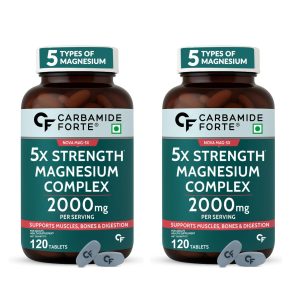
Brands such as Tata 1mg, HealthyHey, HK Vitals and Carbamide Forte make magnesium glycinate. Compare the elemental magnesium per serving and price per day.
Tablets or capsules: which is better?
Both work. Choose the one you find easier to swallow and check the elemental magnesium per serving.
Can children take magnesium glycinate?
Only use children’s products designed for their age, and ask a pharmacist first.
Where can I buy magnesium glycinate in the UK?
KantiGlow stocks magnesium glycinate from Tata 1mg, HealthyHey, HK Vitals and Carbamide Forte, delivered across the UK.
This guide is for general information only and is not medical advice. Food supplements are not intended to diagnose, treat, cure or prevent any disease and should not replace a varied, balanced diet and healthy lifestyle. Speak to your GP or pharmacist before taking a supplement if you are pregnant, breastfeeding, taking medication or have a medical condition. Last updated: 14 October 2026.