Quick answer: Of the five best-known Ayurvedic herbs for blood sugar, fenugreek (methi) has the most consistent trial evidence. Amla and gurmar have some supportive studies, but they are few, small or poorly controlled. Cinnamon and karela have mixed results, with some reviews finding no clear effect. None of them cures diabetes or replaces prescribed treatment, and Diabetes UK does not recommend herbal supplements for diabetes. If you take medication, speak to your GP or pharmacist before using any of them as a supplement.
Key facts
- Most trial evidence: fenugreek seed (methi)
- Some supportive but limited evidence: amla and gurmar
- Mixed or inconsistent evidence: cinnamon and karela
- All five are traditional foods or herbs in Indian cooking and Ayurveda
- Any herb that lowers glucose can add to the effect of diabetes medicines
- No herb is an authorised treatment for diabetes in the UK
How we ranked them
We looked at published systematic reviews and meta-analyses of human trials for each herb and asked three questions. How many trials are there? Were they randomised and controlled? Do the reviews agree with each other? The ranking below reflects how consistent the evidence is, not how powerful the herb is. It is our reading of the research, not medical advice, and it will change as better trials are published.
1. Methi (fenugreek): the most trial evidence
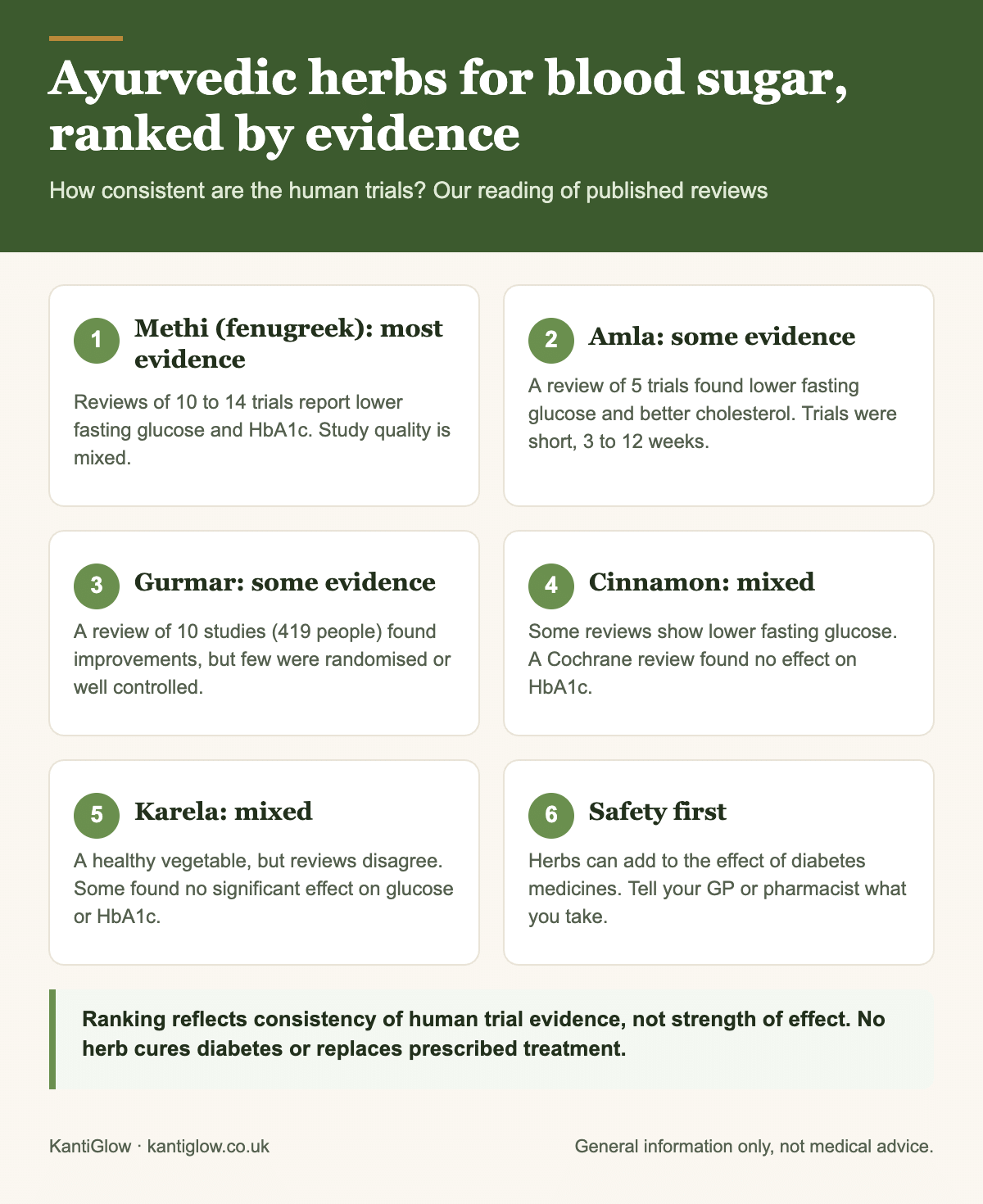
A 2023 review of 10 randomised trials with 706 participants found that fenugreek seed lowered fasting glucose, two-hour glucose and HbA1c in people with type 2 diabetes or prediabetes. Another 2023 review of 14 trials agreed on HbA1c but rated only four of the trials as high quality. Side effects are mostly digestive. See our full methi guide.
2. Amla (Indian gooseberry): promising, short trials
A 2023 review of five randomised trials found that amla supplementation was followed by lower fasting blood glucose, LDL cholesterol and triglycerides, and higher HDL cholesterol. The participants were mostly aged 40 to 58 and the trials lasted only 3 to 12 weeks, so the authors called for more research. Amla is a sour fruit rich in vitamin C and is generally well tolerated as a food.
3. Gurmar (Gymnema sylvestre): positive, but weak study designs
Gurmar means sugar destroyer in Hindi, because chewing the leaf temporarily dulls the taste of sweetness. A 2021 review pooled 10 studies with 419 participants and reported lower fasting glucose, post-meal glucose and HbA1c. However, results were compared with each person’s own starting values, only two of the studies were randomised, and the type of control group was often unclear. There is also a published case report of liver injury linked to gurmar. It may be useful, but the evidence does not yet support firm conclusions.
4. Cinnamon: results disagree
Some pooled analyses report a fall in fasting blood glucose with cinnamon, while a Cochrane review found no effect on HbA1c in people with type 1 or type 2 diabetes. Trials have used different species and very different amounts. Cassia cinnamon, the common supermarket type, contains coumarin, which can affect the liver in large or prolonged amounts. Ceylon cinnamon contains much less. As a spice in food it is fine.
5. Karela (bitter melon): a good vegetable, uncertain as a supplement
Karela is one of the most widely used traditional remedies for diabetes, yet the trials are inconsistent. A 2014 meta-analysis of four randomised trials found no significant effect on HbA1c or fasting glucose. A 2024 review concluded that its metabolic effect cannot be determined from the available evidence. Some newer analyses report small improvements and call for better studies. Karela can cause stomach upset, should be avoided in supplement form in pregnancy, and has been linked with low blood sugar when combined with diabetes medicines.
What about berberine?
Berberine, found in the Ayurvedic herb daruharidra, has a separate and larger body of research. We cover it in our berberine guide, including its interactions with medicines.
How to use this ranking
Treat these herbs as foods first. Methi in flour and dal, amla in chutney, cinnamon on porridge and karela as a sabzi are all reasonable parts of a healthy diet. If you want to use a supplement, choose one herb rather than several, follow the label, and tell your GP or pharmacist, especially if you take insulin or a sulfonylurea such as gliclazide. Weight, food and activity will always do more for blood sugar than any herb.
Frequently asked questions
Which Ayurvedic herb has the best evidence for blood sugar?
Fenugreek seed (methi). Reviews of 10 to 14 clinical trials report modest improvements in fasting glucose and HbA1c, although trial quality is mixed.
Can Ayurvedic herbs cure diabetes?
No. There is no known cure for diabetes. Herbs do not replace weight management, healthy eating, activity or prescribed medication.
Does Diabetes UK recommend herbal remedies?
No. Diabetes UK does not recommend herbal remedies or supplements because there is not enough evidence that they are safe and effective for people with diabetes.
How did you rank the herbs?
By how consistent the published human trial evidence is: the number of trials, whether they were randomised and controlled, and whether reviews agree.
Is karela good for diabetes?
Karela is a healthy vegetable, but trials are inconsistent. One meta-analysis found no significant effect on HbA1c or fasting glucose, and another said its effect cannot be determined.
Does karela juice lower blood sugar?
Evidence is mixed and juice strength varies widely. It can cause stomach upset and may contribute to low blood sugar if you take diabetes medication.
Who should avoid karela supplements?
Avoid them in pregnancy, and seek advice first if you take diabetes medication or have G6PD deficiency, as karela seeds can trigger a reaction in that condition.
What are the side effects of karela?
Stomach pain, diarrhoea and nausea are the most commonly reported. Low blood sugar has been reported when it is combined with diabetes medicines.
What is gurmar?
Gurmar is Gymnema sylvestre, a climbing plant used in Ayurveda. The name means sugar destroyer because the leaf temporarily dulls the taste of sweetness.
Does gurmar lower blood sugar?
A review of 10 studies with 419 participants reported lower fasting glucose and HbA1c, but most studies were not randomised and controls were unclear.
Is gurmar safe?
Short-term use appears well tolerated in studies, but data are limited and there is a published case report of liver injury. Seek advice if you have liver disease.
Does gurmar really reduce sugar cravings?
Chewing the leaf or using a lozenge temporarily blocks sweet taste, which may make sweet foods less appealing. Good evidence for lasting effects on cravings is limited.
Does amla lower blood sugar?
A review of five randomised trials found lower fasting glucose after amla supplementation. The trials were short, 3 to 12 weeks, so more research is needed.
How is amla usually taken?
As fresh or dried fruit, chutney, pickle, powder or capsules. It is very sour and naturally rich in vitamin C.
Is amla safe every day?
As a food, amla is generally well tolerated. For supplements, follow the label and check with a pharmacist if you take regular medication.
Does amla help cholesterol?
The same review reported lower LDL cholesterol and triglycerides and higher HDL cholesterol, again from short trials.
Does cinnamon lower blood sugar?
Results disagree. Some analyses show lower fasting glucose, but a Cochrane review found no effect on HbA1c.
Which cinnamon is safer, cassia or Ceylon?
Ceylon cinnamon contains far less coumarin than cassia. Coumarin can affect the liver in large or prolonged amounts.
How much cinnamon is too much?
There is no agreed safe supplement dose. Using cinnamon as a spice in food is fine, but avoid taking spoonfuls of cassia cinnamon daily.
Can cinnamon harm the liver?
Large or long-term intakes of cassia cinnamon may, because of its coumarin content. Anyone with liver disease should be cautious.
Does fenugreek lower blood sugar?
Reviews of clinical trials report modest reductions in fasting glucose and HbA1c. See our methi guide for details and cautions.
What are the side effects of fenugreek?
Wind, bloating, loose stools and a maple-syrup smell in sweat or urine. People with peanut or chickpea allergy may react to it.
Is berberine an Ayurvedic herb?
Berberine is a compound found in daruharidra (tree turmeric), which is used in Ayurveda. We cover it in a separate guide.
Does turmeric lower blood sugar?
Turmeric is studied mainly for inflammation. Evidence for blood sugar is limited, and concentrated turmeric supplements have been linked with rare liver problems.
Can I take several of these herbs together?
Combinations have not been well studied. Taking several glucose-lowering herbs may raise the risk of low blood sugar, especially with medication.
Can I take these herbs with metformin?
Ask your GP or pharmacist first. Metformin alone rarely causes hypos, but any added glucose-lowering product should be discussed.
Are these herbs risky with insulin or gliclazide?
They can be. Insulin and sulfonylureas can cause low blood sugar, and herbs that lower glucose may add to that effect.
Are herbs safer than medication?
Not automatically. Natural does not mean safe. Herbs can cause side effects and interact with medicines, and they are less well studied.
Are multi-herb diabetes formulas better?
There is little good evidence for combination products, and it is harder to know what is causing an effect or a side effect. Many also make claims that are not permitted in the UK.
Can herbs replace my diabetes medication?
No. Never stop or reduce prescribed medication because you have started a herb. Any change should be agreed with your doctor.
How long do herbs take to work?
Trials ran from a few weeks to several months. HbA1c reflects two to three months, so no meaningful change would show sooner than that.
Should I take herbs as food or as supplements?
Start with food. Methi, karela, amla and cinnamon are normal parts of Indian cooking. Supplements give larger amounts and carry more risk of interactions.
Are these herbs safe in pregnancy?
Normal food amounts are generally fine, but supplement-level doses of fenugreek, karela and gurmar should be avoided unless a doctor or midwife advises otherwise.
Can children take these herbs?
As part of family meals, yes. Herbal supplements are not recommended for children unless a healthcare professional advises it.
Do these herbs help with weight loss?
None is a proven weight-loss treatment. Fibre-rich herbs like fenugreek may help you feel full, but food choices and activity matter far more.
Can herbs prevent diabetes?
There is no evidence that any herb prevents diabetes. Diabetes UK says there is no evidence that supplements such as karela, methi or cinnamon prevent it.
What does Ayurveda call diabetes?
Classical texts describe prameha and madhumeha, meaning sweet urine. Bitter and astringent herbs such as these were traditionally recommended alongside diet and exercise.
How do I choose a quality herbal product?
Look for the plant name and part, the amount per serving, a batch number, a UK or EU address, and no claims to treat or cure disease.
Can herbal products be contaminated?
Yes, some imported products have been found to contain heavy metals or undeclared ingredients. Buy from sellers who can show testing and proper labelling.
Should I tell my doctor about herbs I take?
Yes, always. The NHS advises telling your doctor or pharmacist about any herbal remedies or supplements before starting medicines such as metformin.
Should I monitor my blood sugar when starting a herb?
If you already test at home and take medicines that can cause hypos, ask your diabetes team whether to test more often for the first few weeks.
When should I see my GP?
See your GP before combining herbs with medication, or if you have symptoms of high or low blood sugar such as thirst, frequent urination, shakiness or sweating.
Sources
- The effect of fenugreek in type 2 diabetes and prediabetes: meta-analysis (2023)
- The impact of Emblica officinalis (amla) on lipid profile, glucose and C-reactive protein: meta-analysis (2023)
- The effect of Gymnema sylvestre on glycaemic control in type 2 diabetes: meta-analysis (2021)
- The effect of bitter melon in patients with diabetes mellitus: meta-analysis (2014)
- The metabolic effect of Momordica charantia cannot be determined: meta-analysis (2024)
- Supplements for diabetes mellitus: a review of the literature
- Diabetes UK: Herbal and food supplements
This guide is general information, not medical advice. It does not replace advice from your GP, pharmacist or diabetes team. Do not stop or change prescribed medication without speaking to them. Food supplements are not intended to diagnose, treat, cure or prevent any disease.