Quick answer: Type 2 diabetes can sometimes be put into remission, which means blood sugar returns below the diabetes range without diabetes medication. The driver with the strongest evidence is substantial weight loss, especially in the first few years after diagnosis. In England the NHS Type 2 Diabetes Path to Remission Programme offers this for free to eligible people. No Ayurvedic herb has been shown to produce remission. Ayurvedic routine can help you keep weight off, but it works alongside medical care, not instead of it.
Key facts
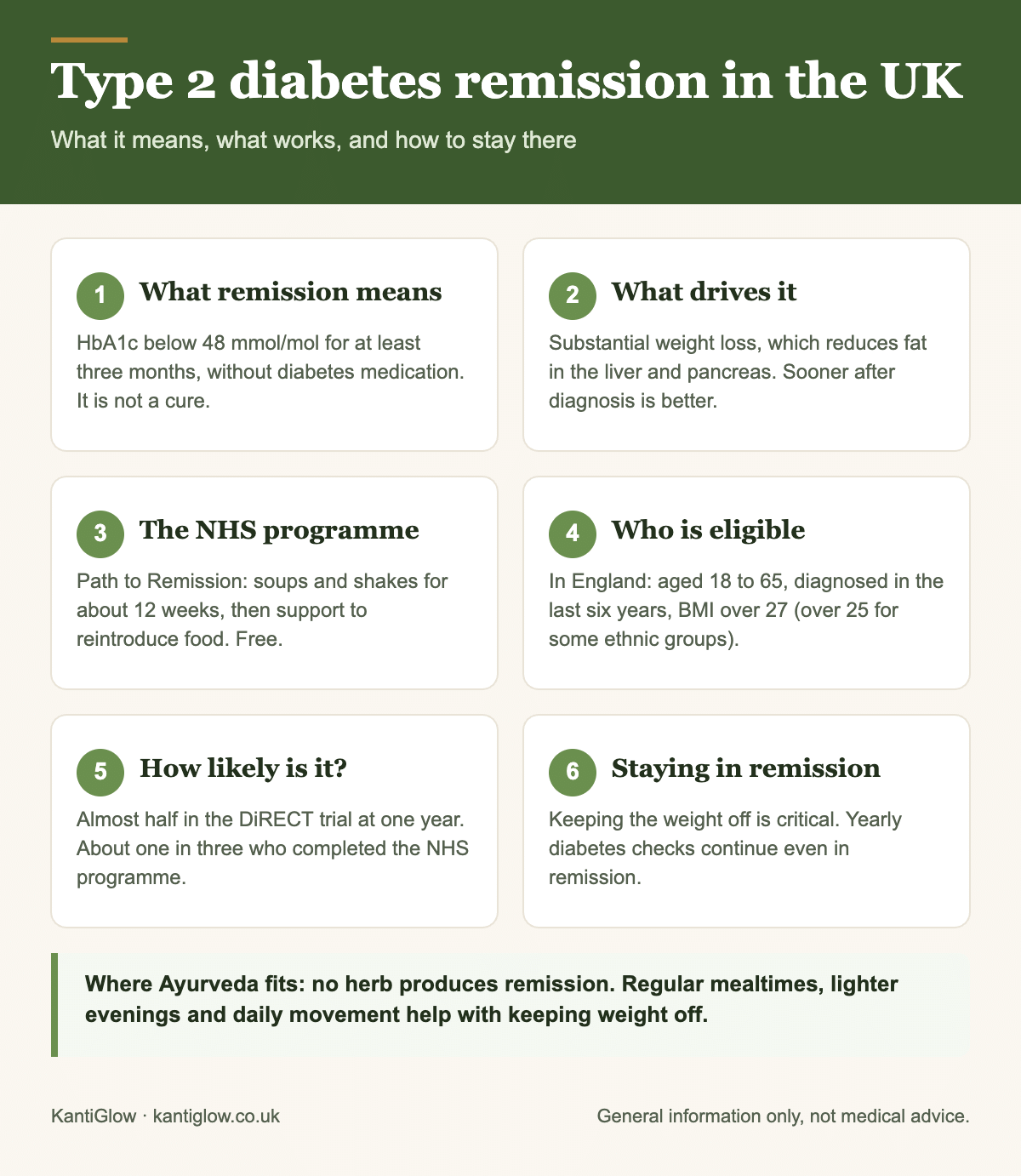
- Remission: HbA1c below 48 mmol/mol for at least three months without diabetes medication
- It is not a cure: blood sugar can rise again, so yearly checks continue
- Strongest evidence: substantial weight loss, typically 10 kg or more
- DiRECT trial: almost half of participants were in remission after one year
- NHS programme in practice: about one in three people who completed it reached remission
- Eligibility in England includes age 18 to 65 and diagnosis within the last six years
- Remission applies to type 2 diabetes, not type 1
What remission means
Remission means your blood sugar has returned below the range for diabetes and stays there without diabetes medication. Diabetes UK defines it as an HbA1c below 48 mmol/mol for at least three months after stopping glucose-lowering medicines. Some people call this reversing type 2 diabetes, but remission is the more accurate word because blood sugar can rise again. It is not a cure.
Remission applies only to type 2 diabetes. Type 1 diabetes is an autoimmune condition and cannot be put into remission through weight loss.
What the evidence shows
Type 2 diabetes was long seen as a condition that only gets worse. That view has changed. The key finding from UK research is that excess fat in the liver and pancreas disrupts how the body handles glucose, and that losing enough weight can reverse the process.
- DiRECT trial: funded by Diabetes UK. Almost half of people who followed a low-calorie total diet replacement programme were in remission after one year. A quarter of participants lost 15 kg or more, and 86% of those reached remission.
- NHS programme in practice: a study published in The Lancet Diabetes and Endocrinology found that 32% of people who completed the programme and had two blood measurements were in remission. Greater weight loss meant higher remission rates.
- Timing matters: people referred more than a year after diagnosis were less likely to reach remission than those referred sooner.
- South Asian adults: the STANDby trial in Glasgow found weight-loss and remission rates comparable to those seen in white groups.
The NHS Type 2 Diabetes Path to Remission Programme
This is a free programme in England, run jointly by NHS England and Diabetes UK. Participants replace normal meals with low-calorie soups and shakes for about 12 weeks, are then supported to reintroduce food, and receive ongoing help to keep the weight off over a year. It is delivered in person or digitally.
The eligibility criteria include:
- aged 18 to 65
- type 2 diabetes diagnosed within the last six years
- BMI over 27 for people from White ethnic groups, or over 25 for people from Black, Asian and other ethnic groups
There are further medical criteria and the programme is not suitable for everyone. Referral is through your GP surgery. Scotland delivers a similar programme called Counterweight Plus through its health boards. If you are not eligible, ask your GP or diabetes team what is available locally.
Other routes
Total diet replacement is not the only way. Remission has also been achieved through other structured weight-loss approaches and through weight-loss (bariatric) surgery. Newer weight-loss medicines can lower weight and blood sugar substantially, though by definition remission means normal blood sugar without glucose-lowering medication. Scottish guidance notes that many people can achieve remission without a formal programme if they are pointed towards effective methods of weight loss. Any very low-calorie diet should be done with medical supervision if you take diabetes or blood pressure medication, because doses often need reducing.
Where Ayurveda fits
No Ayurvedic herb has been shown in trials to put type 2 diabetes into remission, and we would not claim one does. What Ayurveda offers is structure for the hardest part: keeping weight off. Regular mealtimes, the main meal at midday, a light early evening meal, less sweet and fried food, and daily movement are all habits that make weight maintenance easier.
Kitchen herbs such as methi have some evidence for modest effects on blood sugar. They are foods, not treatments. See our guides on methi and on taking herbs with diabetes medication.
Staying in remission
Maintaining weight loss is what sustains remission. There is no guarantee it will last, and blood sugar can rise again as you get older or if weight returns. That is why people in remission are still invited for yearly diabetes checks, including eye screening. If remission ends, it is not a failure: the time spent with normal blood sugar still benefits your long-term health.
Frequently asked questions
What is type 2 diabetes remission?
Remission means blood sugar returns below the diabetes range without diabetes medication. It is usually defined as an HbA1c below 48 mmol/mol for at least three months.
Is remission the same as a cure?
No. Blood sugar can rise again, so remission needs maintaining and yearly checks continue. There is currently no known cure for diabetes.
Is reversing diabetes the same as remission?
People use the terms to mean the same thing. Diabetes UK and the NHS prefer remission because blood sugar levels can rise again.
Can type 2 diabetes really be reversed?
It can be put into remission in some people, mainly through substantial weight loss. It is more likely soon after diagnosis.
Can type 1 diabetes go into remission?
No. Type 1 diabetes is an autoimmune condition. Weight loss does not put it into remission, and insulin must never be stopped.
What HbA1c counts as remission?
Below 48 mmol/mol, or 6.5%, sustained for at least three months without glucose-lowering medication.
How much weight do I need to lose?
In the DiRECT trial, greater weight loss meant more remission. Of those who lost 15 kg or more, 86% reached remission. Around 10 kg or more is a common target.
Why does weight loss cause remission?
Losing weight reduces excess fat in the liver and pancreas, which helps insulin production and insulin action recover.
How quickly can remission happen?
Blood sugar can fall within weeks of substantial weight loss, but remission is only confirmed after at least three months off medication with a normal HbA1c.
How long does remission last?
It varies. Research shows some people stay in remission for several years. Keeping the weight off is the most important factor.
Can diabetes come back after remission?
Yes. If weight returns, or with age, blood sugar can rise again. That is why regular checks continue.
What was the DiRECT trial?
A UK trial funded by Diabetes UK. Almost half of participants on a low-calorie total diet replacement programme were in remission after one year.
What is the NHS Path to Remission Programme?
A free NHS programme in England that uses low-calorie soups and shakes for about 12 weeks, followed by support to reintroduce food and maintain weight loss.
Who is eligible for the NHS programme?
Criteria include being aged 18 to 65, having type 2 diabetes diagnosed within the last six years, and a BMI over 27, or over 25 for Black, Asian and other ethnic groups.
How do I get referred?
Ask your GP surgery or diabetes nurse. They check the full criteria and make the referral.
What is the soups and shakes diet?
It is the informal name for total diet replacement: nutritionally complete low-calorie products, around 800 to 900 calories a day, used in place of normal meals for about 12 weeks.
Does the NHS programme work?
A study found 32% of people who completed it and had two blood measurements were in remission. Higher weight loss was linked with higher remission rates.
Is the programme available in Scotland, Wales and Northern Ireland?
Scotland offers Counterweight Plus through its health boards. Wales and Northern Ireland have their own services. Ask your GP surgery what is available.
What if I am not eligible?
Speak to your GP or diabetes team about other weight management services. Losing weight still has major benefits even without full remission.
Can I do a very low-calorie diet on my own?
Speak to your GP first, especially if you take diabetes or blood pressure medication, because doses often need reducing to stay safe.
Do I stop my medication on the programme?
Medication changes are made by the clinical team. Do not stop or reduce medicines yourself.
Can I reach remission without soups and shakes?
Yes, some people do. Scottish guidance notes many people can achieve remission through other effective weight-loss methods.
Does a low-carb diet lead to remission?
Low-carbohydrate diets help some people lose weight and lower blood sugar. What matters most is the amount of weight lost and whether you can maintain it.
Can weight-loss surgery lead to remission?
Yes. Bariatric surgery produces remission in many people with type 2 diabetes and obesity. Your GP can explain the NHS criteria.
Do weight-loss injections count as remission?
These medicines can lower weight and blood sugar substantially, but remission is defined as normal blood sugar without glucose-lowering medication.
Is remission possible if I have had diabetes for ten years?
It is less likely the longer you have had diabetes, but weight loss still improves blood sugar, blood pressure and medication needs.
Is remission possible if I am not overweight?
It is less studied. Some people with a normal BMI still carry excess fat internally. Discuss your options with your diabetes team.
Can South Asian people achieve remission?
Yes. The STANDby trial in UK South Asian adults found weight-loss and remission rates comparable to those in white groups.
Does exercise alone lead to remission?
Exercise helps blood sugar and weight maintenance, but remission studies are built mainly around weight loss through diet.
Do I still need check-ups in remission?
Yes. You should still be invited for yearly diabetes reviews, including eye screening, because complications can still develop.
Will remission lower my risk of complications?
Time spent with normal blood sugar is thought to reduce long-term risk, and weight loss also improves blood pressure and cholesterol.
What happens if I regain weight?
Blood sugar may rise again. Tell your GP or nurse early. Returning to the habits that worked often helps.
Can Ayurveda put diabetes into remission?
No Ayurvedic herb or treatment has been shown in trials to produce remission. Ayurvedic routine can support weight loss and maintenance alongside medical care.
Can herbs like methi or karela produce remission?
No. Some trials show modest effects on blood sugar, particularly for fenugreek, but that is not remission.
What does Ayurveda recommend for keeping weight off?
Regular mealtimes, the main meal at midday, a light early evening meal, less sweet and fried food, and daily physical activity.
Is fasting used in Ayurveda for diabetes?
Ayurveda favours lighter eating rather than prolonged fasting. If you take diabetes medication, any fasting plan should be agreed with your healthcare team.
Can I use herbal supplements during a remission programme?
Tell the programme team first. Calorie restriction already lowers blood sugar, so adding glucose-lowering herbs could increase the risk of hypos.
Does remission affect my driving licence or insurance?
Rules depend on your treatment and insurer. Check DVLA guidance on diabetes and driving, and tell your insurer about changes to your diagnosis.
How will my GP record remission?
Your record is coded as type 2 diabetes in remission, so that you continue to be invited for yearly checks.
How much does the NHS programme cost?
It is free for eligible people in England, including the soups and shakes.
Is remission worth trying if it might not last?
Yes. Even temporary remission and partial weight loss improve health, and many people reduce their medication.
Where can I find reliable information?
Diabetes UK and NHS England both publish clear information on remission and the Path to Remission Programme.
When should I speak to my GP?
Before starting any very low-calorie diet, before changing medication, and whenever you want to discuss whether remission is realistic for you.
Sources
- NHS England: NHS Type 2 Diabetes Path to Remission Programme
- British Heart Foundation: Can you reverse type 2 diabetes?
- SIGN: Prevention and remission of type 2 diabetes, achieving remission
- University of Glasgow: South Asian people undergo type 2 diabetes remission with low calorie diets
- Diabetes UK: Herbal and food supplements
This guide is general information, not medical advice. It does not replace advice from your GP, pharmacist or diabetes team. Do not stop or change prescribed medication without speaking to them. Food supplements are not intended to diagnose, treat, cure or prevent any disease.