Quick answer: Feeling run down for two or three weeks after a cold, flu or other virus is common, and it usually lifts with rest, sleep, regular food and a gradual return to activity. The key is pacing: do a little more every few days and step back if you feel worse the next day, instead of pushing through. Chyawanprash, the amla-based herbal jam, is the traditional Ayurvedic convalescent tonic. It is a pleasant food with a long history, but it has not been shown to speed recovery, and the classic jar is more than half sugar. Tablets and sugar-free versions avoid the sugar but are different products. See a GP if tiredness lasts more than a few weeks, is getting worse, or comes with breathlessness, chest pain or weight loss.
Key facts
- Tiredness is common after a viral illness and usually improves on its own.
- Sleep, a healthy diet, regular meals, drinking enough and gentle exercise are the recommended ways to fight tiredness.
- See a GP if you have felt tired for a few weeks with no clear improvement, or if it is affecting your daily life.
- Everyone in the UK is advised to consider 10 micrograms of vitamin D a day in autumn and winter.
- Classic chyawanprash is a sweet preserve; people with diabetes need to count it as sugar.
- Herbal products are not recommended for children, in pregnancy or breastfeeding, without advice.
Why you still feel run down
Fighting an infection uses a great deal of energy, and the immune system keeps working after the fever and cough have gone. Add several nights of broken sleep, days of eating little, time in bed that has taken the edge off your fitness, and often a backlog of work, and feeling flat for a couple of weeks is unsurprising. After flu, two to three weeks of tiredness is typical. After COVID-19 and glandular fever it can be longer.
What is normal: tiring more easily, needing more sleep, a lingering cough, poor concentration, low mood for a week or two.
What is not: getting steadily worse, breathlessness at rest or on mild exertion, chest pain, a racing heart, a fever that returns, coughing up blood, or weight loss.
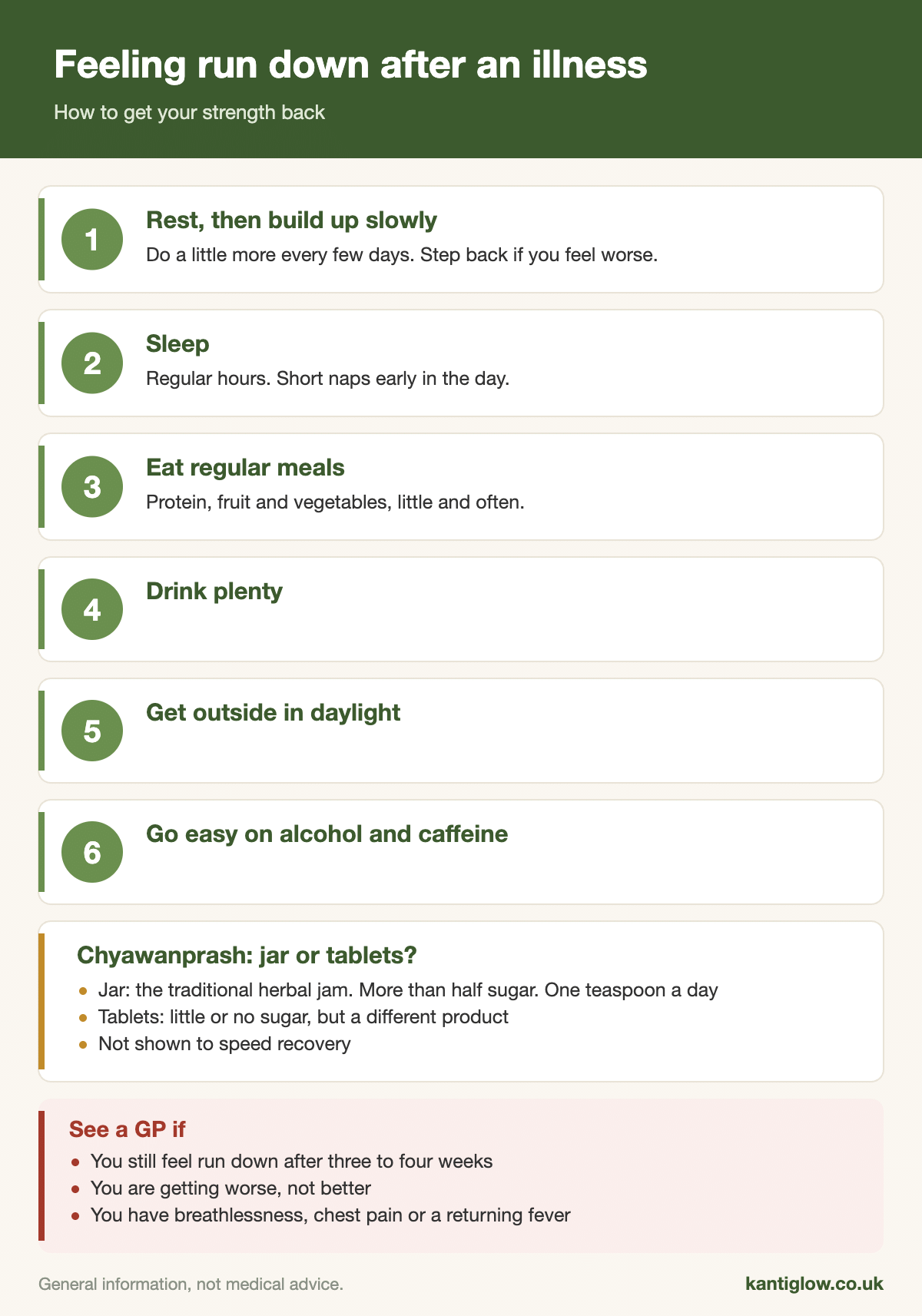
How to get your strength back
1. Rest first, then build up gradually. In the first days after the illness, rest properly. Then add activity in small steps: a short walk, then a longer one, then light chores, then normal work, then exercise. Increase every few days.
2. Pace yourself. If an activity leaves you wiped out the following day, you did too much. Drop back a step and try again in a few days. Spread demanding tasks through the day and week, with breaks.
3. Sleep. Keep regular bed and wake times. A short nap before mid-afternoon is fine while you recover; long daytime sleeps make nights worse.
4. Eat regular meals. Appetite is often poor. Small meals every three to four hours, with protein (dal, eggs, yoghurt, chicken, fish, paneer), fruit and vegetables, and starchy foods. Soup, khichdi and porridge are easy to manage.
5. Drink plenty. Water, milk, soups and herbal teas all count.
6. Get outside. Daylight and fresh air lift mood and help reset sleep.
7. Go easy on alcohol and caffeine.
8. Return to exercise carefully. Wait until everyday activity feels normal, then restart at half your usual effort and build up over two to three weeks. Do not train hard with a fever or chest symptoms.
9. Take vitamin D in autumn and winter.
10. Ask for help with work, childcare and chores for a week or two. Going back at full speed is the commonest reason recovery stalls.
Chyawanprash: what it is
Chyawanprash is a dark, sticky herbal preserve, classed in Ayurveda as a rasayana (rejuvenating tonic) and traditionally given through winter and after illness. Its base is amla (Indian gooseberry) cooked with sugar or jaggery, honey, ghee and sesame oil, with thirty or more herbs and spices such as ashwagandha, pippali (long pepper), cardamom, cinnamon and giloy. Recipes differ between brands.
What research shows. A few small studies, several funded by manufacturers, report fewer or shorter infections or better measures of energy in people taking it. They are not strong enough to say it speeds recovery. Much of the vitamin C in amla is lost in long cooking. It is fair to call it a traditional, nourishing food, and for someone with a poor appetite a sweet spoonful with warm milk can be a pleasant way to take in some energy.
Jar or tablets?
| Jar (classic avaleha) | Sugar-free jar | Tablets or capsules | |
|---|---|---|---|
| What it is | The traditional jam | The jam made with sweeteners such as sorbitol or sucralose | Dried extracts of the herbs, pressed or encapsulated |
| Sugar | High. More than half the jar by weight is typically sugars; a teaspoon has roughly 6 to 8 g | Little or none. Sweeteners can cause wind or loose stools | None or very little |
| Closeness to the classical preparation | The real thing, including ghee, oil and honey | Close, without the sugar base | Different. No ghee, honey or amla pulp in quantity |
| How it is taken | One to two teaspoons a day, straight or with warm milk | As the jar | As the label directs |
| Taste | Sweet, sour and spicy | Similar, slightly different aftertaste | None |
| Convenience | Needs a spoon; sticky | As the jar | Easy to carry and to take consistently |
| Best for | People who want the traditional food and can accommodate the sugar | People limiting sugar who still want the jam | People with diabetes or watching calories, travellers, those who dislike the taste |
| Watch for | Sugar; calories; added “gold”, “silver” or other mineral ingredients in special versions | Sweetener side effects | Amounts are small; check what each tablet contains |
Which should you buy? If you want what Ayurveda means by chyawanprash, buy the jar from an established maker and treat it as a sweet food: one teaspoon a day, not three. If you have diabetes, are managing your weight or simply want the herbs, tablets or a sugar-free version make more sense, on the understanding that they are not the same preparation. Either way, choose a plain version without added metals or minerals.
Cautions
- Diabetes: count the sugar in the classic jar, and discuss it with your nurse or pharmacist.
- Pregnancy and breastfeeding: ask before taking it, because it contains many herbs.
- Children: herbal products are not recommended without advice, and honey-containing products must not be given to babies under one.
- Medicines: it contains herbs such as ashwagandha and giloy that can interact with thyroid, diabetes, blood pressure and immunosuppressant medicines. Ask a pharmacist.
- Liver or autoimmune conditions: check with your doctor first.
- Allergies: it contains ghee (milk) and sesame.
Other things people try
| Option | What we know |
|---|---|
| Vitamin D | Advised in autumn and winter |
| Vitamin C, zinc | May shorten a cold slightly if started early. No effect on recovery afterwards |
| Multivitamins | Reasonable for a few weeks if you have eaten poorly |
| Iron | Only if a blood test shows you need it |
| Ashwagandha, ginseng | Small trials on fatigue. Not for everyone |
| Giloy, tulsi | Traditional. Giloy has been linked to liver injury |
| Energy drinks | A short lift, then a slump |
| Protein | Useful if you have lost weight or muscle. Food first |
When to see a GP
See a GP if you still feel run down after three to four weeks, if tiredness is getting worse instead of better, or if it is stopping you from working or looking after yourself. Ask for an urgent appointment or call 111 if you are breathless, have chest pain or palpitations, cough up blood, or your fever returns. Call 999 for severe chest pain or difficulty breathing.
Feeling run down: frequently asked questions
Why am I still feeling run down after a cold?
Your body is still recovering, and sleep, food and fitness have all taken a knock.
How long does tiredness last after flu?
Typically two to three weeks.
How long does tiredness last after a virus?
Usually a few weeks. Sometimes longer after COVID-19 or glandular fever.
Should I rest or exercise?
Rest at first, then build up gradually.
What is pacing?
Doing a manageable amount, and increasing in small steps without overdoing it.
When can I go back to the gym?
When everyday activity feels normal. Restart at half effort.
Can I exercise with a lingering cough?
Gentle walking, yes. Avoid hard training with chest symptoms.
What should I eat to recover?
Regular small meals with protein, fruit and vegetables.
What if I have no appetite?
Soup, khichdi, porridge, yoghurt and milky drinks are easy to manage.
How much should I drink?
Six to eight glasses a day, more if you have had a fever.
Do naps help?
Short ones early in the day, while you recover.
Does vitamin C help recovery?
It has not been shown to.
Should I take vitamin D?
Yes, in autumn and winter.
Should I take a multivitamin?
It is reasonable for a few weeks if your diet has been poor.
Could it be anaemia?
Possibly, if tiredness continues. A blood test will show it.
Could it be long COVID or post-viral fatigue?
If symptoms last many weeks, see a GP.
What is chyawanprash?
An amla-based herbal jam used in Ayurveda as a tonic.
Does chyawanprash help you recover from illness?
It has not been shown to speed recovery.
Does chyawanprash boost immunity?
That has not been established, and it cannot be claimed in the UK.
How much chyawanprash should I take?
One teaspoon a day, or as the label directs.
When should I take it?
Traditionally in the morning, with warm milk.
How much sugar is in chyawanprash?
The classic jar is more than half sugars.
Is sugar-free chyawanprash healthy?
It avoids the sugar. Sweeteners can cause wind.
Are chyawanprash tablets as good as the jar?
They are a different product, without the jam base.
Jar or tablets: which should I buy?
The jar for the traditional food; tablets if you need to avoid sugar.
Can people with diabetes take chyawanprash?
Choose sugar-free or tablets, and ask your pharmacist.
Can children have chyawanprash?
Not without advice, and never under one year.
Is chyawanprash safe in pregnancy?
Ask your midwife first.
Does chyawanprash interact with medicines?
It can. Ask a pharmacist.
Does chyawanprash contain ashwagandha?
Many recipes do.
Does it contain vitamin C?
Some, though much is lost in cooking.
Does it contain heavy metals?
Reputable plain versions should not. Avoid “gold” or “silver” variants.
Can I take it all year?
It is traditionally a winter tonic. Take breaks.
Does it cause weight gain?
It adds sugar and calories.
How should I store the jar?
Closed, in a cool place, using a dry spoon.
Which brand is best?
The established makers all produce it. Compare sugar and ingredients.
Does ashwagandha help recovery?
There is no good evidence.
Do energy drinks help?
No.
How can I avoid getting ill again?
Sleep, eat well, stay active, wash your hands and have your vaccinations.
When should I see a GP?
If you still feel run down after three to four weeks, or are getting worse.
Sources
- NHS: Tiredness and fatigue
- NHS: Self-help tips to fight tiredness
- NHS: Vitamin D
- NHS: Herbal medicines
Shop the products in this guide
- ExoticVeda Yuvprash Chyawanprash Tablets 60 — £15.99
- Sitaram Chyawanprash Tablets — £8.99
Lab-tested, vegetarian, shipped from India. Food supplements should not replace a varied diet.
This guide is general information, not medical advice. Herbal products and food supplements are not intended to diagnose, treat or cure any condition. See a GP about tiredness that lasts more than a few weeks.