Quick answer: Most people need far fewer supplements than they buy. The NHS position is that a varied, balanced diet provides the nutrients most people need, with a short list of exceptions: vitamin D in autumn and winter for everyone, folic acid when trying for a baby and in early pregnancy, vitamin drops for young children, and vitamin B12 for vegans. Those cost pennies a day. The core of Ayurveda, its daily routine, is free, and its everyday remedies are kitchen spices. If you want a herbal product on top, pick one, for a clear reason, and compare the cost per day, not the price on the tub. That keeps a sensible routine well under £25 a month.
Key facts
- Most people can get the nutrients they need from a varied, balanced diet.
- Vitamin D: 10 micrograms a day is advised for everyone in autumn and winter.
- Folic acid: 400 micrograms a day when trying to conceive and until 12 weeks of pregnancy.
- Taking more of a vitamin than you need does not improve health, and some are harmful in excess.
- The price on the pack tells you little. Cost per day at the dose you would take is what matters.
- Pregnant women and young children on certain benefits can get free vitamins through the NHS Healthy Start scheme.
Why supplement spending creeps up
- One product per worry. Tired, stressed, sleeping badly, hair thinning: each gets its own tub.
- Stacking. A multivitamin, a “hair” formula and an “energy” formula often contain the same B vitamins and zinc three times over.
- Subscriptions that keep arriving after you have stopped noticing any effect.
- Proprietary blends that hide small amounts of many ingredients behind an impressive label.
- No review date. Few people ever ask whether a supplement they started a year ago is doing anything.
What is worth paying for
| Supplement | Who needs it | Typical cost |
|---|---|---|
| Vitamin D, 10 micrograms | Everyone from October to March; all year if you are rarely outdoors, cover your skin, or have dark skin | A few pounds for several months’ supply from supermarkets and pharmacies |
| Folic acid, 400 micrograms | Women trying to conceive and in the first 12 weeks of pregnancy | Pence a day |
| Vitamins A, C and D drops | Children aged 6 months to 5 years | Free with Healthy Start if eligible |
| Vitamin B12 | Vegans, and vegetarians who eat little dairy or egg | Pence a day |
| Iron | Only if a blood test shows you are low | Prescribed or bought on advice |
| Iodine or a fortified plant milk | Vegans who avoid seaweed and iodised products | Check your plant milk label first |
Supermarket and pharmacy own-brand vitamins contain the same nutrients as premium brands at a fraction of the price.
What you can usually skip
- A daily multivitamin if you eat a reasonably varied diet. It is a low-cost safety net at most.
- High-dose single vitamins without a diagnosed deficiency.
- “Booster”, “detox”, “cleanse” and “fat burner” products.
- Collagen, biotin and “hair, skin and nails” formulas, unless you have a specific reason and a review date.
- Duplicates. Lay out everything you take and cross out overlaps.
- Anything that promises to cure a disease.
How to compare prices properly
- Work out the cost per day. Price divided by the number of days the pack lasts at the dose you will take. A £6 tub that lasts 20 days costs more than a £12 tub that lasts 60.
- Compare like with like. For herbs, check whether it is plain powdered herb or a concentrated extract, and how many milligrams per tablet.
- Powders are usually cheaper than capsules, and plain herb is cheaper than branded extracts.
- Larger packs are cheaper per day, but only if you will finish them before the best-before date.
- Ignore “was” prices and compare the price per 100 g or per tablet.
- Do not pay for ingredients at token amounts. If a blend lists twenty herbs in one small capsule, there is little of each.
- Never trade safety for price. For herbal products, a batch number, full labelling and heavy-metal test results matter more than saving a pound.
A routine in three tiers
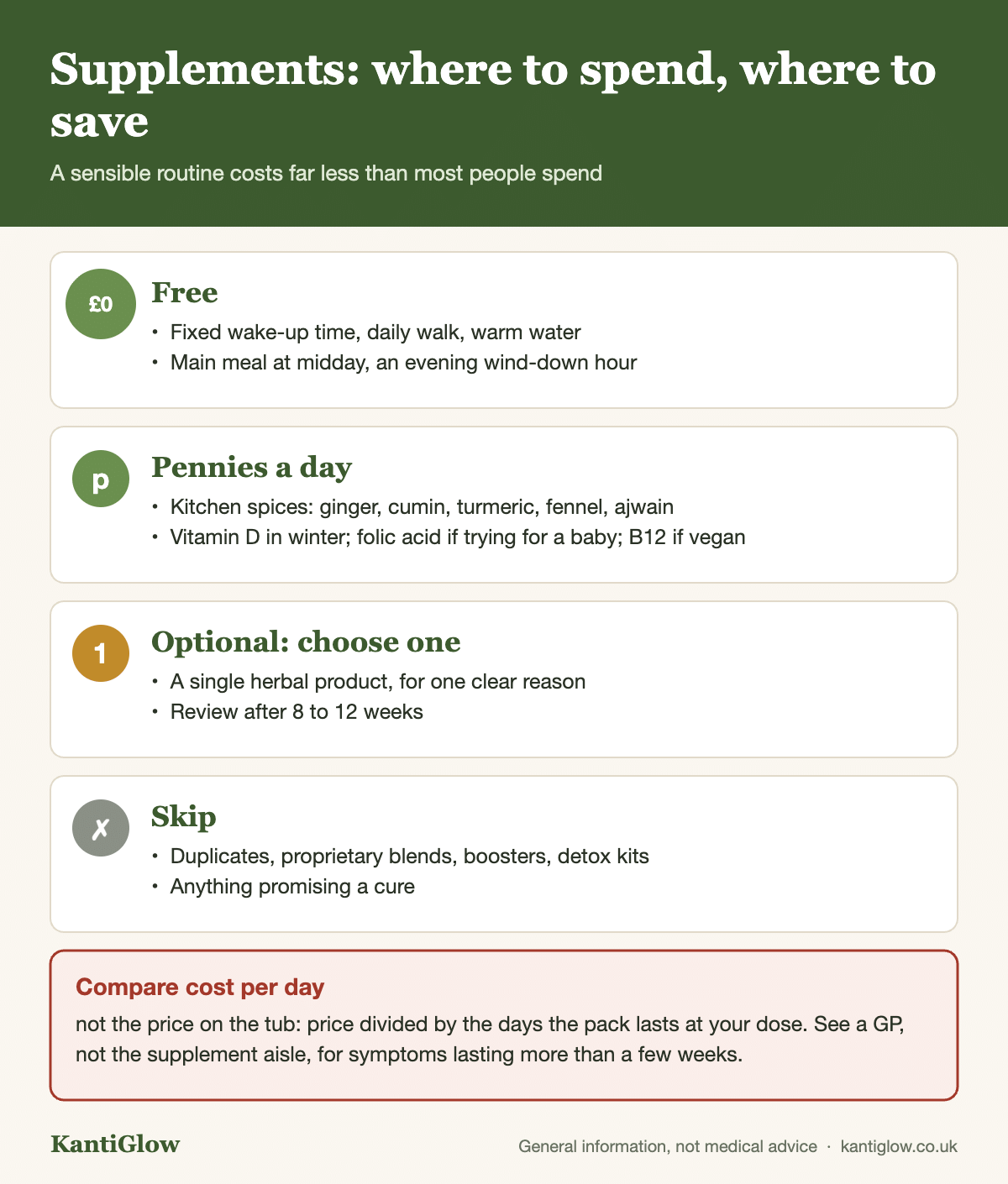
Tier 1: free
- Get up at the same time each day and open the curtains.
- Drink a glass of warm water.
- Eat your main meal at midday and a lighter, earlier supper.
- Walk for 20 to 30 minutes.
- Spend the last hour before bed away from screens.
- Massage feet or scalp with whatever cooking oil you have (sesame, coconut or mustard), patch testing first.
Tier 2: pennies a day
- Kitchen spices from the world-foods aisle or an Indian grocer, bought whole in bags instead of small jars: cumin, coriander, fennel, ajwain, turmeric, black pepper, and fresh ginger. A month’s supply of all of them costs a few pounds.
- Cumin, coriander and fennel tea after lunch: half a teaspoon of each in a mug of hot water.
- Golden milk at night: turmeric, black pepper and ginger in warm milk.
- Dal, seasonal vegetables and frozen veg as the base of meals.
- Vitamin D in winter, and the other NHS-recommended supplements that apply to you.
Tier 3: optional, choose one
If you want one herbal product, match it to a single reason and give it a review date eight to twelve weeks ahead.
| If your reason is | A traditional choice | Read first |
|---|---|---|
| Constipation | Isabgol (psyllium husk) | Take with a full glass of water |
| A general evening routine | Triphala | Mild laxative effect; avoid in pregnancy |
| A caffeine-free daily drink | Tulsi tea | Avoid in pregnancy |
| Stress | Ashwagandha root powder | Not for pregnancy; check with thyroid, liver or autoimmune conditions |
| A food source of vitamin C | Amla powder | Tart; add to water or yoghurt |
These are traditional uses, not proven treatments, and none replaces medical care. Check with a pharmacist first if you are pregnant, breastfeeding or take medication.
What it adds up to. Tier 1 costs nothing. Tier 2 is a few pounds a month for spices plus pennies a day for vitamin D. A single plain herb powder from Tier 3 typically costs a few pounds for a month or more. Most people will come in well under £25, and many under £10.
Ways to save without cutting corners
- Buy whole spices and grind small amounts yourself.
- Choose plain powders (churna) over capsules where you can tolerate the taste.
- Buy one product, finish it, and decide whether it earned its place before buying another.
- Cancel subscriptions and reorder only when you choose to.
- Keep a list of what you take, with start dates, and review it every three months.
- Ask a pharmacist to look over your list. It is free, and they will spot duplicates and interactions.
- Check whether you qualify for Healthy Start vitamins or free prescriptions.
When to see a GP
See a GP instead of buying another supplement if you have symptoms that have lasted more than a few weeks: tiredness, hair loss, low mood, poor sleep, digestive problems or pain. A blood test is free on the NHS and tells you whether you are short of anything. Seek advice if you take several supplements alongside prescribed medicines.
Which supplements are worth taking: frequently asked questions
Do I need to take supplements?
Most people do not, apart from vitamin D in winter.
Which supplements does the NHS recommend?
Vitamin D in autumn and winter, folic acid before and in early pregnancy, and vitamin drops for young children.
Is a multivitamin worth taking?
It is a cheap safety net if your diet is limited. It is not necessary for most people.
Are expensive vitamins better than cheap ones?
No. The nutrient is the same.
Are supermarket own-brand vitamins good?
Yes.
How do I work out cost per day?
Divide the price by the number of days the pack lasts at your dose.
Are powders cheaper than capsules?
Usually.
Are gummies worth it?
They cost more, contain sugar and often have lower doses.
Can I take too many supplements?
Yes. Vitamins A, D, B6, iron, zinc and selenium are harmful in excess.
How do I know if I am doubling up?
Compare the labels of everything you take, line by line.
Should I take vitamin D all year?
Yes if you are rarely outdoors, cover your skin or have dark skin. Otherwise autumn and winter.
Do vegans need supplements?
Vitamin B12, and usually vitamin D and iodine.
Do I need iron?
Only if a blood test shows you are low.
Do I need vitamin C tablets?
Not if you eat fruit and vegetables.
Do I need omega-3?
One portion of oily fish a week covers it. Vegans can consider an algae-based supplement.
Is collagen worth the money?
Evidence is limited. It is one of the pricier supplements.
Are “hair, skin and nails” vitamins worth it?
Only if they correct a deficiency.
What is the Healthy Start scheme?
An NHS scheme giving free vitamins and help with food to eligible pregnant women and young children.
Can I do Ayurveda on a budget?
Yes. The daily routine is free and the everyday remedies are kitchen spices.
What is the cheapest way to start Ayurveda?
A fixed wake-up time, a main meal at midday and an evening wind-down.
Which spices should I buy first?
Cumin, turmeric, fresh ginger and fennel.
Where is the cheapest place to buy spices?
Indian grocers and the world-foods aisle, in bags instead of jars.
Is turmeric from the spice aisle as good as capsules?
For cooking, yes. Capsules contain concentrated extract, which is a different product.
What is CCF tea?
Cumin, coriander and fennel seeds steeped in hot water.
Is golden milk worth making?
It is a cheap, soothing bedtime drink.
Do I need special massage oil?
No. Plain sesame or coconut oil works.
Which one herb should I start with?
Match it to a single reason. Many people begin with triphala or tulsi tea.
Is churna cheaper than tablets?
Usually, per gram of herb.
Is it cheaper to buy herbs in bulk?
Per day, yes, if you will use them before they go off.
How long do herbal powders last?
Check the best-before date. Keep them sealed, cool and dry.
Is cheap ashwagandha safe?
Price is not the test. Look for full labelling, a batch number and heavy-metal test results.
How can I tell a product is good quality?
A named manufacturer, clear ingredients and amounts, a batch number and published test results.
Are proprietary blends good value?
Rarely. Amounts of each ingredient are often small and undisclosed.
Should I buy supplements on subscription?
Only if you have decided the product is worth continuing.
How long should I try a supplement?
Eight to twelve weeks, then review.
How do I know if a supplement is working?
Write down what you expect it to change before you start, and check at your review date.
Is it safe to buy supplements from marketplaces?
Buy from identifiable UK sellers. Counterfeits exist.
Can a pharmacist review my supplements?
Yes, free of charge.
Can supplements interact with medicines?
Yes. Always check.
Should children take herbal supplements?
Not without medical advice.
Are free NHS blood tests available for deficiencies?
Your GP will arrange tests if your symptoms suggest a deficiency.
Is food better than supplements?
Yes, for almost every nutrient.
What should I stop taking first?
Duplicates, then anything you cannot name a reason for.
When should I see a GP instead of buying supplements?
When symptoms have lasted more than a few weeks.
Sources
- NHS: Vitamins and minerals
- NHS: Vitamin D
- NHS: B vitamins and folic acid
- NHS: The Eatwell Guide
- NHS: Herbal medicines
Shop this plan at KantiGlow
- Dabur Ashwagandha Capsules
- Dabur Triphala Churna 120g
- Organic India Sat Isabgol 100g
- Himalaya Tulasi (Holy Basil)
- Dabur Chyawanprakash Sugar Free
- The Ayurvedic Foundation Kit
All products are authentic Indian and UK-labelled brands, sourced directly from India and dispatched within 24–72 hours (UK delivery typically 5–7 working days).
Related guides
Shop the products in this guide
- Organic India Sat Isabgol Psyllium Husk Capsules 100g — £7.99
- Patanjali Ashwagandha Capsules — £1.99
- Dabur Triphala Churna Powder 120g — £3.99
- KantiGlow Selection Hing Goli — £3.99
Lab-tested, vegetarian, shipped from India. Food supplements should not replace a varied diet.
This guide is general information, not medical advice. Food supplements are not intended to diagnose, treat or cure any condition and are not a substitute for a varied diet. Speak to a pharmacist before taking supplements alongside medication, and to a GP about symptoms that persist.