Quick answer: Feeling heavy and sluggish is often a loop: the less you move, the more tired you feel, and the more tired you feel, the less you move. Oversleeping, heavy meals, long hours sitting and dark winter days all tighten it. The way out is to start smaller than seems worthwhile, with a ten-minute brisk walk every day, and build towards 150 minutes of moderate activity a week plus strength work on two days. A fixed wake-up time, daylight soon after waking and a lighter evening meal support it. The Ayurvedic routine for heavy, slow “kapha” types says much the same: get up early, move every day, eat light and warm. If you are exhausted for weeks without explanation, or tiredness comes with weight gain, low mood or loud snoring, see a GP first.
Key facts
- Adults should do at least 150 minutes of moderate activity or 75 minutes of vigorous activity a week, spread over four or five days or every day.
- Strengthening activities for all major muscle groups are advised on at least two days a week.
- Time spent sitting or lying down should be reduced and broken up with movement.
- Brisk walking, cycling, dancing and water aerobics count as moderate activity.
- Tiredness that lasts a few weeks with no clear cause should be checked by a GP.
- Doshas such as kapha are a traditional Ayurvedic framework, not a medical diagnosis.

Why you feel sluggish
- Too little movement. Fitness falls quickly, so everyday tasks take more effort.
- Oversleeping and irregular sleep. Lying in leaves many people groggier, not fresher.
- Heavy, late meals and a lot of refined carbohydrate and sugar.
- Long hours sitting.
- Winter. Less daylight lowers alertness and mood.
- Alcohol, even in moderate amounts.
- Weight gain, which makes movement harder and sleep poorer.
- Low mood. Loss of motivation is a core symptom of depression, not laziness.
- Medical causes: an underactive thyroid, anaemia, diabetes, sleep apnoea, and some medicines.
Rule out a medical cause
See a GP before starting if your tiredness is new and unexplained, or comes with any of these: weight gain with feeling cold and constipated; breathlessness or palpitations; great thirst and passing urine often; loud snoring and waking unrefreshed; or low mood most days for two weeks. A blood test and a conversation settle most of these quickly.
How to start when you have no motivation
Make it too small to refuse. Ten minutes of brisk walking. If that feels like too much, five. The aim in the first week is to show up daily, not to get fit.
Attach it to something you already do. After breakfast, at lunchtime, or straight after work before you sit down.
Do it early. Morning activity happens; evening activity is postponed.
Do not wait to feel like it. Motivation follows action. Most people feel better ten minutes in.
Get outside. Daylight adds its own lift.
Make it easy. Shoes by the door, clothes laid out, a route decided.
Involve someone. A walking partner, a class or a group makes it harder to skip.
Track it. Tick a calendar. A run of ticks becomes its own reason to continue.
Expect a bad day. Missing one does not matter. Missing two in a row is the habit slipping, so make the next one non-negotiable.
A four-week plan to get moving
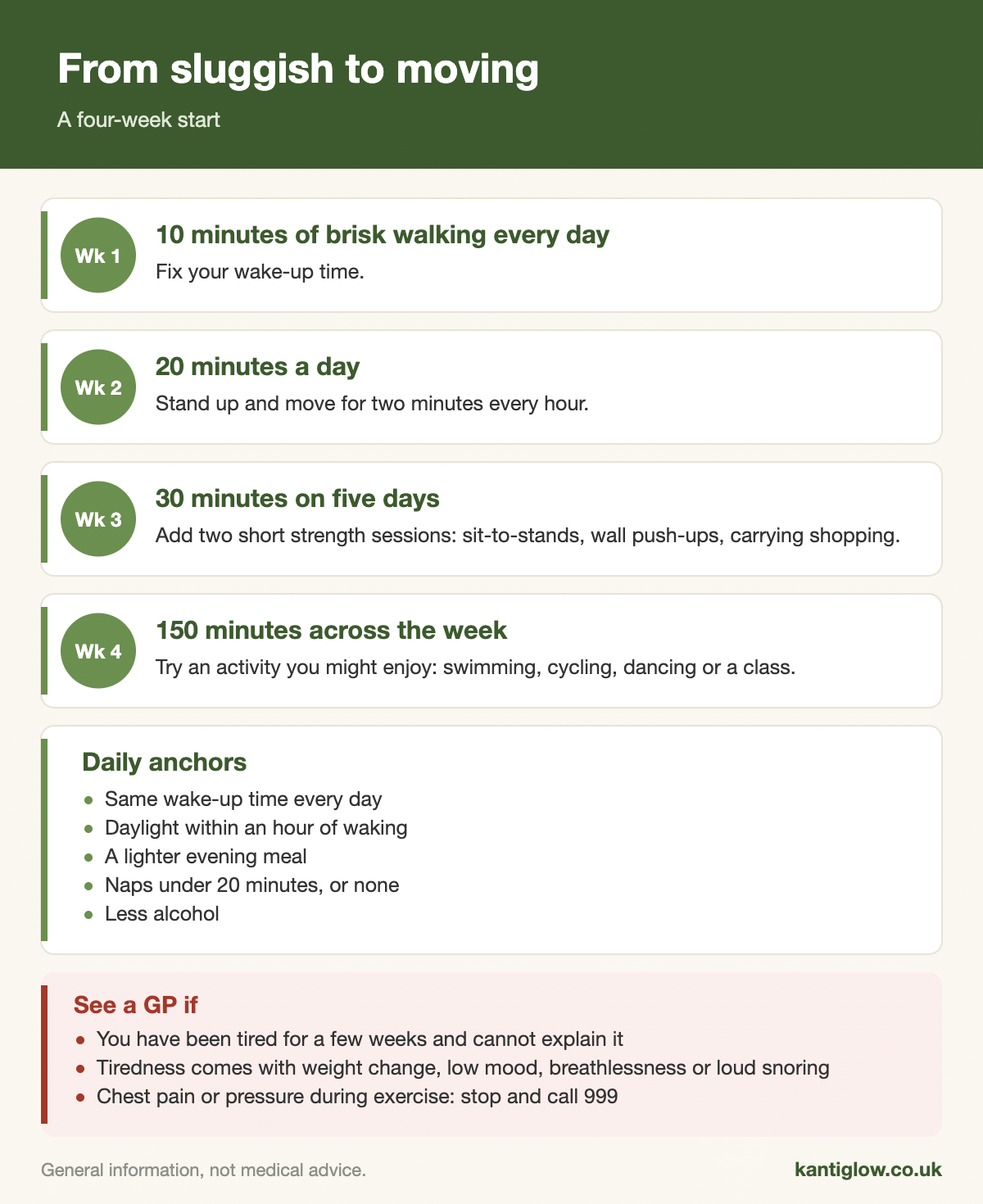
| Week | Activity | Also |
|---|---|---|
| 1 | 10 minutes of brisk walking every day | Fix your wake-up time |
| 2 | 20 minutes a day | Stand up and move for two minutes every hour |
| 3 | 30 minutes on five days | Add two 10-minute strength sessions: sit-to-stands from a chair, wall push-ups, carrying shopping |
| 4 | 150 minutes across the week | Try something you might enjoy: swimming, cycling, dancing, a class, a team sport |
“Brisk” means you are warm and breathing faster but can still talk. If you have a heart condition, chest pain on exertion, or have been inactive for a long time with health problems, check with your GP before stepping up.
Daily anchors that help
- Same wake-up time every day, and no more than an hour’s lie-in at weekends.
- Daylight within an hour of waking.
- Breakfast with protein, or at least not sugary.
- A moderate lunch, followed by a short walk.
- A lighter evening meal, finished two to three hours before bed.
- Naps under 20 minutes, before mid-afternoon, or none.
- Less alcohol.
- Screens off half an hour before bed.
The Ayurvedic kapha routine
In Ayurveda, kapha is the quality associated with heaviness, coolness, slowness and stability. People described as kapha types are said to be solidly built, calm and steady, with a tendency to oversleep, gain weight and feel sluggish, especially in late winter and spring. The traditional routine is designed to counter that:
| Tradition | In practice | Comment |
|---|---|---|
| Rise early, before or around sunrise | A fixed, early wake-up time; no daytime sleep | Regular wake times have good support |
| Vigorous daily exercise | Brisk walking, running, energetic yoga, in the morning | In line with activity guidelines |
| Dry brushing or dry powder massage | Brisk rubbing of the skin before a shower | Invigorating. No health effect shown |
| Light, warm, dry food | Soups, vegetables, pulses, barley, millet; less fried, sweet and creamy food | Sensible eating in general |
| Pungent, bitter and astringent tastes | Ginger, black pepper, mustard seed, turmeric, leafy greens | Flavour without added fat or sugar |
| Main meal at midday, light supper | A smaller evening meal | Suits many people |
| Warm drinks | Ginger tea, hot water | Pleasant; no specific effect shown |
| Variety and stimulation | New activities, new routes | Novelty helps motivation |
The dosha idea has not been tested scientifically, and you do not need to identify as kapha to use the routine. Its core, early rising, daily movement and lighter meals, matches mainstream advice closely.
Herbs and supplements people ask about
| Product | What we know |
|---|---|
| Trikatu (ginger, black pepper, long pepper) | The classical kapha spice blend. Warming; can cause heartburn. No evidence for energy or weight |
| Triphala | A traditional bowel tonic. Not an energy supplement |
| Guggulu | Traditional. Can upset the stomach and interact with medicines |
| Ginger tea | A pleasant warm drink |
| Green tea and coffee | Caffeine lifts alertness for a few hours. Keep it to the morning |
| Vitamin D | Advised in autumn and winter for everyone. Not an energy supplement |
| Iron and B12 | Only if a blood test shows you are low |
| “Metabolism boosters” and fat burners | No good evidence, and some carry risks |
No supplement substitutes for movement.
When to see a GP
See a GP if you have been tired for a few weeks and cannot explain it, if tiredness is affecting daily life, or if it comes with weight change, low mood, breathlessness, heavy snoring or great thirst. Stop exercising and call 999 if you have chest pain, tightness or pressure, or breathlessness that does not settle with rest.
Feeling sluggish: frequently asked questions
Why do I feel so sluggish?
Usually too little movement, irregular sleep, heavy meals or low mood. Sometimes a medical cause.
Why does doing nothing make me more tired?
Fitness drops with inactivity, so everything takes more effort.
Will exercise make me more tired?
For the first few days, perhaps. Within a couple of weeks most people have more energy.
How do I start exercising with no motivation?
Start with ten minutes a day, attached to something you already do.
How much exercise do I need?
At least 150 minutes of moderate activity a week, plus strength work on two days.
Does walking count?
Yes, if it is brisk.
What is brisk walking?
Fast enough to warm you up and quicken your breathing while you can still talk.
Is ten minutes worth doing?
Yes. It all counts, and it builds the habit.
Is it better to exercise in the morning?
It is more likely to happen, and daylight helps.
Do I need a gym?
No.
What strength exercises can I do at home?
Sit-to-stands, wall push-ups, step-ups and carrying shopping.
How many steps should I aim for?
There is no magic number. Add a couple of thousand to what you do now.
How do I sit less?
Stand for calls, set an hourly reminder, and walk after meals.
Why do I feel worse after a lie-in?
Oversleeping shifts your body clock.
How much sleep do I need?
Most adults need seven to nine hours.
Are naps a bad idea?
Keep them under 20 minutes and before mid-afternoon.
Which foods make you sluggish?
Large, heavy meals and a lot of sugar and refined carbohydrate.
What should I eat for more energy?
Regular meals with vegetables, pulses, wholegrains and protein.
Does alcohol make you sluggish?
Yes.
Does coffee help?
For a few hours. Keep it to the morning.
Why am I worse in winter?
Less daylight. Get outside early in the day.
Could it be depression?
Loss of energy and motivation can be. See a GP if low mood lasts two weeks.
Could it be my thyroid?
An underactive thyroid causes tiredness, weight gain and feeling cold. A blood test will show it.
Could it be anaemia?
Possibly. A blood test will show it.
Could it be sleep apnoea?
Loud snoring and daytime sleepiness suggest it.
What is kapha?
One of three doshas in Ayurveda, associated with heaviness and slowness.
How do I know if I am a kapha type?
The description is traditional. You do not need to know to use the routine.
What is the kapha morning routine?
Rise early, exercise, and eat a light breakfast.
What is the kapha diet?
Light, warm food with plenty of vegetables, pulses and spices, and less fried and sweet food.
Should kapha types skip breakfast?
Tradition suggests a light one. Eat if you are hungry.
Is daytime sleep bad for kapha?
Tradition advises against it. Long naps do leave many people groggy.
What is dry brushing?
Brisk brushing of dry skin before a shower. It is invigorating; no health effect is proven.
Which exercise suits kapha?
Tradition favours vigorous activity. The best one is the one you will keep doing.
Does trikatu boost metabolism?
There is no good evidence.
Does triphala give you energy?
No.
Do metabolism boosters work?
No good evidence, and some carry risks.
Will I lose weight?
Activity helps, mainly alongside changes to eating.
How long until I feel better?
Many people notice a difference within two weeks.
What if I miss a day?
Carry on the next day. Avoid missing two in a row.
What if I have bad knees or a bad back?
Try swimming, cycling or chair exercises, and ask a physiotherapist.
Is it safe to start exercising if I am overweight?
Yes. Begin gently, and check with your GP if you have health conditions.
Do I need to warm up?
Start each session slowly for a few minutes.
Does yoga count?
It counts as strength activity, and vigorous styles count as moderate activity.
When should I see a GP?
If tiredness has lasted a few weeks without explanation.
Sources
- NHS: Physical activity guidelines for adults aged 19 to 64
- NHS: Tiredness and fatigue
- NHS: Self-help tips to fight tiredness
- NHS: Underactive thyroid symptoms
- NHS: Herbal medicines
Shop this plan at KantiGlow
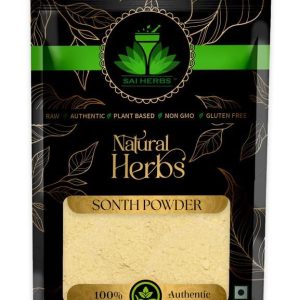
- Dry Ginger (Sonth) Powder
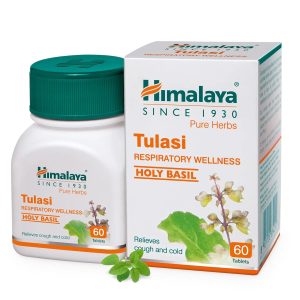
- Himalaya Tulasi (Holy Basil)
- Himalaya Triphala Capsules
- Ceylon Cinnamon Capsules
- Jiva Giloy (Guduchi) Capsules
- The Morning Ritual Kit
All products are authentic Indian and UK-labelled brands, sourced directly from India and dispatched within 24–72 hours (UK delivery typically 5–7 working days).
Related guides
Shop the products in this guide
- Dry Ginger Powder 100g — £4.99
- Ayurvedic Life Triphala Churna Powder 200g — £6.99
- Organic India Cinnamon Capsules — £7.99
- Himalaya Tulsi Tablets 60 — £7.99
Lab-tested, vegetarian, shipped from India. Food supplements should not replace a varied diet.
This guide is general information, not medical advice. Herbal products and food supplements are not intended to diagnose, treat or cure any condition. Speak to a GP about tiredness that persists, and before starting exercise if you have a health condition.
Pingback: Pitta Daily Routine Plan (UK Ayurveda Guide) | KantiGlow