
Quick answer: Piles (haemorrhoids) are swollen blood vessels in and around the bottom, and they often settle within a few days. Treatment at home is about making stools soft and easy to pass and easing the soreness: eat more fibre, drink plenty of fluid, do not strain or linger on the toilet, take warm baths, keep the area clean and dry, and use paracetamol for pain. A pharmacist can recommend creams, suppositories and a gentle laxative, and you can ask to speak in private. Triphala, the Ayurvedic three-fruit powder, is a mild laxative, so it may help in the same way as other stool softeners, though it has not been tested for piles. Always have bleeding from the bottom checked by a GP the first time it happens, and call 999 for heavy bleeding or severe pain.
Key facts
- Symptoms of piles include bright red blood after a poo, an itchy bottom, feeling you still need to go, mucus on the paper, and lumps or pain around the anus.
- Constipation, straining, heavy lifting, pregnancy, getting older and being overweight make piles more likely.
- Fluid and fibre keep stools soft, and warm baths ease itching and pain.
- Codeine-based painkillers cause constipation, and ibuprofen should be avoided if piles are bleeding.
- A pharmacist can suggest creams, laxatives and cold packs.
- Painless bleeding from the bottom, or blood that is dark or mixed with the stool, needs medical assessment.
Is it piles?
| Typical of piles | Get it checked |
|---|---|
| Bright red blood on the paper or in the bowl after a poo | Bleeding with no other piles symptoms, or dark blood |
| Itching, soreness or a lump at the anus | A change in bowel habit lasting three weeks or more |
| A lump that goes back in on its own or can be pushed back | Unexplained weight loss or tummy pain |
| Worse after straining or constipation | A sharp, tearing pain when passing stool (often a fissure) |
| Comes and goes | A very painful, hard lump that appears suddenly (a clotted pile) |
Most bleeding from the bottom is caused by piles or a small tear, but it should not be assumed. See a GP the first time it happens, and again if the pattern changes.
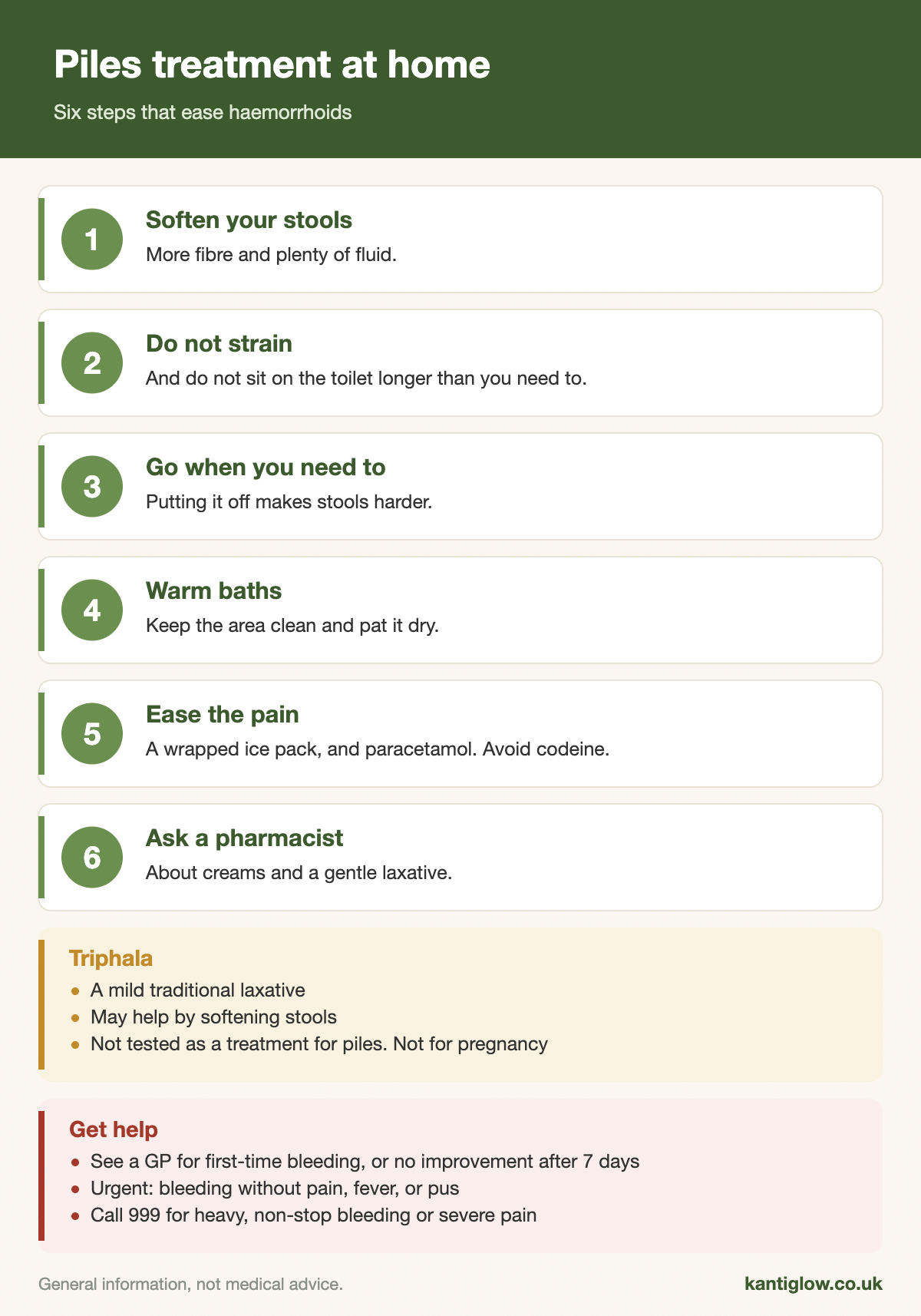
Piles treatment at home, step by step
1. Soften your stools. This is the treatment that matters most.
- Eat more fibre: wholegrains, oats, pulses, vegetables, fruit (prunes, kiwi and pears are particularly effective), and seeds. Increase gradually over a week or two to avoid wind.
- Drink plenty of fluid, about six to eight glasses a day.
- Cut down on alcohol and caffeine if you are constipated.
- If food is not enough, a bulk-forming laxative such as ispaghula (isabgol) husk, taken with a full glass of water, is the usual first choice.
2. Change your toilet habits.
- Go when you feel the urge. Do not put it off.
- Do not strain or hold your breath.
- Do not sit for longer than you need to. Leave the phone outside.
- Raise your feet on a low stool so your knees are above your hips.
3. Ease the soreness.
- Take a warm bath, or sit in a few inches of warm water for ten minutes.
- Wash with water after a poo and pat dry. Avoid scented wipes and soap on the area.
- Hold an ice pack wrapped in a towel against the area for a few minutes.
- Gently push a pile back inside if you can.
- Take paracetamol for pain. Avoid codeine, and avoid ibuprofen if you are bleeding.
- Wear loose cotton underwear.
4. Ask a pharmacist. Creams, ointments and suppositories can ease pain, itching and swelling. Use them for no more than a week at a time unless advised.
5. Keep moving. Regular exercise helps the bowels and reduces pressure from sitting.
6. Avoid heavy lifting while they settle.
Most flare-ups ease within a few days to a week.
Where triphala fits
What it is. Triphala is a powder of three dried fruits: amla (Phyllanthus emblica), haritaki (Terminalia chebula) and bibhitaki (Terminalia bellirica). It is the most widely used Ayurvedic bowel tonic, taken as powder (churna), tablets or capsules, usually at night.
How it might help. Haritaki in particular has a mild laxative action. A softer, easier stool means less straining, which is the aim of all piles self-care. Small studies suggest triphala relieves constipation in some people. It has not been tested as a treatment for piles themselves, and it does not shrink them.
How it is taken. Follow your product’s label. Traditionally, half to one teaspoon of powder in warm water at bedtime, or the equivalent in tablets. Start low, because it can cause loose stools and cramping.
Powder, tablets or capsules? They contain the same thing. Powder is cheapest and has a sharp, astringent taste; tablets and capsules avoid the taste.
Cautions.
- Do not take it in pregnancy or while breastfeeding.
- Reduce the amount or stop if you get diarrhoea or cramps. Diarrhoea irritates piles too.
- It may lower blood sugar. Check with a pharmacist if you take diabetes medicines.
- Take it two hours apart from other medicines.
- Do not rely on any laxative, herbal or otherwise, long term without advice. Fibre and fluid come first.
Triphala guggulu is a different product: triphala combined with guggul resin, traditionally used for piles and fistula. It is more likely to cause side effects and interactions, and should be discussed with a pharmacist first.
Other remedies people ask about
| Remedy | What we know |
|---|---|
| Isabgol (psyllium husk) | Good evidence as a bulk-forming laxative. A sensible first choice |
| Witch hazel pads | Soothing for some. Limited evidence |
| Aloe vera gel | Cooling. Limited evidence. Patch-test first |
| Coconut oil | Eases friction. No specific evidence |
| Flavonoid tablets (diosmin) | Some evidence for reducing bleeding. Ask a pharmacist |
| Sitz baths with salts | Warm water is what helps. Additives are not needed |
| Arshoghni vati, pilex and similar formulas | Traditional. Some contain mineral ingredients; check the label |
| Ghee or castor oil at night | Traditional laxatives. Castor oil is harsh and not advised |
If home treatment is not enough
A GP can prescribe stronger creams and check nothing else is causing your symptoms. If piles keep returning, hospital treatments include banding, where a small band cuts off the blood supply, injection, and, for large piles, surgery. These are common, quick procedures.
Preventing piles coming back
- Keep fibre and fluid up for good, not just during a flare.
- Keep the toilet habits above.
- Stay active and keep to a healthy weight.
- In pregnancy, ask your midwife about safe laxatives and creams.
When to get help
See a GP if symptoms have not improved after seven days of home treatment, piles keep coming back, or you notice any change around your bottom that is not normal for you.
Ask for an urgent GP appointment or call 111 if you have bleeding from the bottom without pain, a high temperature or feel hot and shivery, or pus leaking from your piles.
Call 999 or go to A&E if you are bleeding non-stop, there is a lot of blood (for example, the toilet water turns red or you pass large clots), or you are in severe pain.
Piles treatment at home: frequently asked questions
What is the best piles treatment at home?
Softer stools through fibre and fluid, no straining, warm baths and a pharmacy cream.
What are piles?
Swollen blood vessels in and around the anus.
What causes piles?
Constipation, straining, pregnancy, heavy lifting, age and excess weight.
How long do piles last?
Often a few days to a week.
Do piles go away on their own?
Small ones often do.
Is bleeding normal with piles?
Bright red blood after a poo is common, but have it checked.
How do I know it is not something serious?
You cannot be sure without an examination. See a GP for first-time bleeding.
What should I eat for piles?
Wholegrains, oats, pulses, fruit and vegetables.
Which fruits help most?
Prunes, kiwi and pears.
How much water should I drink?
Six to eight glasses a day.
Do spicy foods cause piles?
They do not cause them, but can sting on the way out.
Does alcohol make piles worse?
It can contribute to constipation.
How should I sit on the toilet?
Feet raised on a stool, leaning forward, without straining.
How long should I sit on the toilet?
No longer than you need to.
Do warm baths help?
Yes.
Should I use ice?
A wrapped ice pack can ease discomfort.
Which painkiller can I take?
Paracetamol. Avoid codeine, and ibuprofen if bleeding.
Which cream is best?
Ask a pharmacist. Use for up to a week.
Should I push a pile back in?
Gently, if you can.
Can I exercise with piles?
Yes. Avoid heavy lifting during a flare.
Does sitting cause piles?
Long periods sitting, especially on the toilet, add pressure.
Are piles common in pregnancy?
Yes. Ask your midwife before using treatments.
What is triphala?
A powder of three dried fruits used as an Ayurvedic bowel tonic.
Does triphala cure piles?
No. It may help by softening stools.
How do I take triphala for constipation?
Follow the label, usually at bedtime with warm water.
How quickly does triphala work?
Often overnight or within a day or two.
Can I take triphala every day?
Review regular use. Fibre and fluid should come first.
What are the side effects of triphala?
Loose stools, cramps and wind.
Who should not take triphala?
Pregnant or breastfeeding women.
Is triphala powder or tablet better?
They are the same. Tablets avoid the taste.
Is isabgol better than triphala?
Isabgol has stronger evidence as a stool softener.
Can I take triphala and isabgol together?
Many people do. Start with one.
What is triphala guggulu?
Triphala with guggul resin. Ask a pharmacist first.
Does aloe vera help?
It is cooling. Evidence is limited.
Does coconut oil help?
It reduces friction.
What is banding?
A hospital procedure that cuts off a pile’s blood supply.
Will I need surgery?
Rarely.
How do I stop piles coming back?
Keep stools soft and do not strain.
When should I see a GP?
If there is no improvement after seven days, or for first-time bleeding.
When is it an emergency?
Heavy or non-stop bleeding, or severe pain.
Sources
Shop related products at KantiGlow
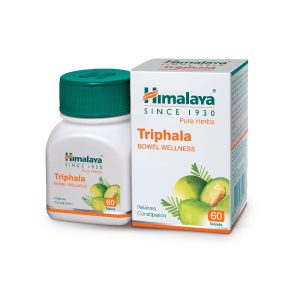
- Himalaya Triphala Capsules
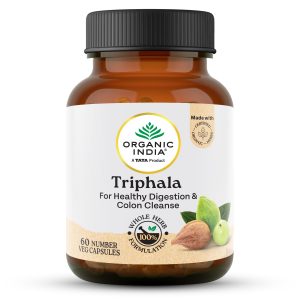
- Organic India Triphala Capsules
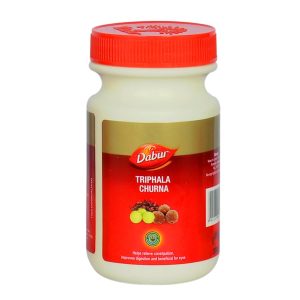
- Dabur Triphala Churna 120g
- Kerala Ayurveda Triphala Choornam 50g
- The Digestion Kit (triphala + isabgol combo)
All products are authentic Indian brands, sourced directly from India and dispatched within 24–72 hours (UK delivery typically 5–7 working days).
Related guides
Shop the products in this guide
- Kerala Ayurveda Triphala Choornam Powder 50g — £2.99
- Dabur Ashwagandha Capsules 20 — £3.99
- Dabur Amla Churna Powder — £2.99
- KantiGlow Selection Hing Goli — £3.99
Lab-tested, vegetarian, shipped from India. Food supplements should not replace a varied diet.
This guide is general information, not medical advice. Herbal products and food supplements are not intended to diagnose, treat or cure any condition, including piles. See a GP about bleeding from the bottom.
Pingback: Isabgol (Psyllium Husk) UK Guide: How to Take It | KantiGlow
Pingback: Ayurvedic Morning Routine (Dinacharya) UK Guide | KantiGlow
Pingback: Amla UK Guide: Powder vs Juice vs Tablets | KantiGlow
Pingback: 4-Week Ayurvedic Digestion Routine (Gut Reset, UK) | KantiGlow
Pingback: Kapha Daily Routine Plan (UK Ayurveda Guide) | KantiGlow
Pingback: Ayurveda 7-Day Starter Plan for UK Beginners | KantiGlow
Pingback: How to Take Churna: Ayurvedic Powders | KantiGlow