Quick answer: Worry that is hard to control and gets in the way of daily life is very treatable. The steps with the best evidence are slow breathing, regular exercise, less caffeine and alcohol, steady sleep, and gradually facing the things you have been avoiding. Talking therapy, usually CBT, is the main treatment, and adults in England can refer themselves without seeing a GP. Of the three herbs people ask about, ashwagandha has the most research, with small trials reporting lower stress and anxiety scores; brahmi has a few small trials; lion’s mane has almost none for anxiety. None is a treatment for an anxiety disorder, and each has people who should avoid it. See a GP if anxiety is affecting your life.
Key facts
- The main symptom of generalised anxiety disorder (GAD) is ongoing worry that is difficult to control and affects daily life.
- Other symptoms include trouble sleeping, restlessness, irritability, poor concentration, tiredness, muscle tension, stomach problems, palpitations and feeling lightheaded.
- Self-help includes talking to someone, breathing exercises, exercise, sleep, regular meals, and facing situations gradually.
- Caffeine can make anxiety worse, and alcohol, smoking or drugs should not be used to cope.
- Treatment is usually a talking therapy such as CBT, or an SSRI antidepressant.
- Adults aged 18 and over can refer themselves to NHS Talking Therapies.
Worry, anxiety or an anxiety disorder?
Everyone feels anxious sometimes: before an interview, about money, when someone is ill. It becomes a problem when the worry is there most days, jumps from one subject to the next, is out of proportion, and is hard to stop. Doctors consider GAD when this has gone on for about six months and affects work, sleep or relationships.
What it feels like in the body. A tight chest, a racing heart, churning stomach, tense shoulders and jaw, shaky hands, sweating, a dry mouth, needing the toilet, and being unable to sit still. These are the effects of adrenaline. They are unpleasant and harmless, though chest pain you have not had before should always be checked.
Things that can mimic or worsen anxiety: too much caffeine, alcohol and hangovers, an overactive thyroid, some asthma and decongestant medicines, low blood sugar, perimenopause, and lack of sleep.
What helps
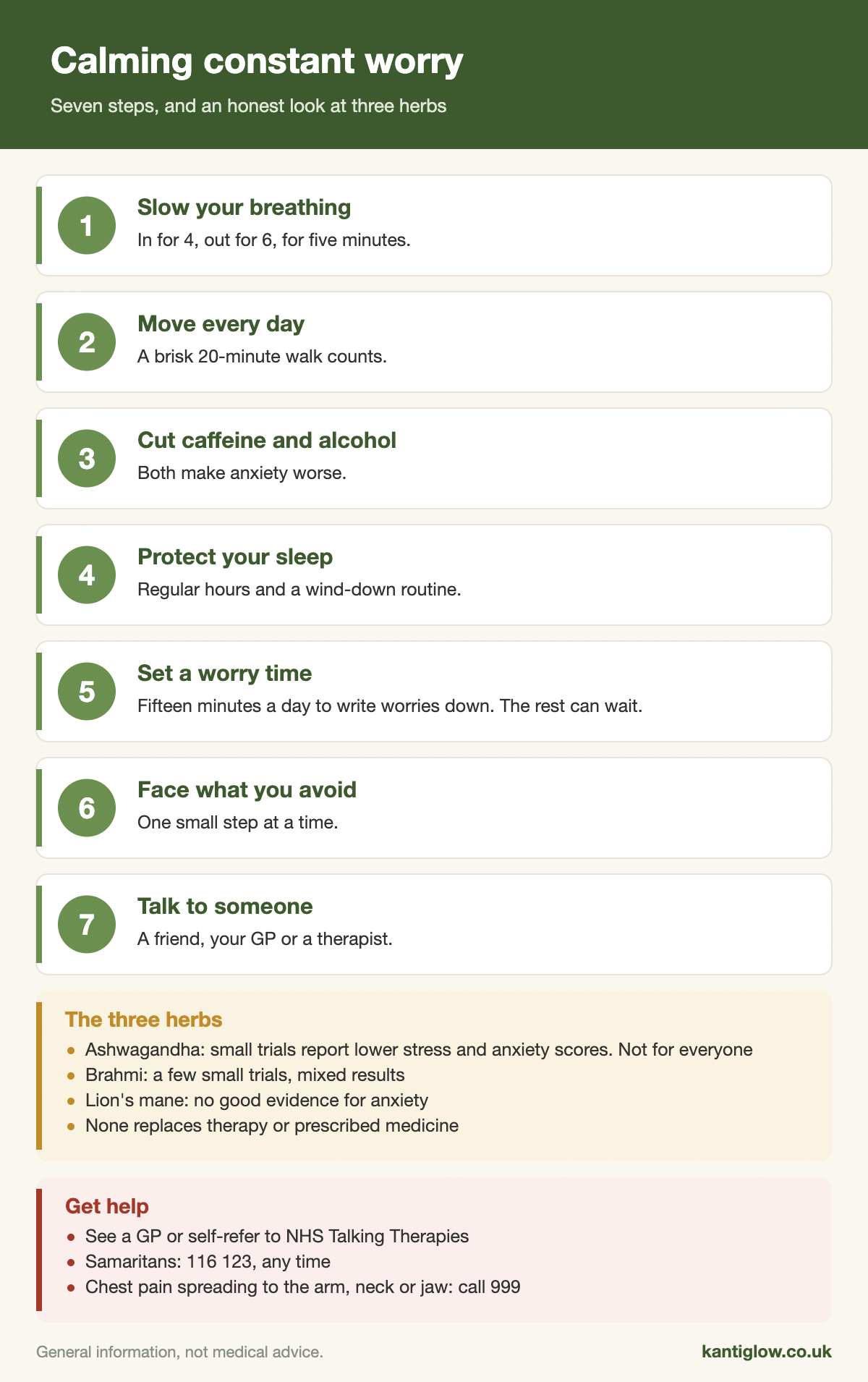
1. Slow your breathing. Breathe in gently through your nose for a count of four and out for a count of six. Keep going for five minutes. A longer out-breath switches on the body’s calming response. Practise when you are calm so it is there when you need it.
2. Move every day. Exercise uses up adrenaline and reliably reduces anxiety. A brisk 20-minute walk counts.
3. Cut caffeine. Coffee, strong tea, cola and energy drinks produce the same racing heart and jitters as anxiety. Reduce gradually over a week or two.
4. Do not use alcohol to cope. It calms for an hour and leaves you more anxious the next day.
5. Protect your sleep. Regular hours, a wind-down routine, and a notepad by the bed for thoughts that will not wait.
6. Eat regular meals.
7. Set a worry time. Give yourself 15 minutes at a fixed time each day to write worries down. When one turns up at another time, tell yourself it can wait until then. For each, ask: is there anything I can do about this? If yes, plan the next step. If no, practise letting it pass.
8. Face what you avoid, gradually. Avoidance brings relief now and makes anxiety stronger later. Break the feared thing into small steps and stay with each one until the anxiety drops.
9. Talk to someone you trust.
10. Try a guided programme. Self-help books and online courses based on CBT work well for many people.
11. Yoga, pilates or meditation if they suit you.
Treatment that works
- Talking therapy. CBT teaches you to notice and change the thinking and behaviour that keep worry going. Refer yourself to NHS Talking Therapies or ask a GP.
- Medicine. Usually an SSRI antidepressant. A GP will discuss benefits and side effects.
- Specialist support if these are not enough.
Brahmi, ashwagandha or lion’s mane?
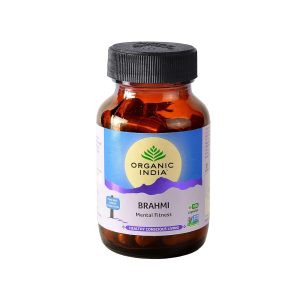
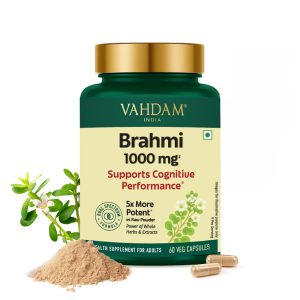
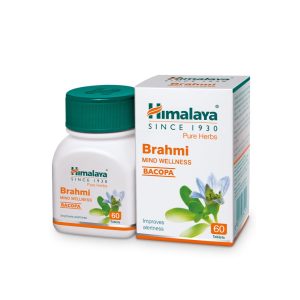
| Brahmi (Bacopa monnieri) | Ashwagandha (Withania somnifera) | Lion’s mane (Hericium erinaceus) | |
|---|---|---|---|
| What it is | A small creeping herb | The root of a shrub | An edible mushroom |
| Tradition | Ayurvedic herb for the mind (medhya) | Ayurvedic calming tonic | East Asian food and tonic |
| Research on anxiety | A few small trials, mostly measuring memory, with anxiety as a side measure. Mixed results | Several small trials, typically eight weeks, reporting lower stress and anxiety scores than placebo. Quality varies | One or two very small studies. Not established |
| How it feels | Subtle. Some feel calmer, some sleepy | Calming. Can cause drowsiness | Most people notice nothing |
| Common side effects | Nausea, stomach cramps, loose stools | Stomach upset, drowsiness | Stomach upset; rash in people allergic to mushrooms |
| Who should avoid or check first | Pregnancy and breastfeeding; slow heart rate; thyroid medicines; sedatives | Pregnancy and breastfeeding; thyroid, liver or autoimmune conditions; sedatives; thyroid, diabetes and blood pressure medicines | Mushroom allergy; pregnancy and breastfeeding; blood thinners |
| Safety notes | Do not confuse with gotu kola, which is also sold as “brahmi” | Rare cases of liver injury have been reported | Limited safety data |
Which, if any?
- If you want to try one, ashwagandha has the most evidence for feeling less stressed. It is still modest evidence, and it is unsuitable for a number of people.
- Brahmi is better thought of as a traditional herb for study and memory than for anxiety.
- Lion’s mane has no good evidence for anxiety.
- Do not combine all three. Start one at a time, at the label amount, for six to eight weeks.
- Do not take any of them with antidepressants or sedatives without asking a pharmacist, and never stop a prescribed medicine in favour of a herb.
No herb teaches you the skills that stop worry returning. Use them, if at all, alongside the steps above.
Other things people try
| Option | What we know |
|---|---|
| Chamomile, tulsi or lavender tea | Pleasant, caffeine-free and calming as a ritual |
| Lavender oil capsules | Some trial evidence for mild anxiety. Can cause burping |
| Magnesium | No good evidence for anxiety |
| L-theanine | Small trials. Found naturally in tea |
| CBD | Unproven, variable products |
| Valerian, passionflower | Used for sleep. Limited evidence |
| St John’s wort | Interacts with many medicines. Not advised for anxiety |
When to get help
See a GP, or refer yourself to NHS Talking Therapies, if anxiety is affecting your daily life or self-help has not worked. If you are pregnant or have had a baby in the last year, you can also speak to your midwife or health visitor. Call 999 for chest pain that spreads to the arm, neck or jaw, or that comes with breathlessness or sweating. If you feel you cannot keep yourself safe, call 111, or Samaritans on 116 123 at any time.
Constant worry: frequently asked questions
Why can’t I stop worrying?
Worry feels like problem-solving, so the mind keeps returning to it. It is a habit that can be changed.
What is generalised anxiety disorder?
Ongoing worry about many things that is hard to control and affects daily life.
What are the physical symptoms of anxiety?
A racing heart, tight chest, tense muscles, churning stomach and restlessness.
Can anxiety cause chest tightness?
Yes. New chest pain should still be checked.
Can anxiety cause stomach problems?
Yes.
What causes anxiety?
A mix of temperament, life events, stress and health. Often there is no single cause.
Does caffeine cause anxiety?
It can make it worse.
Does alcohol help anxiety?
Briefly. It worsens it the next day.
Does exercise help?
Yes.
How do I calm down quickly?
Slow your breathing, with a longer out-breath, for five minutes.
What is worry time?
A fixed 15 minutes a day for writing worries down, so they can wait at other times.
Does avoiding things help?
It gives short-term relief and strengthens anxiety over time.
What is CBT?
A talking therapy that changes unhelpful patterns of thinking and behaviour.
Can I refer myself for therapy?
Yes, to NHS Talking Therapies in England if you are 18 or over.
Do I need medication?
Not always. A GP can discuss it.
How long does treatment take?
Many people improve within a few weeks to months.
Can anxiety be cured?
Most people learn to manage it well.
Is it anxiety or my thyroid?
An overactive thyroid causes similar symptoms. A blood test will tell.
Can perimenopause cause anxiety?
Yes.
What is a panic attack?
A sudden surge of intense fear with physical symptoms, peaking within minutes.
What is brahmi?
Bacopa monnieri, a traditional Ayurvedic herb for the mind.
Does brahmi help anxiety?
A few small trials give mixed results.
What are the side effects of brahmi?
Nausea, cramps and loose stools.
What is ashwagandha?
The root of Withania somnifera, a traditional calming tonic.
Does ashwagandha reduce anxiety?
Small trials report lower stress and anxiety scores.
How long does ashwagandha take?
Trials usually ran for about eight weeks.
Is ashwagandha safe?
For many adults in the short term. Some people should avoid it.
Who should not take ashwagandha?
Pregnant or breastfeeding women, and people with thyroid, liver or autoimmune conditions, unless advised.
What is lion’s mane?
An edible mushroom.
Does lion’s mane help anxiety?
There is no good evidence.
Which of the three is best for anxiety?
Ashwagandha has the most evidence, though it is modest.
Can I take them together?
Start one at a time.
Can I take herbs with antidepressants?
Ask a pharmacist first.
Can herbs replace therapy or medication?
No.
Does chamomile tea help?
It is a calming, caffeine-free drink.
Does magnesium help anxiety?
There is no good evidence.
Does CBD help?
It is unproven.
Are herbs safe in pregnancy?
Do not take them without advice.
How can I help someone with anxiety?
Listen, avoid telling them to calm down, and encourage them to get help.
When should I see a GP?
If anxiety is affecting your daily life.
Sources
- NHS: Generalised anxiety disorder (GAD)
- NHS: NHS Talking Therapies
- NHS: Low mood, sadness and depression
- NHS: Herbal medicines
Shop related products at KantiGlow
- Organic India Brahmi Capsules
- Himalaya Brahmi Tablets
- Vahdam Brahmi (Bacopa) 1000mg
- Sri Sri Tattva Brahmi 500mg
- Jiva Ashwagandha + Brahmi Tablets
- Himalaya Organic Ashwagandha 670mg
All products are authentic Indian brands, sourced directly from India and dispatched within 24–72 hours (UK delivery typically 5–7 working days).
Related guides
Shop the products in this guide
- Sri Sri Tattva Brahmi 500mg Tablets 60 — £4.99
- Sri Sri Tattva Ashwagandhadi Tablets 60 — £5.99
- Lion’s Mane Mushroom Extract 10:1 Capsules 60 — £14.99
Lab-tested, vegetarian, shipped from India. Food supplements should not replace a varied diet.
This guide is general information, not medical advice. Herbal products and food supplements are not intended to diagnose, treat or cure any condition, including anxiety. Speak to a GP if anxiety is affecting your daily life.
Pingback: Ayurvedic Focus Routine for Exams & Deadlines (UK) | KantiGlow