Quick answer: You do not need to give up Indian food to bring your blood sugar down. Keep the cuisine and change the proportions: half the plate vegetables and salad, a quarter dal or other protein, and a quarter roti or rice. Choose wholemeal atta and smaller portions of basmati, cut back on sweets, fried snacks and sweet drinks, and eat a lighter evening meal. No single diet suits everyone, so treat the sample day below as a starting point and adapt it with your GP, nurse or dietitian.
Key facts
- There is no single best diet for prediabetes. The best one is the one you can keep to
- Plate guide: half vegetables and salad, a quarter protein, a quarter starchy carbohydrate
- One small chapati counts as one carbohydrate portion. Four to five tablespoons of cooked rice count as two
- Limit fruit juice and smoothies to 150 ml a day
- Swap butter and ghee for measured amounts of vegetable oil
- Jaggery, honey and sugar all raise blood sugar
- Methi and karela belong on the plate as foods, not as cures
The principle: keep the cuisine, change the proportions
A traditional Indian kitchen already holds much of what helps with blood sugar: dal and pulses, vegetables, wholemeal flour, yoghurt and spices. What tends to push blood sugar and weight up is the proportion of the plate given to rice, roti and potatoes, along with fried snacks, ghee, sweets and sweet drinks. Diabetes UK does not recommend one diet for everyone, and culturally familiar food is easier to stick with. So the aim here is adjustment, not replacement.
Build the plate
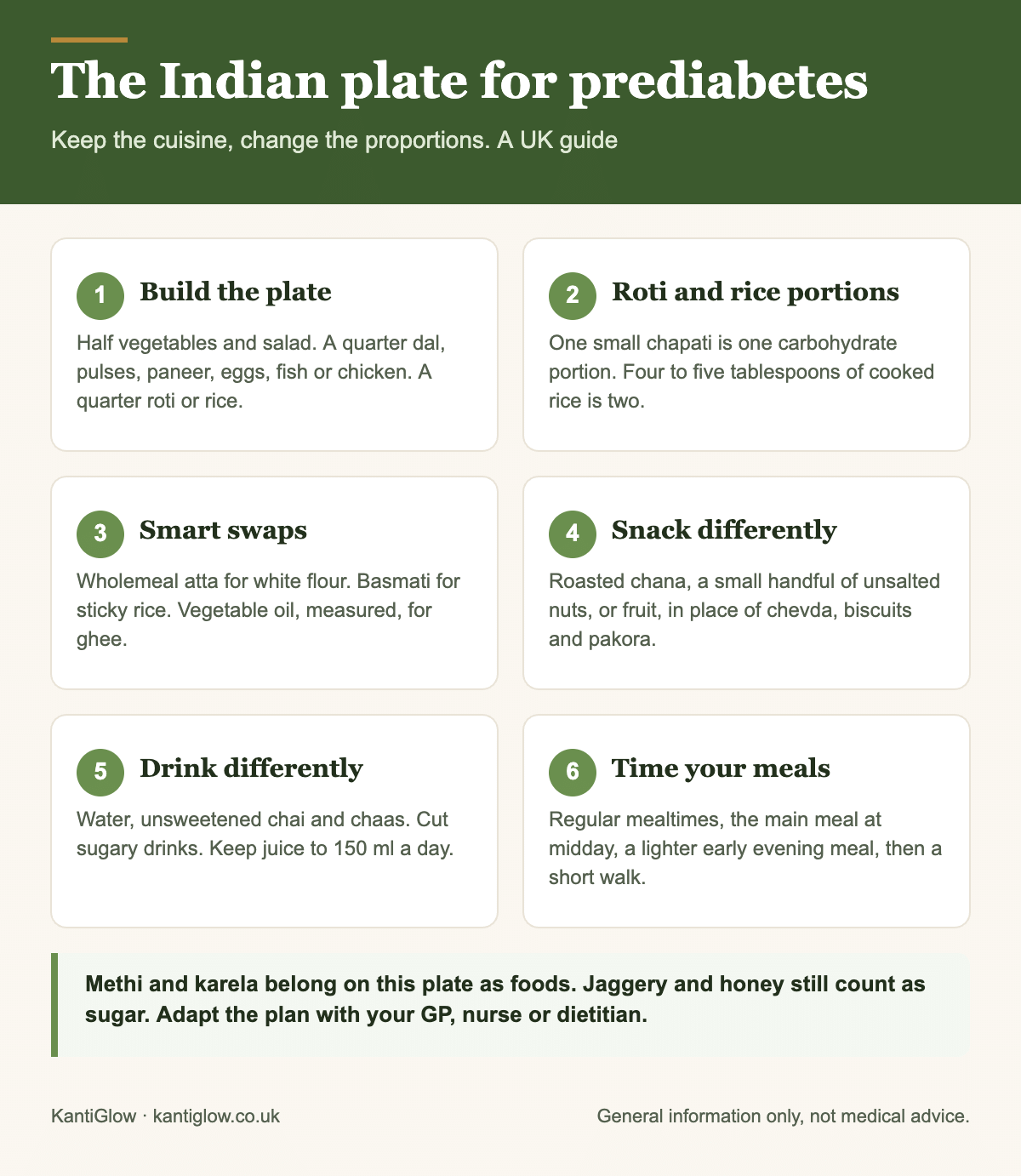
- Half the plate: vegetables and salad. Bhindi, karela, lauki, tinda, baingan, gobi, palak, methi leaves, cabbage, kachumber. Potato and sweetcorn count as starch, not vegetables.
- A quarter: protein. Dal, chana, rajma, sprouted moong, paneer, tofu, eggs, fish or chicken.
- A quarter: starchy carbohydrate. Wholemeal chapati, basmati or brown rice, millet roti.
- On the side: plain yoghurt or raita, and water.
Serve the vegetables and dal first, then add the roti or rice to the space that is left.
Roti and rice: how much?
NHS diabetes education material counts one small chapati as one carbohydrate portion and a large one as two. Four to five tablespoons of cooked rice count as two portions. Many people find that two small chapatis, or a few tablespoons of rice, at a main meal is a sensible starting point, and that having both roti and rice at the same meal quickly doubles the carbohydrate. Your own needs depend on your size, activity and goals, so check with your nurse or dietitian.
Wholemeal atta has more fibre than white flour, and basmati raises blood sugar more slowly than sticky or short-grain white rice. Neither makes large portions harmless.
Swaps that make the biggest difference
| Instead of | Try |
|---|---|
| White flour roti, naan, puri | Wholemeal chapati, or atta mixed with besan or millet flour |
| A full plate of white rice | A few tablespoons of basmati or brown rice with extra dal and sabzi |
| Paratha fried in ghee | Dry-roasted stuffed roti with a teaspoon of oil |
| Samosa, pakora, chevda | Roasted chana, sprouted moong chaat, a small handful of unsalted nuts |
| Sweet chai, several cups a day | Masala chai with no sugar, or reduce by half a teaspoon each week |
| Sweet lassi, juice, fizzy drinks | Chaas, water, sugar-free drinks |
| Butter and ghee, poured | Rapeseed or sunflower oil, measured with a spoon |
| Mithai as an everyday treat | Fruit most days, a small piece of mithai on occasions |
A sample day
These are examples, not prescriptions. Adjust portions to your appetite, activity and any advice from your healthcare team.
Vegetarian
- Breakfast: two besan or moong dal chilla with vegetables, plain yoghurt, unsweetened chai.
- Lunch (main meal): two small wholemeal chapatis, a bowl of dal, bhindi or karela sabzi, kachumber salad.
- Afternoon: a handful of roasted chana or one piece of fruit.
- Dinner (lighter, early): palak paneer or mixed vegetable curry with one chapati or three tablespoons of basmati rice, raita.
Non-vegetarian
- Breakfast: two-egg masala omelette with tomatoes and mushrooms, one slice of wholemeal toast.
- Lunch (main meal): tandoori chicken or fish curry, one to two small chapatis, a large salad, dal.
- Afternoon: a small handful of unsalted nuts, unsweetened chai.
- Dinner (lighter, early): chicken and vegetable soup or keema with peas, cabbage sabzi, three tablespoons of rice.
Where methi, karela and Ayurvedic routine fit
Methi and karela have a long history in Indian cooking and in Ayurveda, and both fit naturally into this plate: methi leaves in dal and thepla, a little ground methi seed in atta, karela as a dry sabzi. Fenugreek seed has some trial evidence for modest effects on blood sugar, and the evidence for karela is mixed. They are foods that support a good diet, not treatments. Ayurveda also recommends regular mealtimes, the main meal at midday and a light, early evening meal, which helps with portion control. For more detail see our guides to methi and to reversing prediabetes.
When to get personal advice
Ask your GP surgery for a referral to a dietitian or the NHS Diabetes Prevention Programme if you have prediabetes. Get personal advice before making big changes if you take diabetes medication, are pregnant, have kidney disease, or plan to fast.
Frequently asked questions
Can I eat Indian food with prediabetes?
Yes. Indian food built around dal, vegetables, wholemeal roti and sensible portions of rice suits prediabetes well. Portions, frying and sweets are what need adjusting.
What is the best Indian diet for prediabetes?
There is no single best diet. A plate that is half vegetables, a quarter protein and a quarter roti or rice, with few sweets and fried foods, is a sound starting point.
How many chapatis can I eat?
It depends on your size and activity. One small chapati counts as one carbohydrate portion, and many people start with two small ones at a main meal.
Is roti better than rice?
Wholemeal roti has more fibre than white rice, but both are carbohydrate. Portion size matters more than which one you choose.
Can I eat rice with prediabetes?
Yes, in smaller portions. Four to five tablespoons of cooked rice count as two carbohydrate portions. Pair it with dal and vegetables.
Is basmati rice better than other white rice?
Basmati raises blood sugar more slowly than sticky or short-grain white rice, but large portions will still raise it.
Is brown rice better?
Brown rice has more fibre and is a reasonable choice if you enjoy it. The portion still counts.
Can I have roti and rice in the same meal?
You can, but halve each. Having full portions of both doubles the carbohydrate on the plate.
Which flour is best for chapati?
Wholemeal atta. Mixing in besan, or millet flours such as bajra, jowar or ragi, adds fibre and variety.
Are millets good for prediabetes?
Millets such as bajra, jowar and ragi are wholegrains with more fibre than refined flour. They are still carbohydrate, so portions count.
Is dal good for blood sugar?
Yes. Dal and other pulses provide protein and fibre and raise blood sugar more slowly than rice or bread.
Is paneer OK?
Paneer is a good source of protein but is high in fat and calories. Use moderate portions and avoid deep frying it.
Are potatoes a vegetable on this plan?
Count potatoes as starchy carbohydrate, alongside roti and rice, not as part of the vegetable half of the plate.
Which vegetables are best?
Non-starchy vegetables such as bhindi, karela, lauki, gobi, baingan, palak, methi leaves, cabbage and salad.
Is karela good for prediabetes?
As a vegetable, yes. Evidence that karela itself lowers blood sugar is mixed, so enjoy it as part of the vegetable half of your plate.
Should I eat methi seeds every day?
Methi in food is a reasonable habit and has some supportive research. Larger supplement amounts can cause wind and may interact with diabetes medicines.
Can I eat idli and dosa?
Yes, in moderation. They are mainly carbohydrate, so have a smaller portion with plenty of sambar and vegetables.
Is poha or upma a good breakfast?
Both are mostly carbohydrate. Keep the portion modest and add vegetables, peanuts or a side of yoghurt or egg for protein.
What is a good Indian breakfast for prediabetes?
Besan or moong dal chilla with vegetables, a masala omelette, or plain yoghurt with fruit and nuts are all good choices.
Are parathas allowed?
Occasionally. Dry-roast them with a teaspoon of oil instead of frying in ghee, and count a paratha as more than one chapati.
Can I eat samosas and pakoras?
Keep them for occasions. They are deep fried and high in calories. Baking or air-frying reduces the fat.
What are good Indian snacks?
Roasted chana, sprouted moong chaat, a small handful of unsalted nuts, vegetable sticks with raita, or a piece of fruit.
Can I eat mithai?
Occasionally, in small pieces. Mithai is high in sugar and fat, so it is best kept for celebrations.
Are sugar-free sweets a good choice?
They contain less sugar but are often still high in fat and calories. Treat them as an occasional food too.
Is jaggery better than sugar?
No. Jaggery, honey and sugar all raise blood sugar. Use any of them sparingly.
Can I use sweeteners in chai?
Yes. Low-calorie sweeteners do not raise blood sugar and can help you cut down, though reducing sweetness overall is the better long-term goal.
How much chai can I drink?
Unsweetened chai is fine. If you take sugar, several cups a day add up, so cut down gradually.
Is lassi healthy?
Sweet lassi is high in sugar. Plain chaas or salted lassi made with low-fat yoghurt is a better choice.
Can I drink fruit juice?
Limit juice and smoothies to 150 ml a day. Whole fruit is better because it contains fibre.
Which fruits can I eat?
All whole fruits are fine in sensible portions. A portion is roughly a handful, such as one apple, one small banana or a few slices of mango.
Can I eat mango and banana?
Yes, in portion-sized amounts. A few slices of mango or one small banana is a portion. Spread fruit through the day.
Is ghee healthy?
Ghee is high in saturated fat and calories. Heart UK suggests swapping butter and ghee for vegetable oils and measuring what you use.
Which cooking oil should I use?
Unsaturated oils such as rapeseed, sunflower or olive oil, measured with a spoon rather than poured.
Is coconut oil a good choice?
Coconut oil is high in saturated fat, so it is best used occasionally rather than as your everyday oil.
Should I follow a low-carb Indian diet?
Some people find a lower-carbohydrate approach helps with weight and blood sugar. NHS prevention materials include South Asian low-carb meal plans. Discuss it with your team first if you take medication.
Do I need to count calories?
Not necessarily. Using the plate method, smaller carbohydrate portions and fewer fried and sweet foods is enough for many people.
What should I order at an Indian restaurant?
Tandoori or grilled dishes, dal, vegetable sides and salad. Choose either rice or bread, share it, and skip creamy sauces and fried starters.
How do I manage weddings and festivals?
Eat a normal meal beforehand, fill your plate with vegetables and protein first, choose one sweet you really want, and return to routine the next day.
Can I fast with prediabetes?
Many people can, but if you take any blood sugar medication speak to your GP first. Break fasts with balanced meals rather than fried and sweet foods.
Are fasting foods like sabudana OK?
Sabudana is almost pure starch and raises blood sugar quickly. Have a small portion and pair it with peanuts, yoghurt or vegetables.
Can I drink alcohol?
Within UK guidelines of no more than 14 units a week. Alcohol adds calories, and sweet mixers add sugar.
Does eating late affect blood sugar?
A heavy late meal is harder to burn off. A lighter, earlier evening meal followed by a short walk is a helpful habit.
Does walking after meals help?
Yes. Even two to five minutes of light walking after eating reduces the rise in blood sugar compared with sitting.
What does Ayurveda say about diet for blood sugar?
Eat at regular times, make lunch the main meal, keep the evening meal light, favour bitter vegetables and pulses, and limit sweet, oily and heavy foods.
Who can give me a personal diet plan?
A registered dietitian. Ask your GP surgery for a referral, or for the NHS Diabetes Prevention Programme if you have prediabetes.
Sources
- Diabetes UK: How to reverse prediabetes
- Leeds Community Healthcare NHS Trust: Healthy eating with type 2 diabetes guide
- Diabetes.co.uk: Healthy eating tips for South Asians
- Tools to support practice: healthy eating resources for South Asians
- Diabetes UK: Herbal and food supplements
- The effect of fenugreek in type 2 diabetes and prediabetes: meta-analysis (2023)
This guide is general information, not medical advice. It does not replace advice from your GP, pharmacist or diabetes team. Do not stop or change prescribed medication without speaking to them. Food supplements are not intended to diagnose, treat, cure or prevent any disease.