‘Greens’ have become a supermarket category in Britain, and four powders dominate the searches: moringa, spirulina, wheatgrass and sea moss. Only one of them — moringa — is Ayurvedic, but all four fit naturally into an Ayurvedic morning. This guide compares what each actually is, which nutrients they can lawfully claim, how they taste, and how to build a daily greens routine without buying all four.
The plan at a glance
- Moringa: leaf of the Indian drumstick tree — Ayurvedic; source of vitamin A, iron, calcium in the leaf
- Spirulina: blue-green algae — high-protein; source of iron and vitamin B12 varies by product
- Wheatgrass: young wheat shoots — mild, chlorophyll-rich, gluten-free when harvested young
- Sea moss: Irish moss seaweed — a source of iodine; take care with dose
- Routine: one greens serving in the morning, rotated weekly
Quick answers
- What is the difference between moringa, spirulina, wheatgrass and sea moss?
- Which greens can make nutrient claims in the UK?
- Which one is Ayurvedic?
- How do I build a daily greens routine?
- Which tastes best?
- Are there safety points?
- How much of each should I take?
- What is the Ayurvedic view of greens?
What is the difference between moringa, spirulina, wheatgrass and sea moss?
Moringa (Moringa oleifera) is a tree leaf from India, used in Ayurveda and in South Indian cooking; the dried leaf powder is a food. Spirulina is a cultivated blue-green algae, around 60% protein by weight, with a strong sea-like taste. Wheatgrass is the young shoot of the wheat plant, juiced or dried; it tastes grassy and is usually gluten-free because it is cut before grain forms. Sea moss (Chondrus crispus) is a red seaweed, popular on social media, notable for its iodine content. They are not interchangeable.
Which greens can make nutrient claims in the UK?
Claims belong to nutrients, not to the powder, and only where a serving supplies at least 15% of the reference intake. Moringa leaf powder is often a source of vitamin A (contributes to normal vision and normal immune function) and iron (contributes to normal formation of red blood cells). Spirulina can qualify for iron and sometimes protein. Sea moss can be a source of iodine (contributes to normal thyroid function) — but iodine has an upper limit, so follow the label precisely. Check the nutrition panel of the product you buy; if it does not show the amount, the claim cannot be made.
Which one is Ayurvedic?
Moringa — called shigru in the classical texts — is the only one of the four in the Ayurvedic tradition, where the leaves, pods and seeds are all used. Our moringa guide covers it in depth. Spirulina, wheatgrass and sea moss are modern additions that sit comfortably alongside.
How do I build a daily greens routine?
One serving a day, in the morning, in water, juice or a smoothie. Rotate rather than stack: moringa for a week or two, then spirulina, and so on. A ‘super greens’ blend that combines spirulina and wheatgrass is the easiest single product. Keep to labelled servings — more is not better, and sea moss in particular should never exceed the pack dose because of iodine.
Which tastes best?
Wheatgrass is the mildest (grassy, slightly sweet); moringa is earthy like matcha; spirulina is strong and marine and is best hidden in a fruit smoothie; sea moss is nearly tasteless as a gel but has a seaweed note as a powder. Capsules and tablets avoid the taste altogether.
Are there safety points?
Sea moss: iodine — do not exceed the dose, and avoid if you have a thyroid condition unless your doctor agrees. Spirulina: buy from a reputable brand with contamination testing, as poorly sourced algae can carry impurities. Wheatgrass: fine for most coeliacs as it is grain-free, but check the label. Pregnant or breastfeeding, or on medication? Ask a pharmacist first.
How much of each should I take?
Follow the pack, but as a guide: moringa leaf powder ½–1 teaspoon (2–4g) daily or two capsules; spirulina 1–3g daily (3–6 tablets); wheatgrass powder 1 teaspoon (3g) daily; sea moss strictly as labelled, typically one to two capsules, because iodine content varies widely. Start at half the dose for the first week. Greens are food, not medicine, and the labelled serving is the ceiling, not a starting point.
What is the Ayurvedic view of greens?
Ayurveda values green leaves — moringa, coriander, fenugreek leaf, spinach — but prefers them cooked and spiced rather than raw and cold, especially for vata types and in winter. A tablespoon of moringa powder stirred into a warm dal or soup is more in keeping with the tradition than a cold green smoothie. Spirulina and sea moss have no place in the classical texts, but they can sit alongside a warm Ayurvedic breakfast without conflict.
Shop this plan at KantiGlow
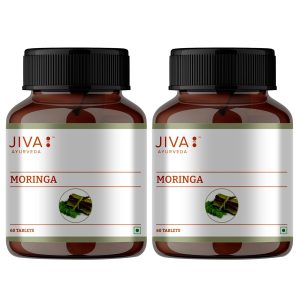
- Jiva Ayurveda Moringa Powder 200g
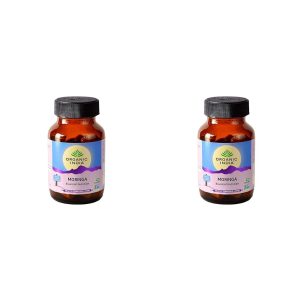
- Organic India Moringa Capsules
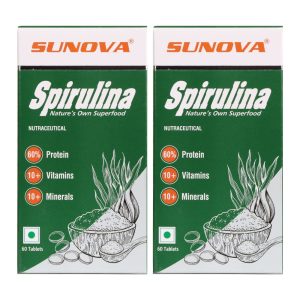
- Sunova Spirulina Tablets
- Organic India Wheatgrass Powder
- Sea Moss, Bladderwrack & Burdock Complex
- Super Greens Powder (Spirulina + Wheatgrass)
All products are authentic Indian and UK-labelled brands, sourced directly from India and dispatched within 24–72 hours (UK delivery typically 5–7 working days).
Related guides
Food supplements are not a substitute for a varied, balanced diet and a healthy lifestyle. Do not exceed the recommended daily dose. Keep out of reach of young children. If you are pregnant, breastfeeding, taking medication or under medical supervision, consult a healthcare professional before use. This guide describes traditional Ayurvedic routines and UK labelling rules; it is not medical advice, and nutrient claims apply only to products whose labels show the qualifying amount.
Shop the products in this guide
- Organic India Moringa 60 Veg Capsules 60 — £7.99
- Sunova Spirulina Tablets — £9.99
- Zespo Sea Moss with Bladderwrack & Burdock Capsules 60 — £11.99
- Organic India Wheatgrass Powder 100g — £9.99
Lab-tested, vegetarian, shipped from India. Food supplements should not replace a varied diet.