Quick answer: Adult acne is common, particularly in women, and it is usually driven by hormones, not by dirt or diet. What clears it is consistent treatment for long enough: benzoyl peroxide or salicylic acid from a pharmacy for six to eight weeks, and if that fails, prescription treatment from a GP, which typically takes two to three months. Wash gently twice a day, use non-comedogenic products and do not pick. Neem, turmeric and manjistha are traditional Ayurvedic skin herbs with very little clinical evidence, and they should not replace treatment. See a GP if spots are deep, painful or scarring, or if acne is getting you down.
Key facts
- Acne happens when hair follicles block with oil and dead skin cells, and bacteria cause inflammation.
- Triggers include hormone changes around periods, pregnancy and menopause, polycystic ovary syndrome, some medicines, and greasy skin or hair products.
- Most treatments take two to three months to work. Stopping early is the commonest reason they fail.
- Picking and squeezing cause scars. Scrubbing irritates skin and makes acne worse.
- Topical retinoids and some oral treatments must not be used in pregnancy.
- Creams containing steroids, including some “fairness” creams, cause and worsen acne.
Why am I still getting spots as an adult?
- Hormones. Flares before a period, and spots along the jaw and chin, point to a hormonal pattern. Acne with irregular periods and extra facial or body hair can be a sign of polycystic ovary syndrome.
- Products. Heavy creams, oils and make-up that block pores. Hair oils and pomades cause spots along the hairline and forehead.
- Steroid creams. Skin-lightening and “fairness” creams bought informally often contain strong steroids. They cause stubborn acne, thinning and redness.
- Medicines. Some contraceptives (the progestogen-only pill and the implant can worsen acne), steroids, lithium and some epilepsy medicines.
- Friction and sweat. Helmets, tight collars, masks and gym kit.
- Stress does not cause acne but can make it flare.
- Diet. The evidence is limited. Some studies link high-sugar diets and large amounts of milk with acne in some people. No food has been shown to cause it.
Acne is not caused by poor hygiene, and it is not infectious.
What works, step by step
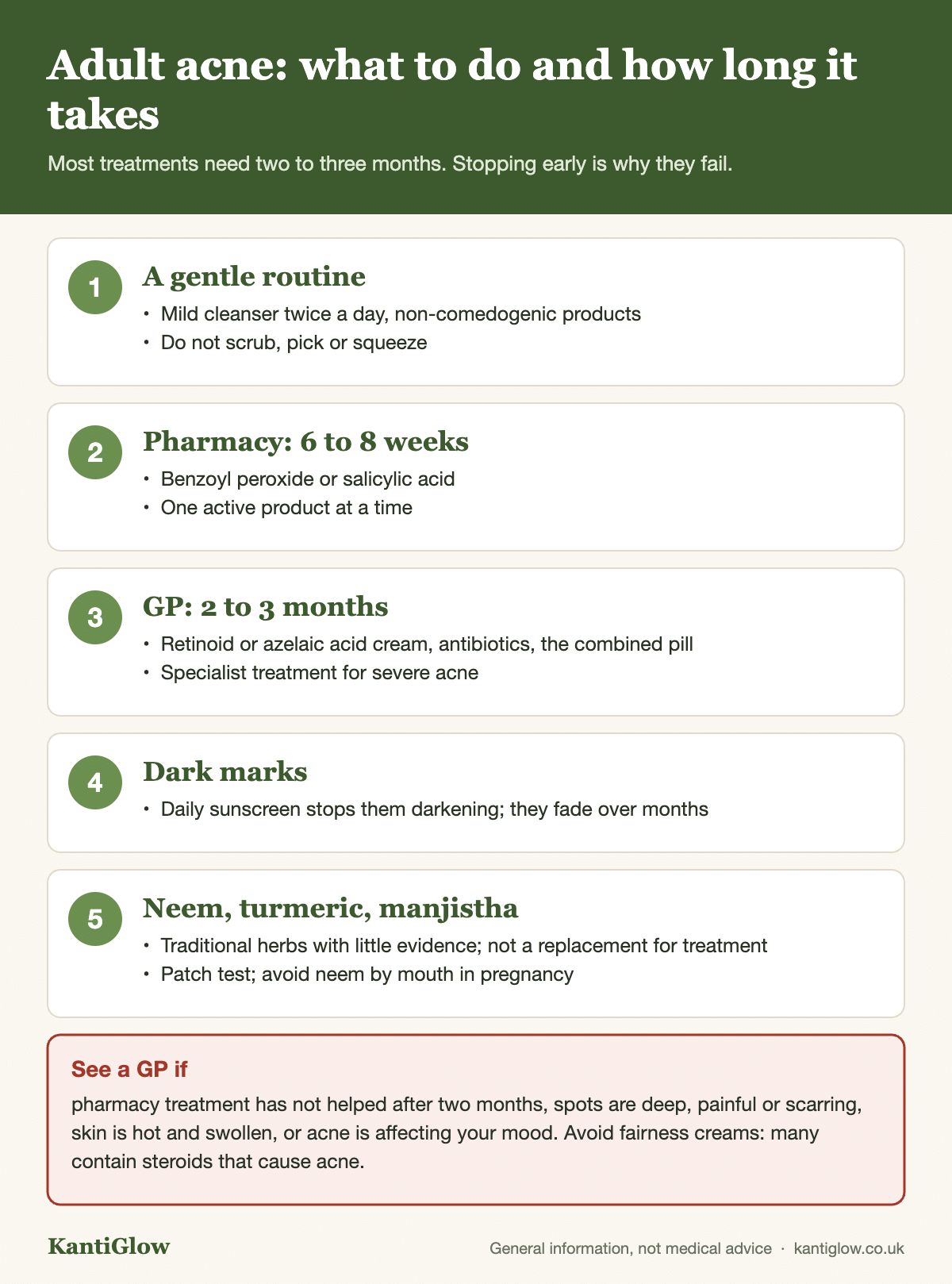
1. A gentle routine. Wash twice a day with a mild cleanser and lukewarm water. Remove make-up before bed. Choose products labelled non-comedogenic. Do not scrub, and do not pick or squeeze.
2. Pharmacy treatment for 6 to 8 weeks. Benzoyl peroxide gel or cream is the standard first choice. Start with a low strength once a day, because it can dry and irritate, and it bleaches towels and pillowcases. Salicylic acid is an alternative. Pharmacies also sell zinc and niacinamide. Use one active product at a time and give it the full six to eight weeks.
3. See a GP if it has not improved. Prescription options include:
| Treatment | How it is used | Time to work | Note |
|---|---|---|---|
| Topical retinoid | Gel or cream at night | 6 to 8 weeks | Not in pregnancy |
| Azelaic acid | Cream or gel | About a month | Also helps dark marks; suitable in pregnancy on advice |
| Topical antibiotic | With benzoyl peroxide | 6 to 8 weeks | Short courses only |
| Antibiotic tablets | Daily | About 6 weeks | Combined with a topical treatment |
| Combined contraceptive pill | Daily, for women | Up to a year for full benefit | Helps hormonal acne |
| Isotretinoin | Capsules, from a specialist only | Months | For severe acne; strict pregnancy prevention |
4. Treat the marks. In brown and black skin, spots often leave dark marks that last longer than the spot. They are not scars and they fade over months. Daily sunscreen stops them darkening, and azelaic acid and retinoids help. True scars (dents or raised lumps) need a dermatologist.
5. Keep going. Once clear, most people need to continue a maintenance treatment.
Where neem, turmeric and manjistha fit
| Herb | Traditional use | What research shows | Cautions |
|---|---|---|---|
| Neem | Leaf paste, soap and tablets for the skin | Laboratory studies show activity against bacteria. Human trials for acne are few and small | Neem oil can irritate; patch test. Do not take neem by mouth if pregnant, breastfeeding or trying to conceive. Not for children |
| Turmeric (haridra) | Face packs with gram flour; taken in food | Small studies of creams and gels; results are inconsistent | Stains skin and fabric yellow. Can cause contact allergy |
| Manjistha | Taken by mouth and in face packs; described in Ayurveda as a “blood purifier” | Almost no human research | Can turn urine orange-red. Avoid in pregnancy |
In the UK these cannot be sold as treating acne or “purifying” the blood, and “detox” claims have no scientific basis. If you like using them:
- Use them alongside treatment, not instead of it.
- Patch test any paste or oil on the inner arm for 24 hours.
- Do not apply home pastes to skin that is raw from benzoyl peroxide or a retinoid.
- Tell your GP or pharmacist about anything you take by mouth.
When to see a GP
See a GP if pharmacy treatment has not helped after two months, if you have many spots or spots that are deep, painful or leaving scars, if skin is hot, swollen and red, or if acne is affecting your mood or confidence. Mention irregular periods or excess hair, and any creams you have been using.
Adult acne: frequently asked questions
Why do I have acne in my 30s or 40s?
Hormone changes are the usual reason, particularly in women.
Is adult acne different from teenage acne?
It is the same condition. In adults it is often along the jaw and chin and flares with the menstrual cycle.
What causes spots on my chin and jawline?
That pattern is typical of hormonal acne.
Why do I break out before my period?
Hormone levels shift in the week before a period and increase oil production.
Could it be PCOS?
Possibly, if you also have irregular periods or excess facial or body hair. See a GP.
Does stress cause acne?
It does not cause it but can trigger flares.
Does diet cause acne?
Evidence is limited. High-sugar diets and a lot of milk may worsen it in some people.
Does chocolate cause spots?
There is no good evidence that it does.
Does dairy cause acne?
Some studies link milk with acne. If you suspect it, try reducing it for a few weeks.
Is acne caused by dirty skin?
No. Over-washing and scrubbing make it worse.
How often should I wash my face?
Twice a day with a gentle cleanser.
Should I moisturise if I have oily skin?
Yes, with a light, non-comedogenic moisturiser, especially when using drying treatments.
What does non-comedogenic mean?
The product is formulated not to block pores.
Does make-up cause acne?
Heavy, oily products can. Choose non-comedogenic ones and remove them at night.
Does hair oil cause forehead spots?
Yes, oils and pomades can block pores along the hairline.
Should I squeeze spots?
No. It increases the risk of scarring.
What is benzoyl peroxide?
A pharmacy treatment that reduces bacteria and unblocks pores.
How long does benzoyl peroxide take to work?
About six to eight weeks.
What is salicylic acid?
An ingredient that helps unblock pores, found in cleansers and gels.
Does niacinamide help acne?
It can reduce redness and oiliness and is sold in pharmacies.
Does zinc help?
Zinc supplements are sold for acne. Evidence is modest.
Do pimple patches work?
They protect a spot from picking and can help it heal.
Does toothpaste dry out spots?
It irritates skin. Do not use it.
Does tea tree oil work?
Small studies suggest a mild effect. It can irritate, and must be diluted.
Does sunbathing clear acne?
No. It can worsen dark marks and damages skin.
What can a GP prescribe?
Retinoid or azelaic acid creams, antibiotics, and for women the combined pill.
How long do prescription treatments take?
Usually two to three months.
Can the pill help acne?
The combined pill can. The progestogen-only pill and implant can make it worse.
What is isotretinoin?
A capsule for severe acne, prescribed only by specialists because of its side effects.
Can I treat acne in pregnancy?
Some treatments are not safe. Speak to your midwife, GP or pharmacist.
How do I fade dark marks?
Daily sunscreen, time, and azelaic acid or a retinoid.
Can acne scars be treated?
Yes, by a dermatologist. Not all treatments are available on the NHS.
Does neem help acne?
Evidence in people is very limited.
Is neem safe to take by mouth?
Not if you are pregnant, breastfeeding or trying to conceive. Otherwise follow the label and keep to short periods.
Does a turmeric face mask help?
Results are inconsistent, and it stains.
What is manjistha?
The root of Rubia cordifolia, a traditional Ayurvedic skin herb.
Does manjistha purify the blood?
That is a traditional description, not a proven effect.
Is multani mitti good for oily skin?
Clay masks absorb oil temporarily. Overuse dries the skin.
Can fairness creams cause acne?
Yes. Many contain steroids that cause acne and thin the skin.
Does sweating or the gym cause spots?
Sweat and tight clothing can. Shower and change soon after exercise.
Can acne affect mental health?
Yes. Tell your GP if it is affecting your mood.
Will my acne go away?
It can be controlled in almost everyone with the right treatment.
Do I need a dermatologist?
Your GP will refer you if acne is severe or not responding.
When should I see a GP?
If pharmacy treatment has not worked after two months, or spots are painful or scarring.
Sources
Shop the products in this guide
- Elecious Neem Powder 200g — £5.99
- Neuwganic Organic Manjistha Powder 100g — £4.99
- Himalaya Haridra Turmeric (60) — £8.99
- Neemveda Neem, Turmeric & Black Pepper (180) — £7.99
- Jiva Skin Fit Clear Complexion (120) — £5.99
- Jiva Skin Fit Blood Purity (120) — £4.99
- Sariva (Anantmool) Churna — £7.99
- The Skin & Hair Kit — £31.00
Batch lab-tested, shipped from India. Food supplements should not replace a varied, balanced diet and a healthy lifestyle.
This guide is general information, not medical advice. Herbal products are not intended to diagnose, treat or cure any condition. Speak to a pharmacist or GP about acne that persists, and before taking a herbal product if you are pregnant, breastfeeding or take medication.