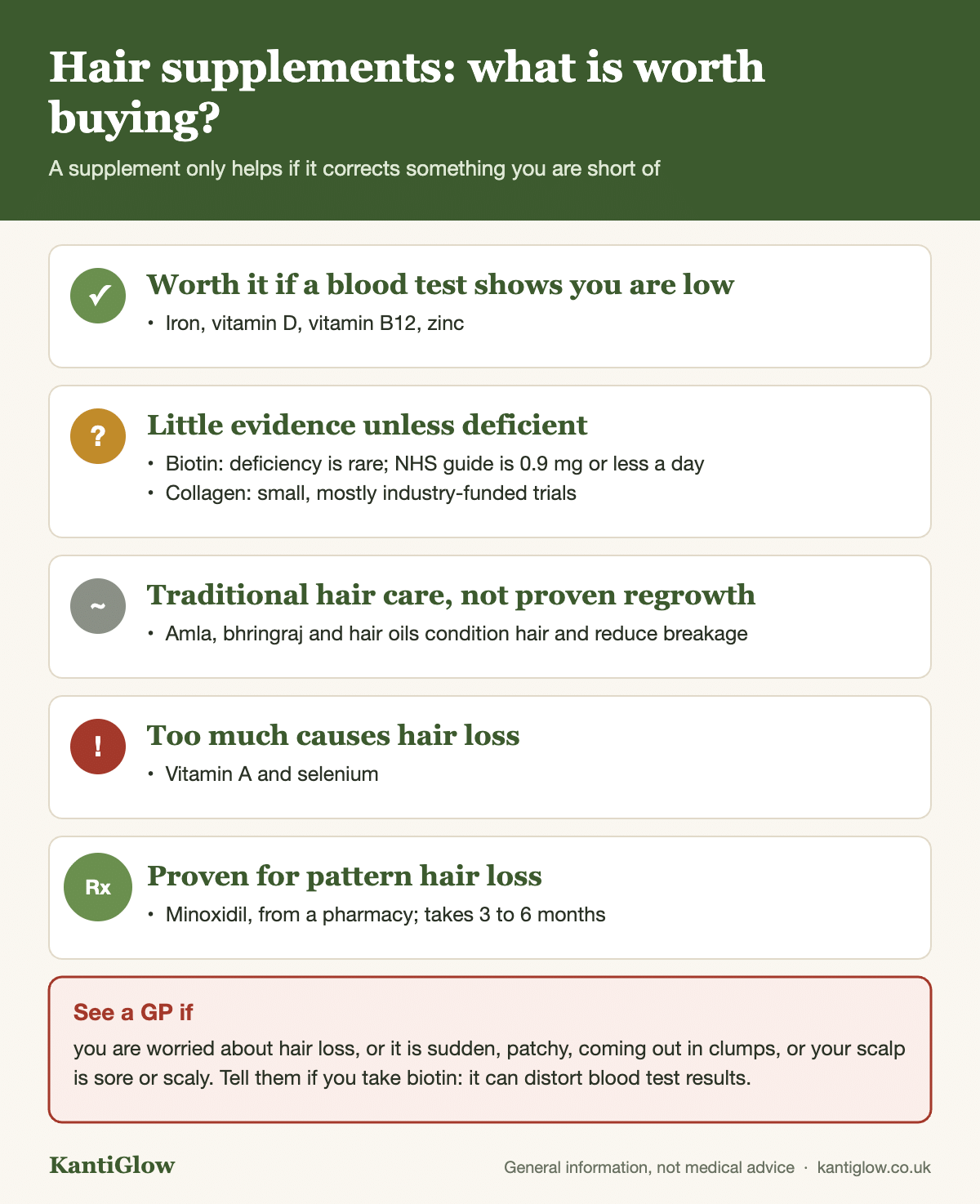
Quick answer: A hair supplement only helps if it corrects something you are short of. The deficiencies that matter for hair are iron, vitamin D, vitamin B12, zinc and protein, and a blood test from your GP can check most of them. Biotin is the best-selling hair vitamin, but deficiency is rare, there is no good evidence it helps people who are not deficient, and the NHS says to keep supplements to 0.9 mg or less a day, far below what many “hair” products contain. Amla and bhringraj are traditional Indian hair-care herbs with almost no human trials for regrowth. For pattern thinning, the treatment with real evidence is minoxidil. Start by finding out why your hair is thinning.
Key facts
- Losing 50 to 100 hairs a day is normal.
- Pattern hair loss is permanent without treatment and runs in families. Temporary loss follows illness, stress, weight loss or iron deficiency.
- Biotin, zinc and selenium each have an authorised claim for the maintenance of normal hair. That is not a claim that extra amounts grow hair.
- The NHS says 0.9 mg or less of biotin a day from supplements is unlikely to cause harm. Many hair products contain 5 to 10 mg.
- High-dose biotin can distort blood test results, including thyroid and heart tests.
- Too much vitamin A or selenium can cause hair loss.
First, why is it thinning?
Supplements are the wrong starting point if you do not know the cause. In brief:
- Gradual thinning at the parting, crown or temples is usually pattern hair loss.
- Sudden shedding all over usually follows a trigger two to three months earlier.
- Patches, a sore or scaly scalp, or thinning edges have other causes.
Our guide Hair Falling Out? Find the Cause First explains how to tell them apart and which blood tests to ask for.
Which supplement, if any?
| Supplement | Helps when | Evidence if you are not deficient | Watch out for |
|---|---|---|---|
| Iron | A blood test shows low ferritin or anaemia | None | Constipation, stomach upset. Harmful in excess. Keep away from children |
| Vitamin D | Levels are low; UK advice is 10 micrograms a day in winter anyway | Weak | Do not exceed 100 micrograms a day |
| Vitamin B12 | You are vegan, vegetarian or take metformin, and levels are low | None | Usually very safe |
| Zinc | Intake is low | Weak | High doses cause nausea and reduce copper absorption |
| Biotin | True deficiency, which is rare | None of good quality | NHS: 0.9 mg or less a day. Interferes with blood tests |
| Collagen | Not established | Small, mostly industry-funded trials | Not vegetarian |
| Amla | Not established | Almost no human trials | Supplies vitamin C |
| Bhringraj | Not established | Animal studies only | Avoid in pregnancy |
| Selenium, vitamin A | Rarely needed | None | Excess of either causes hair loss |
Biotin in detail
Biotin is a B vitamin found in small amounts in many foods, and gut bacteria make some too. A varied diet supplies all you need. Deficiency does cause hair loss, but it is seen mainly in rare inherited conditions, long-term use of some epilepsy medicines, or eating raw egg whites regularly.
Hair supplements often contain 5,000 or 10,000 micrograms (5 to 10 mg). That is many times the NHS’s 0.9 mg guide figure, and there is not enough evidence on the effects of taking high doses every day. The clearest known problem is that it interferes with laboratory tests and can produce falsely normal or abnormal results for thyroid function and for troponin, the test used to diagnose a heart attack. If you take biotin, tell anyone ordering a blood test, and ask how long to stop beforehand.
Amla in detail
Amla is Indian gooseberry, a vitamin C-rich fruit. It is used in hair oils, in powder masks and as a food. As oil or a mask it conditions the hair. As food it contributes vitamin C, which helps the body absorb iron from plant foods, a useful point if your iron is low. There are no good human trials showing that amla regrows hair.
Bhringraj in detail
Bhringraj (Eclipta alba) is the herb most associated with hair in Ayurveda, mainly as an oil massaged into the scalp. Studies in mice have shown faster hair growth. No good trials have been done in people. As an oil it is a reasonable choice for scalp massage and conditioning. Taken by mouth, follow the label, and avoid it in pregnancy.
What does have evidence
- Minoxidil lotion or foam, from a pharmacy, for male and female pattern hair loss. It takes three to six months and works only while you keep using it.
- Finasteride tablets for men only.
- Treating the cause of shedding: iron, thyroid, a medicine, or simply time after illness or childbirth.
- Enough protein and calories. Crash dieting is a common trigger.
- Gentle handling: loose styles, less heat, and oiling to reduce breakage.
Not all treatments are available on the NHS, and the NHS advises speaking to a GP before paying a commercial hair clinic.
How to decide in four steps
- Work out the pattern, and ask a GP about blood tests if you are shedding.
- Correct anything a test shows is low.
- If it is pattern hair loss, talk to a pharmacist about minoxidil.
- If you still want a supplement, choose a multivitamin with modest amounts over a high-dose single ingredient, and review at six months. Hair grows about 1 cm a month, so nothing can be judged sooner.
When to see a GP
See a GP if you are worried about hair loss, if it is sudden, patchy or coming out in clumps, if your scalp is sore, itchy or scaly, or if it is affecting your wellbeing. Your GP may be able to arrange counselling, and Alopecia UK can point you to support groups.
Thinning hair: frequently asked questions
Do hair supplements work?
Only if they correct a deficiency.
What is the best vitamin for thinning hair?
Whichever one a blood test shows you are low in. Iron and vitamin D are the most common.
Does biotin help hair growth?
Not unless you are deficient, which is rare.
How much biotin is safe?
The NHS says 0.9 mg or less a day from supplements is unlikely to cause harm.
Is 10,000 mcg of biotin too much?
It is more than ten times the NHS guide figure, with no proven extra benefit.
Can biotin affect blood tests?
Yes, including thyroid and troponin tests.
How long before a blood test should I stop biotin?
Ask the clinician ordering the test. A few days is commonly advised.
Can biotin cause acne?
Some people report breakouts on high doses. It has not been well studied.
What are the signs of biotin deficiency?
Hair loss, a scaly red rash and brittle nails. It is rare.
Does low iron cause hair thinning?
Yes, low iron stores are linked with shedding.
Should I take iron for my hair?
Only if a blood test shows you need it.
Does vitamin D help hair?
Low levels are associated with some hair loss. Take 10 micrograms a day in autumn and winter in any case.
Does zinc help hair?
Zinc contributes to the maintenance of normal hair. Extra zinc helps only if your intake is low.
Does B12 deficiency cause hair loss?
It can contribute. Vegans and people on metformin are at higher risk.
Can too many vitamins cause hair loss?
Yes. Excess vitamin A and selenium both can.
Do hair gummies work?
They are usually biotin with sugar. See the answers on biotin.
Does collagen help hair?
Evidence is limited and mostly industry funded.
Does protein intake matter?
Yes. Hair is made of protein, and low intake causes shedding.
What is amla?
Indian gooseberry, a fruit rich in vitamin C.
Does amla regrow hair?
There is no good human evidence that it does.
Is amla oil good for hair?
It conditions hair and is pleasant for scalp massage.
Should I eat amla or apply it?
Either is fine. Eating it supplies vitamin C; applying it conditions the hair.
What is bhringraj?
An Ayurvedic herb, Eclipta alba, traditionally used in hair oils.
Does bhringraj work?
Animal studies are positive. Human trials are lacking.
Bhringraj oil or tablets?
Oil is the traditional use and the lower-risk option.
Can I use amla and bhringraj together?
Yes, they are commonly combined in hair oils.
Biotin, amla or bhringraj: which should I buy?
None is proven to regrow hair. A blood test is a better first purchase.
Does hair oiling help thinning?
It reduces breakage so hair looks fuller. It does not grow new hair.
Does rosemary oil work?
One small trial was encouraging. More research is needed.
What is minoxidil?
A scalp treatment proven to help pattern hair loss in men and women.
Is minoxidil available on the NHS?
Generally not. You buy it from a pharmacy.
Can women use finasteride?
No.
Do caffeine shampoos work?
Evidence is weak.
Does saw palmetto help?
Small studies only. It is not recommended in pregnancy.
Does methi (fenugreek) help hair?
A few small studies exist. Evidence is not strong.
Does onion juice help?
One small study in alopecia areata. It can irritate.
Do multivitamins help hair?
They cover small dietary gaps. Check they do not duplicate other supplements.
How long should I try a supplement?
Six months. Hair grows slowly.
Will my hair grow back?
After temporary shedding, usually yes. Pattern hair loss needs ongoing treatment.
Is thinning hair hereditary?
Pattern hair loss usually runs in families.
Does stress cause thinning?
Severe stress can trigger shedding a few months later.
Does menopause thin hair?
Yes, pattern thinning often shows around menopause.
Should I go to a hair clinic?
Speak to a GP first.
When should I see a GP?
If you are worried, or hair loss is sudden, patchy or affecting your wellbeing.
Sources
- NHS: Hair loss
- NHS: B vitamins and folic acid (biotin)
- NHS: Iron deficiency anaemia
- NHS: Vitamin D
- British Association of Dermatologists: Telogen effluvium
- Great Britain nutrition and health claims register
Shop the products in this guide
- The Forest Herbs Bhringraj Powder 200g — £6.99
- Organic India Amla Powder 200g — £8.99
- Jiva Amla 500mg Tablets — £12.99
- Tata 1mg Biotin Advanced (60) — £8.99
- Revital Biotin + Amla (50) — £15.99
- Men’s Hair Support with Biotin — £18.99
- HealthVit Biotino Plus Tablets — £4.99
- The Skin & Hair Kit — £31.00
Batch lab-tested, shipped from India. Food supplements should not replace a varied, balanced diet and a healthy lifestyle.
This guide is general information, not medical advice. Food supplements and herbal products are not intended to diagnose, treat or cure any condition. See a GP about hair loss that worries you, and tell them about any supplements you take.