Quick answer: Losing 50 to 100 hairs a day is normal. If you are losing clearly more, the first job is to work out why, because the fix depends on the cause. Sudden all-over shedding usually follows a trigger two to three months earlier, such as illness, childbirth, rapid weight loss or stress, and it normally grows back within about six months. Gradual thinning at the parting or hairline is usually pattern hair loss, which needs a different approach. Ask a GP to check your ferritin, thyroid and blood count before spending money on supplements. Oiling, amla and bhringraj are sound ways to look after hair and scalp, but none is proven to regrow hair.
Key facts
- 50 to 100 hairs a day is normal shedding.
- Stress shedding (telogen effluvium) starts 2 to 3 months after the trigger.
- Low iron stores and thyroid problems are common, treatable causes. Both are found with a blood test.
- Biotin only helps hair if you are deficient, which is rare. It can also interfere with some blood tests.
- Minoxidil is the main proven treatment for pattern hair loss. It is not available on the NHS.
- See a GP for sudden loss, bald patches, clumps coming out, or an itchy, burning scalp.
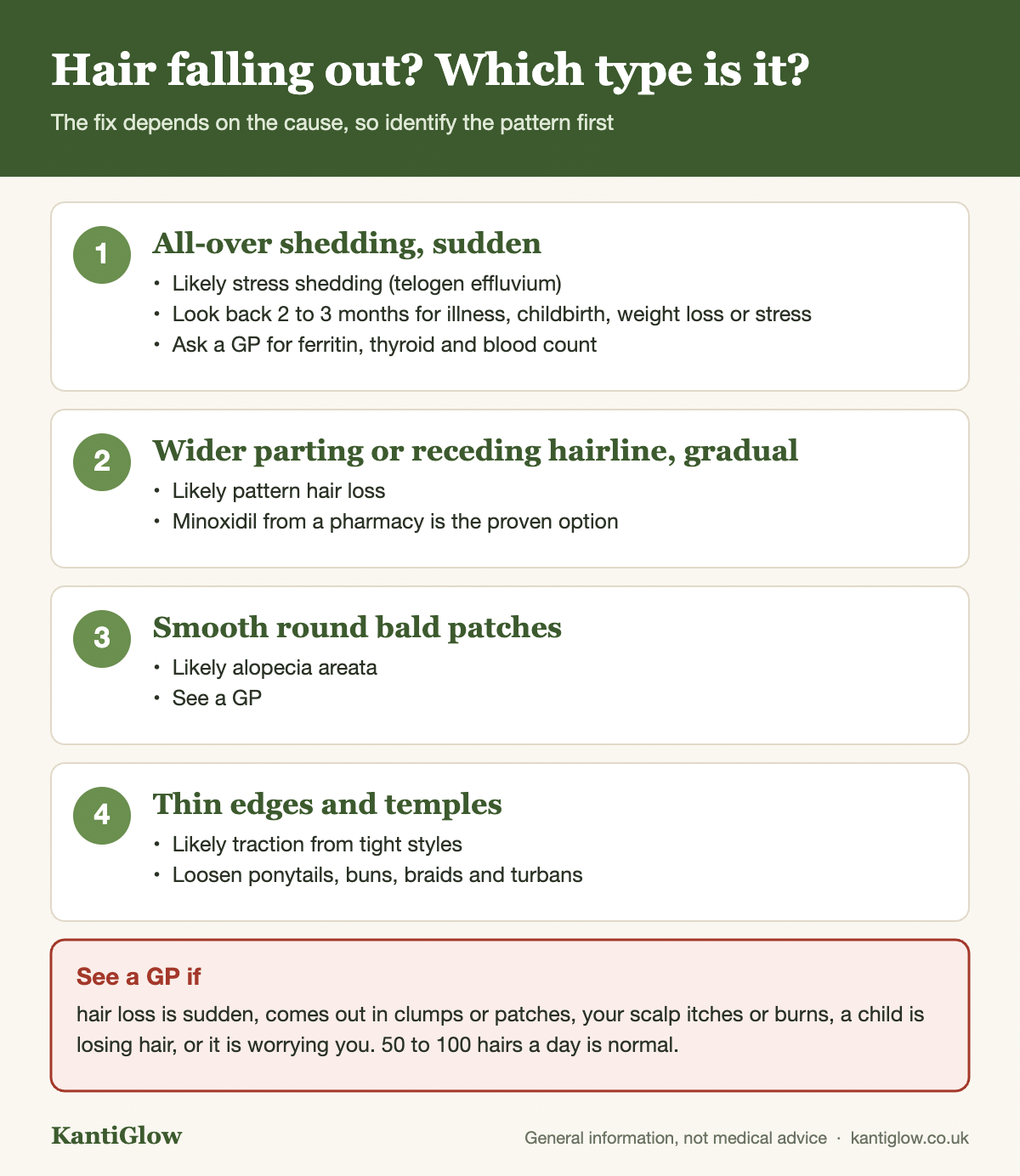
Which type of hair loss do I have?
| What you see | Most likely | First step |
|---|---|---|
| Hair coming out all over, handfuls in the shower, started suddenly | Telogen effluvium (stress shedding) | Look back 2 to 3 months for a trigger. Ask a GP for blood tests. |
| Parting getting wider, ponytail thinner, slow change over years | Female pattern hair loss | GP or pharmacist. Minoxidil is the proven option. |
| Receding temples, thinning crown | Male pattern hair loss | Pharmacist. Minoxidil or finasteride. |
| Smooth round bald patches | Alopecia areata | GP. |
| Thinning at the hairline and temples | Traction from tight styles | Loosen ponytails, buns, braids and turbans. |
| Itchy, flaky, sore or scarred scalp | Scalp condition | GP. Needs treating before hair recovers. |
Common triggers for sudden shedding
- Illness with a high temperature, including flu and Covid
- Childbirth (shedding peaks about three to four months after delivery)
- Rapid weight loss, crash diets and weight-loss injections
- Low iron stores, especially with heavy periods or a vegetarian diet
- Thyroid problems
- Surgery, bereavement or a period of severe stress
- Starting or stopping some medicines, including the contraceptive pill
Blood tests worth asking for
A GP will usually check a full blood count, ferritin (iron stores) and thyroid function. Depending on your history they may add vitamin D, B12 or hormone tests. Do not start iron tablets on a guess. Too much iron is harmful, and taking it before the test hides the result.
The 8-week plan
Weeks 1 and 2: find the cause. Write down anything that happened two to three months before the shedding began. Book the blood tests. Take a photo of your parting and hairline in the same light so you have a baseline.
Weeks 3 and 4: stop the damage. Loosen tight styles. Turn the heat down on straighteners and dryers. Detangle from the ends up with a wide-tooth comb. Do not skip washing to “save” hair: the hairs that come out in the wash had already let go.
Weeks 5 and 6: feed the hair. Eat protein at every meal: dal, eggs, paneer, yoghurt, fish, chicken, nuts. Include iron-rich food (lentils, chickpeas, spinach, red meat) with vitamin C to help absorption. Take vitamin D through autumn and winter as the UK government advises. Take iron only if a test shows you need it.
Weeks 7 and 8: build the routine. Oil the scalp and lengths once or twice a week for 30 to 60 minutes before washing. Use a gentle shampoo. Compare your photos at week 8. New short hairs along the parting are a good sign.
Hair grows about 1 cm a month, so real change takes three to six months. Eight weeks is long enough to fix the cause and stop making it worse.
Amla, bhringraj, neem and oiling: what they can and cannot do
- Hair oiling. Coconut oil in particular reduces protein loss and breakage, so hair looks thicker and snaps less. It does not make follicles grow new hair. If you have dandruff or seborrhoeic dermatitis, heavy oiling can make the scalp worse.
- Amla. A vitamin C-rich fruit used in Indian hair oils and powders for generations. Human research on hair growth is very limited.
- Bhringraj. The classic Ayurvedic hair herb. The evidence is from animal studies, not people.
- Neem. Traditionally used on a flaky scalp. It can irritate sensitive skin, so patch test first.
Treat these as hair care, in the same way you would a good conditioner.
Biotin: read this before you buy
Biotin contributes to the maintenance of normal hair, and that is the authorised UK claim. Deficiency is rare if you eat a mixed diet, and there is no good evidence that extra biotin helps people who are not deficient. High-dose biotin can also interfere with blood tests, including thyroid tests and the troponin test used for heart attacks. Tell your doctor you take it, and stop a few days before a blood test if they advise.
Proven treatments
For pattern hair loss, minoxidil lotion or foam is available from pharmacies for men and women. Finasteride is for men only. Neither works for everyone, both take months, and the effect stops when you stop. They are not provided on the NHS for this purpose. The NHS advises seeing a GP before paying a commercial hair clinic.
When to see a GP
See a GP if you have sudden hair loss, bald patches, hair coming out in clumps, a scalp that itches or burns, or if the hair loss is worrying you. Any hair loss in a child should be seen. Hair loss can be upsetting, and a GP can also point you to support. Alopecia UK runs peer support groups.
Hair falling out: frequently asked questions
How much hair loss is normal?
Around 50 to 100 hairs a day. More on wash days is expected.
Why is my hair suddenly falling out?
Usually because of a trigger two to three months ago, such as illness, childbirth, weight loss or stress.
Will it grow back?
Stress shedding almost always does, typically within about six months. Pattern hair loss does not without treatment.
How long does telogen effluvium last?
Shedding usually eases within three to six months once the trigger has passed.
Can stress really make hair fall out?
Yes. Severe physical or emotional stress pushes hairs into the resting phase, and they shed a few months later.
Does low iron cause hair loss?
Low iron stores are linked to shedding, especially in women. A ferritin blood test checks it.
What ferritin level is good for hair?
There is no agreed figure. Ask your GP to explain your result in context.
Should I take iron tablets?
Only if a blood test shows you need them.
Can thyroid problems cause hair loss?
Yes, both underactive and overactive thyroid can. It is found with a blood test and is treatable.
Does vitamin D deficiency cause hair loss?
Low vitamin D is associated with some hair loss, though cause is not proven. UK advice is 10 micrograms a day in autumn and winter anyway.
Why is my hair falling out after having a baby?
Hormone levels drop after birth and many hairs shed together around three to four months later. It recovers.
Do weight-loss injections cause hair loss?
Rapid weight loss of any kind can trigger shedding. Eating enough protein helps limit it.
Does washing hair every day cause hair loss?
No. Washing only removes hairs that had already detached.
Does hard water cause hair loss?
It can make hair dry and prone to breaking. It does not cause loss from the root.
Do tight hairstyles cause hair loss?
Yes. Constant pulling causes traction alopecia, which can become permanent if it continues.
Does wearing a turban or hijab cause hair loss?
Only if the hair underneath is tied tightly. Vary the position and keep the knot loose.
Does oiling stop hair fall?
It reduces breakage. It does not stop shedding from the root.
Which oil is best?
Coconut oil has the best evidence for reducing protein loss. Amla and bhringraj oils are traditional choices.
How often should I oil my hair?
Once or twice a week is enough. Leave it on for 30 to 60 minutes before washing.
Should I leave oil on overnight?
You can if your scalp tolerates it. If you have dandruff, keep it short.
Can oiling make hair loss worse?
Hairs loosened by massage were about to fall anyway. Heavy oil can aggravate a flaky, itchy scalp.
Does amla help hair growth?
It is a traditional hair tonic. Good human studies are lacking.
Does bhringraj regrow hair?
There is no human evidence that it does.
Is amla better as powder, juice or oil?
For hair care, oil or a powder mask is the traditional use. As food, any form adds vitamin C.
Does biotin help hair growth?
Only if you are deficient, which is rare.
How much biotin should I take?
Most people need none beyond their diet. If you take it, keep to the label and tell your doctor.
Can biotin affect blood tests?
Yes. It can give false results on thyroid and heart tests.
Does rosemary oil work?
One small trial found it similar to weak minoxidil after six months. More research is needed.
Does onion juice work?
A small study in alopecia areata showed some regrowth. It can irritate the scalp, and evidence is thin.
Does scalp massage help?
It feels good and may help blood flow. Evidence for regrowth is weak.
What is minoxidil?
A lotion or foam applied to the scalp that is proven to help pattern hair loss in men and women.
How long does minoxidil take?
Three to six months, and you may shed more in the first few weeks.
Is minoxidil on the NHS?
No, you buy it from a pharmacy.
Can women take finasteride?
No, it is licensed for men only.
Do hair gummies and collagen work?
There is little evidence they help unless they correct a deficiency.
What should I eat for healthy hair?
Enough protein, iron, zinc and overall calories. Crash diets are a common cause of shedding.
Is a vegetarian diet bad for hair?
No, but pay attention to protein, iron, zinc and B12.
Does menopause cause hair thinning?
Yes, pattern thinning often becomes noticeable around menopause.
Does PCOS cause hair loss?
It can cause thinning on the scalp with extra hair on the face or body. See a GP.
Why is my scalp itchy and flaky as well?
That suggests a scalp condition such as seborrhoeic dermatitis or psoriasis. Treat the scalp first.
Does dandruff cause hair loss?
Not directly, but scratching and inflammation can increase shedding.
Is hair loss in a child normal?
No. Always see a GP.
Should I go to a hair clinic?
See a GP first to find the cause before paying for private treatment.
How will I know the plan is working?
Fewer hairs in the brush and shower, and short new hairs along the parting, usually from month three.
Sources
- NHS: Hair loss
- British Association of Dermatologists: Telogen effluvium
- NHS: Vitamin D
- Great Britain nutrition and health claims register
- Alopecia UK
Shop this plan at KantiGlow
- The Skin & Hair Kit
- Organic India Amla Powder 200g
- Moolveda Bhringraj Tablets
- Carbamide Forte Biotin + Bhringraj
- Tata 1mg Biotin Advanced
- Revital Biotin + Amla
All products are authentic Indian and UK-labelled brands, sourced directly from India and dispatched within 24–72 hours (UK delivery typically 5–7 working days).
Related guides
Shop the products in this guide
- Moolveda Amalaki Rasayan Tablets 60 — £6.99
- The Forest Herbs Bhringraj Powder 200g — £6.99
- Tata 1mg Biotin+ Advanced Tablets 60 — £8.99
- Elecious Neem Powder 200g — £5.99
Lab-tested, vegetarian, shipped from India. Food supplements should not replace a varied diet.
This guide is general information, not medical advice. Food supplements and herbal products are not intended to diagnose, treat or cure any condition. See a GP about hair loss that is sudden, patchy or worrying you.
Pingback: Collagen + Amla 12-Week Skin Routine (UK Guide) | KantiGlow