Quick answer: A dip in alertness in the early afternoon is built into the body clock, so everyone has one. It turns into a crash when it meets short sleep, a large carbohydrate-heavy lunch, hours of sitting, too little water or caffeine wearing off. The fixes are practical: enough sleep at regular times, a lighter lunch with protein and fibre, a ten-minute walk in daylight after eating, water, and caffeine kept to the morning. Korean ginseng is mildly stimulating and has small trials suggesting it reduces fatigue a little, but it can raise heart rate and disturb sleep. Ashwagandha is calming, not energising. Neither replaces the basics. See a GP if you are exhausted most of the day for more than a few weeks.
Key facts
- The body clock produces a natural dip in alertness in the early afternoon, as well as at night.
- Regular meals and healthy snacks spaced a few hours apart keep energy steadier than fewer large meals.
- Even mild dehydration can cause tiredness.
- Caffeine late in the day disrupts sleep, which makes the next afternoon worse.
- Exercise, even a short walk, reduces tiredness.
- See a GP if you have been tired for a few weeks and do not know why.
Why do I crash in the afternoon?
- Your body clock. Alertness dips roughly seven to nine hours after waking, whatever you eat.
- Sleep debt. If you slept six hours or less, the dip hits much harder.
- A big lunch. Large meals, especially those high in refined carbohydrate such as white rice, white bread, pasta, chips and sugary drinks, are followed by a drop in alertness.
- Sitting still. Hours without moving lower alertness.
- Not drinking enough.
- Caffeine wearing off. A strong morning coffee can leave a trough by early afternoon.
- Alcohol the night before, even a couple of drinks.
- A warm, stuffy room.
- Medical causes if it is severe or new: sleep apnoea, low iron, an underactive thyroid, diabetes or prediabetes, depression, or medicines that cause drowsiness.
What beats the slump
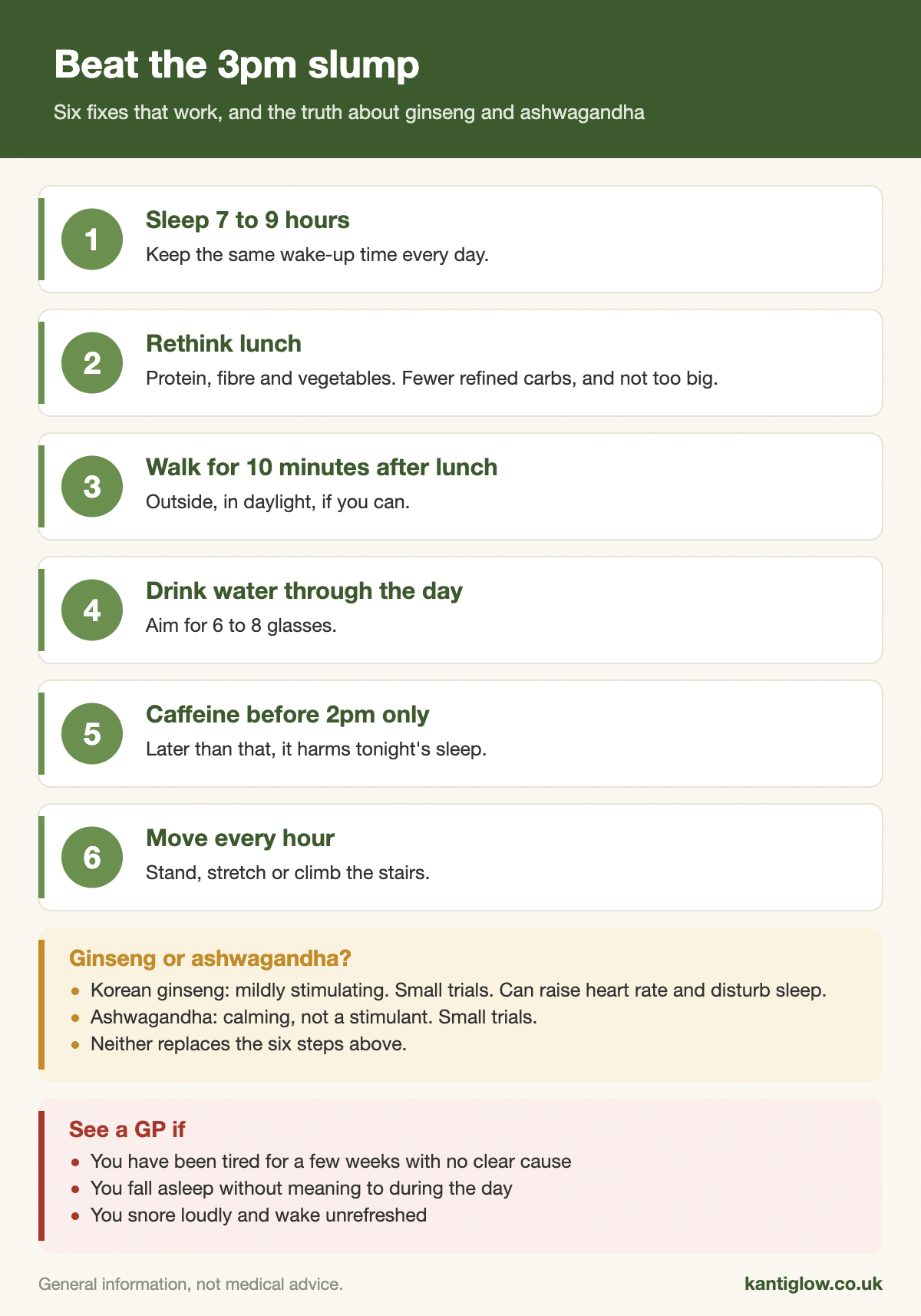
1. Fix sleep first. Seven to nine hours, with the same bedtime and wake-up time every day. No afternoon trick makes up for a short night.
2. Rethink lunch.
- Make it moderate in size, not the largest meal of your day if afternoons are a problem.
- Build it around protein and fibre: dal or beans, eggs, chicken, fish, paneer or tofu, with plenty of vegetables.
- Swap some of the white rice, bread or pasta for wholegrain versions, or simply halve the portion.
- Skip sugary drinks and desserts at lunchtime.
3. Walk for ten minutes after eating, outside if you can. Daylight and movement together are the fastest fix.
4. Drink water through the day. Keep a bottle on your desk.
5. Time your caffeine. Have it in the morning, and no later than about 2pm. A cup of tea just before the dip helps some people, as long as it does not push your bedtime later.
6. Move every hour. Stand, stretch, climb the stairs, or take phone calls on your feet.
7. Snack sensibly if lunch was light: fruit and nuts, yoghurt, hummus and carrots, or roasted chana.
8. Use the dip. Schedule routine tasks for early afternoon and demanding ones for the morning.
9. A short nap, if your day allows it: 10 to 20 minutes before 3pm, with an alarm. Skip naps if you have trouble sleeping at night.
10. Cool, fresh air. Open a window.
Ayurveda offers the opposite advice on lunch: it traditionally recommends the main meal at midday, when digestion is said to be strongest, followed by a short walk. If a larger lunch suits you, the walk and the make-up of the meal matter more than its size.
Korean ginseng or ashwagandha?
People often reach for one of these when they feel flat. They are very different herbs.
| Korean ginseng (Panax ginseng) | Ashwagandha (Withania somnifera) | |
|---|---|---|
| Also called | Asian or red ginseng | Indian ginseng, winter cherry. It is not a true ginseng |
| Tradition | East Asian medicine; a stimulating tonic | Ayurveda; a calming tonic |
| How it feels | Mildly stimulating | Relaxing; some people feel drowsy |
| Evidence for tiredness | Small trials and reviews suggest a modest reduction in fatigue. Quality is mixed | Small trials in stressed adults report less fatigue, probably through better sleep and lower stress |
| Usual time taken | Morning | Evening |
| Common side effects | Trouble sleeping, headache, stomach upset, palpitations, raised blood pressure | Drowsiness, stomach upset |
| Who should avoid or check first | High blood pressure, heart conditions, pregnancy and breastfeeding; people taking warfarin, diabetes medicines, some antidepressants or stimulants | Pregnancy and breastfeeding; thyroid, liver or autoimmune conditions; people taking sedatives, thyroid, diabetes or blood pressure medicines |
| How long | Usually limited to about three months, then a break | Trials lasted up to about three months |
Which, if either?
- If you are tired because you are wound up and sleeping badly, a stimulant will make things worse. Ashwagandha is the more logical of the two, though sleep habits matter more.
- If you sleep well and simply want a lift, Korean ginseng is the stimulating one, but so is a cup of tea, and tea is cheaper and better understood.
- Do not take the two together to “balance” each other. Start with one.
- Neither has an authorised health claim in the UK, and neither can be sold as increasing energy.
If you try one, choose a single-ingredient product, take it at the label amount, review after eight weeks, and stop if you notice palpitations, poor sleep, headaches, or yellowing of the skin or eyes.
Other things people try
| Option | What we know |
|---|---|
| Energy drinks | A caffeine and sugar spike followed by a dip. Not a solution |
| B vitamins | Reduce tiredness only if you are low |
| Iron | Only if a blood test shows you need it |
| Vitamin D | Advised in winter. Not an energy supplement |
| Magnesium | Contributes to a reduction in tiredness and fatigue if intake is low |
| Shilajit, chyawanprash | Traditional tonics with little evidence for daytime energy |
| Green tea | Gentle caffeine with L-theanine; a reasonable afternoon choice before 2pm |
| Peppermint or ginger tea | Caffeine-free and refreshing |
When to see a GP
See a GP if you have been tired for a few weeks with no clear cause, if you fall asleep unintentionally during the day, if you snore loudly and wake unrefreshed, or if tiredness comes with great thirst and passing urine often, weight change, heavy periods, breathlessness or low mood. Never drive when you feel sleepy.
Afternoon slump: frequently asked questions
Why do I get tired at 3pm?
The body clock dips in the early afternoon, and short sleep or a heavy lunch makes it worse.
Is the afternoon slump normal?
A mild one is. Struggling to stay awake is not.
Does lunch cause the slump?
A large or carbohydrate-heavy lunch deepens it.
What should I eat for lunch to avoid a crash?
Protein, vegetables and wholegrains in a moderate portion.
Does rice make you sleepy?
A large portion of white rice can. Try a smaller portion with more dal and vegetables.
Should I skip lunch?
No. It tends to lead to a bigger dip and overeating later.
Does sugar give you energy?
Briefly, followed by a drop.
Does coffee after lunch help?
It can, but after about 2pm it harms sleep.
What is a coffee nap?
A coffee followed at once by a 15-minute nap. Some people find it effective.
Are naps good or bad?
A short nap before 3pm can help. Avoid naps if you sleep badly at night.
How long should a nap be?
10 to 20 minutes.
Does walking after lunch help?
Yes.
Does dehydration cause tiredness?
Yes, even when mild.
How much water should I drink?
Six to eight glasses a day.
Does lack of sleep cause the afternoon crash?
It is the biggest factor.
Why am I tired after eating?
Blood sugar and gut hormones change after a meal. Marked sleepiness after every meal should be checked.
Could it be diabetes?
Tiredness with thirst and frequent urination needs a blood test.
Could it be low iron?
Possibly, especially with heavy periods.
Could it be my thyroid?
An underactive thyroid causes extreme tiredness. A blood test will show it.
Could it be sleep apnoea?
Loud snoring and daytime sleepiness suggest it. See a GP.
What is Korean ginseng?
The root of Panax ginseng, a stimulating tonic in East Asian medicine.
Does ginseng give you energy?
Small trials suggest a modest reduction in fatigue.
When should I take ginseng?
In the morning.
What are the side effects of ginseng?
Trouble sleeping, headache, stomach upset and palpitations.
Does ginseng raise blood pressure?
It can. Avoid it if yours is high unless a doctor agrees.
Can I take ginseng with coffee?
The stimulant effects add up. Be cautious.
Can I take ginseng with warfarin?
No, not without advice.
How long can I take ginseng?
Usually up to about three months, then a break.
What is red ginseng?
Korean ginseng that has been steamed and dried.
Is ashwagandha a type of ginseng?
No. It is called Indian ginseng but is unrelated.
Does ashwagandha give you energy?
It is calming. Any effect on tiredness comes through stress and sleep.
When should I take ashwagandha?
Usually in the evening.
Does ashwagandha make you sleepy?
It can.
Which is better, ginseng or ashwagandha?
They do different things. Ginseng stimulates; ashwagandha calms.
Can I take ginseng and ashwagandha together?
Start with one. Combining them has not been well studied.
Who should avoid ginseng?
People with high blood pressure or heart conditions, and pregnant or breastfeeding women.
Who should avoid ashwagandha?
Pregnant or breastfeeding women, and people with thyroid, liver or autoimmune conditions unless advised.
Is American or Siberian ginseng the same?
No. They are different plants with different effects.
Do energy drinks help?
For an hour or so, then they make things worse.
Do B vitamins give you energy?
Only if you are deficient.
Does exercise help tiredness?
Yes, including on the same day.
Does a standing desk help?
Changing position through the day helps alertness.
Why am I more tired in winter afternoons?
Less daylight. Get outside at lunchtime.
When should I see a GP?
If tiredness has lasted a few weeks or you fall asleep unintentionally.
Sources
- NHS: Self-help tips to fight tiredness
- NHS: Tiredness and fatigue
- NHS: Insomnia
- NHS: Water, drinks and hydration
- NHS: Herbal medicines
- Great Britain nutrition and health claims register
Shop the products in this guide
- Pure Nutrition Korean Red Ginseng — £15.99
- Health Veda Korean Red Ginseng 1000mg — £12.99
- Himalayan Organics Korean Red Panax Ginseng 1000mg — £15.99
- Jiva Stress Free Ashwagandha and Brahmi (120) — £6.99
- Baidyanath Ashwagandhadi Churna 100g — £4.99
- Dabur Ashwagandha Capsules (20) — £3.99
Batch lab-tested, shipped from India. Food supplements should not replace a varied, balanced diet and a healthy lifestyle.
This guide is general information, not medical advice. Herbal products and food supplements are not intended to diagnose, treat or cure any condition. Speak to a GP about tiredness that persists, and to a pharmacist before taking a herbal product if you have a medical condition or take medication.