Quick answer: High blood pressure usually has no symptoms, so the reading is what matters: 140/90 or higher at a clinic, or 135/85 or higher at home. It can often be brought down by eating less salt, eating more fruit, vegetables and pulses, being active for 150 minutes a week, losing weight if you need to, drinking less alcohol and not smoking. If it stays high, or your risk of heart attack or stroke is raised, daily tablets are very effective and you should take them. Pomegranate juice has small, short trials showing a modest fall in blood pressure. Extracts are less studied, the effect is far smaller than medication, and pomegranate must never replace prescribed treatment.
Key facts
- High blood pressure is 140/90 or higher measured by a healthcare professional, or 135/85 or higher measured at home.
- It rarely causes symptoms. The only way to know is to have it measured.
- Risk is higher with age, a family history, and Black African, Black Caribbean or South Asian background.
- Get checked at a pharmacy or GP surgery if you are 40 or over and have not been checked in the last 5 years. Many pharmacies offer free checks to over-40s.
- Aim for less than 6 g of salt a day, 14 units of alcohol a week or fewer, and at least 150 minutes of exercise a week.
- Medicine is offered if blood pressure is very high, if your risk of heart attack or stroke is higher, or if it stays high after lifestyle changes.
What do the numbers mean?
A reading has two numbers. The first (systolic) is the pressure when your heart beats. The second (diastolic) is the pressure between beats.
| Reading | At a clinic | At home |
|---|---|---|
| High | 140/90 or higher | 135/85 or higher |
One high reading is not a diagnosis. Blood pressure rises with stress, caffeine, a full bladder and rushing to the appointment. Your GP may ask you to take readings at home for a week or wear a monitor for 24 hours.
Measuring at home. Use an upper-arm monitor that has been validated. Sit quietly for five minutes with your back supported, feet flat and arm resting at heart level. Do not talk. Take two readings a minute apart, morning and evening, and write them down.
High blood pressure matters because, untreated, it raises the risk of stroke, heart attack, heart failure, kidney disease and dementia.
What brings blood pressure down
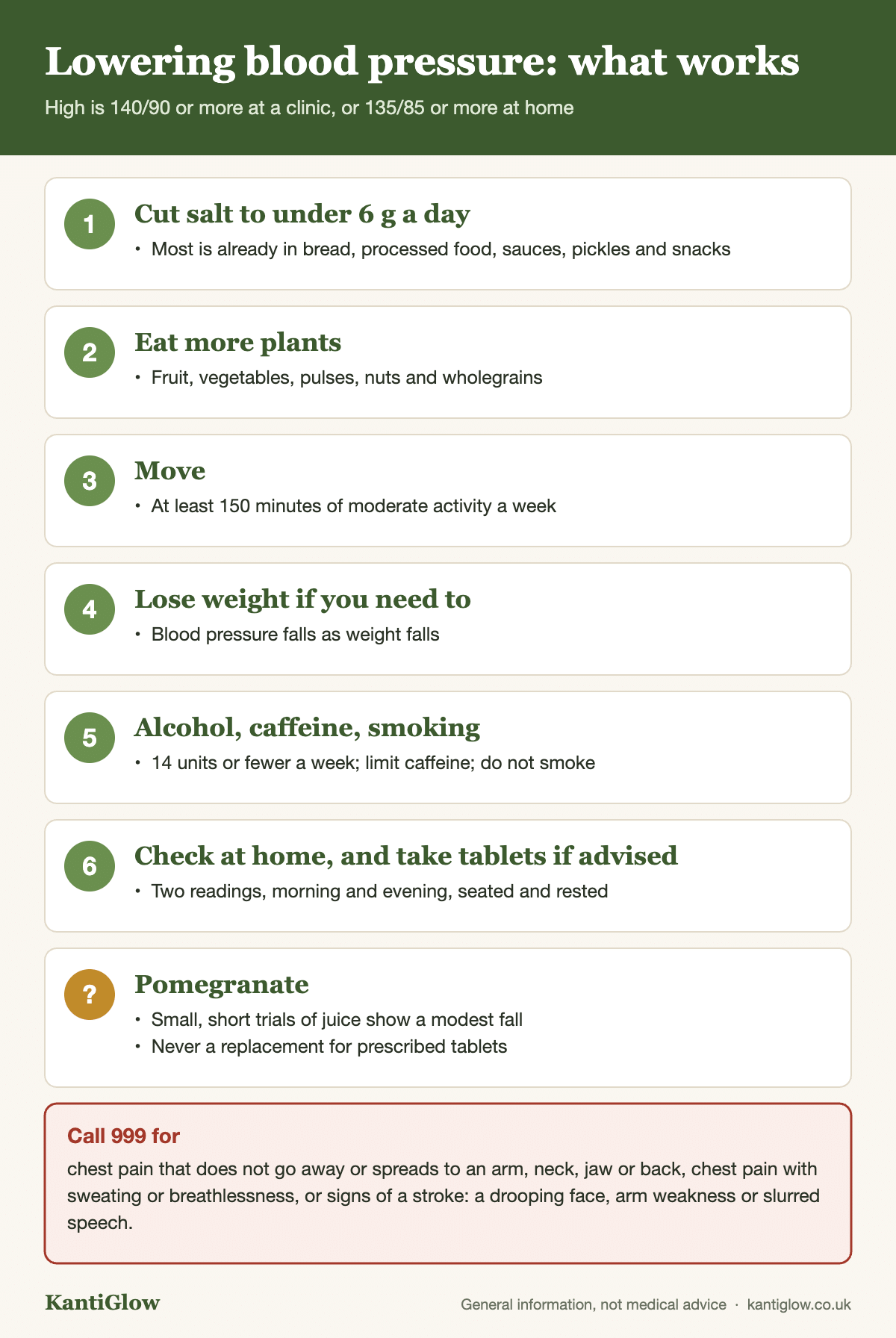
1. Cut salt. This has the largest effect of any dietary change. Keep under 6 g a day, about a teaspoon. Three-quarters of the salt we eat is already in food: bread, cereals, processed meat, cheese, sauces, takeaways, crisps, pickles, papad and namkeen. Cook with less, taste before adding more, and use lemon, ginger, garlic, chilli and spices for flavour. Check labels: more than 1.5 g of salt per 100 g is high.
2. Eat more plants. Fruit, vegetables, pulses, nuts and wholegrains supply potassium and fibre, which help lower blood pressure. If you have kidney disease or take certain blood pressure tablets, ask before increasing potassium a great deal or using salt substitutes.
3. Move. At least 150 minutes of moderate activity a week, such as brisk walking, cycling or swimming.
4. Lose weight if you are overweight. Blood pressure falls roughly in step with weight.
5. Alcohol, caffeine and smoking. Keep alcohol to 14 units a week or fewer. Limit coffee, tea and cola. Do not smoke.
6. Sleep and stress. Aim for seven to nine hours. Loud snoring with daytime sleepiness can mean sleep apnoea, which raises blood pressure.
7. Check your medicines. Anti-inflammatory painkillers such as ibuprofen, some decongestants, the combined pill and liquorice can all raise blood pressure. Ask a pharmacist.
8. Recheck. Give the changes two to three months and measure again.
9. Take tablets if they are advised. They are usually taken once a day, many people need more than one, and they cut the risk of stroke and heart attack substantially. Do not stop them because you feel well.
Does pomegranate help?
What it is. Pomegranate fruit, juice and peel are rich in polyphenols, the best known being punicalagins. Supplements contain extracts, often of the peel, standardised to a stated percentage of punicalagins or ellagic acid.
What trials show.
- Pooled results from small trials of pomegranate juice, typically a glass a day for a few weeks, show an average fall in systolic blood pressure of a few points.
- The trials were short and small, and it is not known whether the effect lasts or reduces strokes or heart attacks.
- Extract capsules have been studied less than juice, and results are mixed.
- By comparison, a single blood pressure tablet typically lowers systolic pressure by around ten points, and salt reduction by about five.
Things to weigh up.
- Juice contains as much sugar as other fruit juices. Only 150 ml a day counts towards your five a day, and it matters if you have diabetes or are watching your weight. Eating the fruit gives you the fibre too.
- Pomegranate may add to the effect of blood pressure tablets. Tell your GP or pharmacist, and watch for dizziness.
- It may affect how the liver handles some medicines, including warfarin and some statins. The evidence is limited, but check before combining them.
- Avoid extracts in pregnancy and breastfeeding. Fruit and juice as food are fine.
- It has no authorised health claim in the UK.
If you try it. Keep taking any prescribed tablets. Measure your blood pressure at home for a week before and after four to eight weeks, and stop if the readings have not changed.
Other foods and supplements
| Option | What we know |
|---|---|
| Beetroot juice | Small trials show a short-term fall of a few points |
| Hibiscus tea | Small trials show a modest fall |
| Garlic | Modest effect in some trials. Supplements can interact with blood thinners |
| Potassium-rich foods (bananas, pulses, spinach, potatoes) | Helpful. Check first with kidney disease or certain tablets |
| Magnesium | Small effect at most |
| Arjuna bark | A traditional Ayurvedic heart herb with very little research. Check before combining with heart medicines |
| Ashwagandha, tulsi | May lower blood pressure slightly. Check if you take tablets |
| Liquorice (mulethi) | Raises blood pressure. Avoid |
| Sarpagandha (Rauwolfia serpentina) | Contains reserpine, a potent drug that lowers blood pressure and can cause depression and dangerous interactions. Do not self-medicate with it |
When to get help
Get your blood pressure checked at a pharmacy or GP surgery if you are 40 or over and have not had it checked in five years, or sooner if you are at higher risk.
See a GP if your home readings are 135/85 or higher, or if you have side effects from tablets. Do not stop tablets without advice.
Call 999 for sudden chest pain or discomfort that does not go away, pain spreading to an arm, neck, jaw, stomach or back, or chest pain with sweating, sickness, light-headedness or shortness of breath. Call 999 for signs of a stroke: a drooping face, arm weakness or slurred speech.
High blood pressure: frequently asked questions
What is high blood pressure?
A reading of 140/90 or higher at a clinic, or 135/85 or higher at home.
What are the symptoms of high blood pressure?
Usually none.
What causes high blood pressure?
Age, family history, too much salt, excess weight, alcohol, smoking and stress.
Why are South Asian and Black people at higher risk?
These groups have higher rates of high blood pressure and related conditions. The reasons are partly genetic and partly lifestyle.
Where can I get my blood pressure checked?
At a pharmacy or GP surgery. Many pharmacies check over-40s free.
How often should I be checked?
At least every five years from 40, and more often if it is borderline.
Is one high reading a diagnosis?
No. It needs confirming with repeat or home readings.
How do I measure blood pressure at home?
Seated and rested, arm at heart level, two readings a minute apart, morning and evening.
Which monitor should I buy?
A validated upper-arm monitor with the right cuff size.
Why is my reading higher at the doctor’s?
Nerves. It is called the white coat effect.
Can I lower blood pressure without tablets?
Often, if it is mildly raised. Your GP will advise.
How quickly can lifestyle changes work?
Within weeks for salt reduction, and over a few months for weight and exercise.
How much salt can I have?
Less than 6 g a day.
Which foods are high in salt?
Bread, processed meat, cheese, sauces, takeaways, crisps and pickles.
Is pink or rock salt better?
No. It is still salt.
Are salt substitutes safe?
They contain potassium. Check first if you have kidney disease or take certain tablets.
Which foods lower blood pressure?
Fruit, vegetables, pulses, nuts and wholegrains.
Does exercise lower blood pressure?
Yes.
Does losing weight help?
Yes, considerably.
Does alcohol raise blood pressure?
Yes.
Does caffeine raise blood pressure?
It causes a short-term rise. Limit it.
Does stress cause high blood pressure?
Long-term stress contributes.
Do I have to take tablets for life?
Usually, though some people can reduce them after sustained lifestyle changes, with their doctor’s agreement.
What are the side effects of blood pressure tablets?
They vary by type. Tell your GP: there are alternatives.
Can I stop tablets if my readings are normal?
No. They are normal because of the tablets.
Does pomegranate lower blood pressure?
Juice lowers it a little in small, short trials.
How much pomegranate juice was used in trials?
Usually about a glass a day.
Is pomegranate juice high in sugar?
Yes, like other fruit juices.
Is the whole fruit better than juice?
It gives you fibre and less sugar per serving.
What are punicalagins?
Polyphenols found mainly in pomegranate peel.
Do pomegranate extract capsules work?
They are less studied than juice, with mixed results.
Can I take pomegranate with blood pressure tablets?
Tell your GP or pharmacist. It may add to their effect.
Does pomegranate interact with warfarin or statins?
It may. Check before combining them.
Is pomegranate safe in pregnancy?
As food, yes. Avoid extracts.
Can pomegranate replace my tablets?
No.
Does beetroot juice help?
A little, for a few hours.
Does garlic lower blood pressure?
Modestly, in some trials.
Does hibiscus tea help?
Small trials suggest a modest fall.
Does arjuna help the heart?
It is a traditional herb with very little research.
Is sarpagandha safe?
No, not for self-treatment. It contains a potent drug.
Does liquorice raise blood pressure?
Yes.
Can ibuprofen raise blood pressure?
Yes, with regular use.
What is a hypertensive crisis?
Very high blood pressure with symptoms such as chest pain, severe headache or confusion. Call 999.
When should I see a GP?
If home readings are 135/85 or higher, or you have concerns about your tablets.
Sources
- NHS: High blood pressure
- NHS: NHS Health Check
- NHS: 5 A Day, what counts?
- NHS: The Eatwell Guide
- NHS: Herbal medicines
Shop the products in this guide
- Trexgenics Pomegranate Extract Capsules — £18.99
- Dadimastak Churna — £5.99
- Organic India Amla Powder 200g — £8.99
- Jiva Amla 500mg Tablets — £12.99
Batch lab-tested, shipped from India. Food supplements should not replace a varied, balanced diet and a healthy lifestyle.
This guide is general information, not medical advice. Food supplements are not intended to diagnose, treat or cure any condition. Do not stop or change prescribed blood pressure medicine without speaking to your GP, and check with a pharmacist before taking a supplement alongside it.