Quick answer: Most adults catch two to four colds a year, and more if they live or work with young children. You cannot avoid them completely, but a few habits lower the odds: washing your hands often, not touching your eyes and nose, sleeping at least seven hours, staying active and taking vitamin D through the winter. The NHS says there is little evidence that vitamin C, echinacea or garlic prevent colds or speed recovery. Golden milk, tulsi tea, ginger and chyawanprash are traditional Indian winter comforts: pleasant and mostly harmless, but not proven to prevent infections. See a GP if you are ill more often or for longer than seems normal.
Key facts
- Colds are caused by viruses. Antibiotics do not help.
- You can pass a cold on from a few days before symptoms start until they have gone, usually 1 to 2 weeks.
- Cold viruses can survive on hands and surfaces for up to 24 hours.
- The flu vaccine protects against flu, not colds. It is free on the NHS for over-65s, pregnant women and people with certain long-term conditions.
- Everyone in the UK should consider 10 micrograms of vitamin D a day in autumn and winter.
- No food, herb or supplement can legally be sold in the UK as preventing or curing colds.
Why do I catch so many colds?
- Exposure. Children in nursery or school, crowded commutes, open-plan offices and caring roles all mean more viruses.
- Time indoors. In winter we share enclosed, poorly ventilated air for longer.
- Short sleep. People who sleep under six hours a night catch colds more readily than those who sleep seven or more.
- Stress. Long-term stress is linked with more infections.
- Smoking and vaping irritate the airways and prolong symptoms.
- Low vitamin D, common by late winter, especially in people with brown or black skin.
- Medical reasons. Asthma, diabetes, some medicines and conditions that weaken the immune system. Allergies and sinus problems can also feel like one long cold.
There are more than 200 cold viruses, which is why catching one does not protect you from the next.
What helps, and what does not
Worth doing
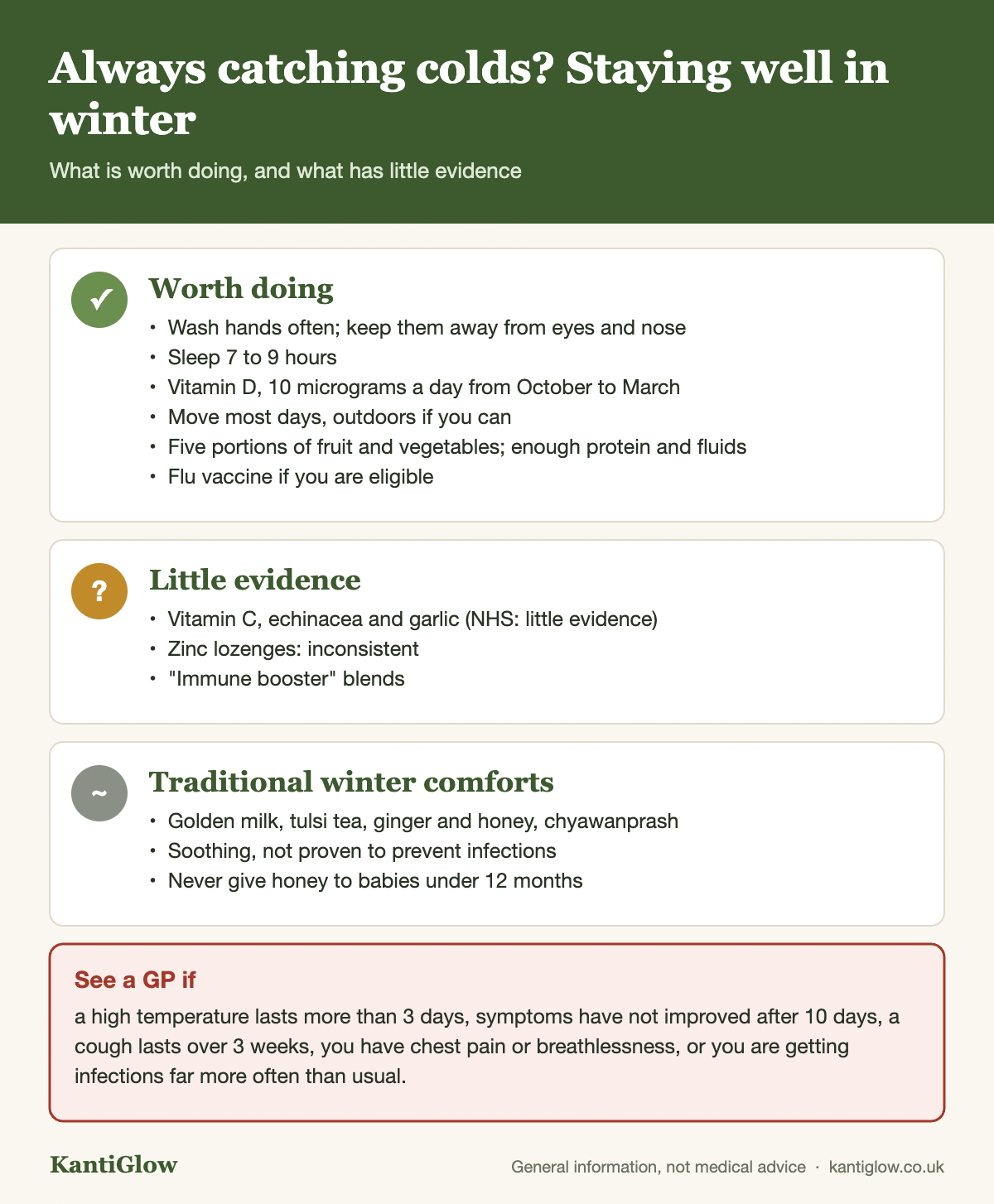
- Wash your hands often with soap and warm water, especially after public transport and before eating.
- Keep your hands away from your eyes and nose.
- Sleep seven to nine hours.
- Take vitamin D, 10 micrograms (400 IU) a day from October to March.
- Move most days, outdoors if you can.
- Eat well: at least five portions of fruit and vegetables a day, enough protein, and six to eight drinks.
- Get the flu vaccine if you are eligible, and any other vaccines you are offered.
- Open a window for a few minutes when people gather indoors.
- Do not share towels or cups with someone who has a cold.
Little or no good evidence
| Remedy | What we know |
|---|---|
| Vitamin C | The NHS says there is little evidence it prevents colds or speeds recovery. Regular use may shorten colds very slightly |
| Echinacea | Little evidence |
| Garlic | Little evidence |
| Zinc lozenges | Some trials suggest slightly shorter colds if started within a day. Results are inconsistent and they can cause nausea and a bad taste |
| “Immune booster” blends | The immune system cannot be “boosted” by a supplement in a healthy person. The phrase has no scientific meaning |
Vitamins C, D and zinc do contribute to the normal function of the immune system, which is why being short of them matters. Taking extra when you already have enough has not been shown to prevent infections.
The Ayurvedic winter routine
Ayurveda treats winter as a season for warmth: cooked, spiced food, warm drinks, oil massage and steady routine. Much of this is sensible comfort.
| Tradition | What it is | Evidence and cautions |
|---|---|---|
| Golden milk (haldi doodh) | Turmeric and black pepper in warm milk | A soothing bedtime drink. Not shown to prevent colds |
| Tulsi tea | Holy basil leaves, often with ginger | Traditional. Limited human research. Avoid in pregnancy |
| Ginger, black pepper, honey | Kitchen remedies for throats and coughs | Honey is a recognised option for coughs. Never give honey to babies under 12 months |
| Chyawanprash | A spiced amla jam taken by the spoonful | Traditional winter tonic. Small studies only. High in sugar, so count it if you have diabetes |
| Giloy (guduchi) | A herb marketed for immunity | Cases of liver injury have been reported. Avoid with liver or autoimmune conditions, and in pregnancy |
| Warm oil massage | Sesame oil before a bath | Pleasant and good for dry winter skin. No effect on infections |
When you do catch one
Rest, drink plenty, and eat when you can. A hot lemon and honey drink soothes the throat. Adults can gargle with salt water. Paracetamol or ibuprofen eases aches and fever, and a pharmacist can advise on decongestants, which should not be used for more than a week. Stay at home if you have a temperature or feel too unwell for normal activities. Most colds improve within one to two weeks.
When to see a GP
See a GP if a high temperature lasts more than three days, symptoms get worse or have not improved after ten days, a cough lasts more than three weeks, or you have chest pain or shortness of breath. Also speak to a GP if you have a long-term condition or weakened immune system, or if you are getting infections much more often than you used to, infections that need antibiotics repeatedly, or infections alongside weight loss, great thirst or exhaustion.
Always catching colds: frequently asked questions
How many colds a year is normal?
Two to four for most adults. Young children can have eight or more.
Why do I keep getting colds?
Usually exposure, short sleep and stress. See a GP if it is a clear change from normal for you.
Why are colds more common in winter?
People spend more time together indoors, and some viruses spread more easily in cold, dry air.
Does being cold give you a cold?
Not directly. You need to catch a virus.
Does going out with wet hair cause a cold?
No.
How do colds spread?
Through droplets from coughs and sneezes, and from hands and surfaces.
How long am I infectious?
From a few days before symptoms until they have cleared.
Does handwashing really help?
Yes. It is one of the most effective measures.
Does hand sanitiser work?
Alcohol gel helps when you cannot wash your hands.
Does sleep affect how often I get ill?
Yes. Short sleepers catch more colds.
Does stress lower immunity?
Long-term stress is linked with more infections.
Does exercise help?
Regular moderate exercise is associated with fewer colds.
Should I exercise with a cold?
Light activity is fine if symptoms are above the neck. Rest if you have a fever or chest symptoms.
Does vitamin D prevent colds?
It supports normal immune function. Evidence that it prevents colds in people with adequate levels is weak.
How much vitamin D should I take?
10 micrograms (400 IU) a day in autumn and winter.
Does vitamin C prevent colds?
The NHS says there is little evidence that it does.
Does zinc help?
Lozenges may slightly shorten a cold if started early. Evidence is inconsistent.
Does echinacea work?
There is little evidence.
Does garlic help?
There is little evidence.
Can I boost my immune system?
Not beyond normal. You can avoid weakening it by sleeping, eating well and not smoking.
Do probiotics prevent colds?
Some studies suggest a small effect. Evidence is not strong.
Does the flu jab stop colds?
No. It protects against flu.
Who gets a free flu vaccine?
Over-65s, pregnant women, people with certain long-term conditions, carers and some others.
What is golden milk?
Warm milk with turmeric and usually black pepper.
Does golden milk help with colds?
It is soothing. It has not been shown to prevent or shorten colds.
How do I make golden milk?
Warm a cup of milk with half a teaspoon of turmeric, a pinch of black pepper and a little ginger.
Is turmeric milk safe every day?
As a food, yes for most people.
What is chyawanprash?
A traditional Indian herbal jam based on amla.
Does chyawanprash boost immunity?
That claim cannot be made. Research is limited.
Can people with diabetes take chyawanprash?
It is high in sugar. Count it, or choose a sugar-free version, and ask your diabetes team.
Is tulsi tea good in winter?
It is a pleasant caffeine-free drink. Evidence for health effects is limited.
Is giloy safe?
Liver injury has been reported. Avoid it if you have liver or autoimmune disease.
Does ginger help?
Ginger tea soothes a sore throat. Evidence is limited.
Does honey help a cough?
Yes, for adults and children over one.
Does steam help a blocked nose?
A hot shower can ease congestion. Do not use bowls of hot water with children.
Do I need antibiotics for a cold?
No. Colds are viral.
How long does a cold last?
Usually one to two weeks.
Is it a cold or flu?
Flu comes on quickly with fever, aches and exhaustion. Colds build over two to three days and are milder.
Is it a cold or an allergy?
Allergies cause itching and clear runny nose without fever, and last as long as the trigger.
Why do my children bring home so many colds?
Their immune systems are meeting each virus for the first time.
Does a humidifier help?
It may ease a dry throat. Keep it clean.
Should I take a multivitamin in winter?
It can cover small gaps in diet. Check it does not double your vitamin D.
When are frequent infections a concern?
When they are severe, need repeated antibiotics, or come with other symptoms.
When should I see a GP about a cold?
If it lasts more than ten days without improving, or you have a high fever, chest pain or breathlessness.
Sources
- NHS: Common cold
- NHS: Flu vaccine
- NHS: Vitamin D
- NHS: The Eatwell Guide
- NHS: Insomnia
- Great Britain nutrition and health claims register
Shop this plan at KantiGlow
- Golden Milk Turmeric Latte with Saffron
- Himalaya Organic Turmeric Tablets
- Calcium + D3 + K2 Tablets
- Dabur Chyawanprakash Sugar Free
- Dry Ginger (Sonth) Powder
- Himalaya Organic Ashwagandha 670mg
All products are authentic Indian and UK-labelled brands, sourced directly from India and dispatched within 24–72 hours (UK delivery typically 5–7 working days).
Related guides
Shop the products in this guide
- Vitamin C + Zinc + Vitamin D3 Effervescent Tablets 15 — £9.99
- Organic India Turmeric Formula Capsules 60 — £5.99
- Dry Ginger Powder 100g — £4.99
- Himalayan Organics Curcumin with Black Pepper 1500mg Capsules 120 — £19.99
Lab-tested, vegetarian, shipped from India. Food supplements should not replace a varied diet.
This guide is general information, not medical advice. Food supplements and herbal products are not intended to diagnose, treat, cure or prevent any disease. Speak to a GP about frequent or severe infections, and to a pharmacist before taking a herbal product if you are pregnant or take medication.
Pingback: 30-Day Golden Milk Challenge: Turmeric (UK) | KantiGlow