Quick answer: A dip in mood and energy as the days shorten is very common. For most people it is mild and improves with more daylight, regular exercise, steady sleep times and keeping up with other people. For some it is seasonal affective disorder (SAD), a form of depression that returns each winter and needs proper treatment: talking therapy, light therapy or antidepressants. The dividing line is how long it lasts and how much it affects your life. If your mood has been low for two weeks or more, or you are struggling to cope, see a GP or refer yourself to NHS Talking Therapies. The routine below is for the milder end, and no herb or supplement treats depression.
Key facts
- SAD is depression that comes back each winter and lifts in spring or summer.
- Symptoms include low mood, loss of interest, irritability, poor concentration, increased appetite, and feeling very tired and sleeping more.
- It is thought to be linked to reduced daylight affecting body clock and brain chemistry.
- Low mood lasting 2 weeks or more could be a sign of depression.
- Adults in England can refer themselves to NHS Talking Therapies without seeing a GP.
- If you are in crisis, Samaritans answer on 116 123 at any time.
Winter blues or SAD?
| Winter blues | SAD |
|---|---|
| A bit flat and tired; you still enjoy things once you start | Low most of the day, most days; things you enjoy stop appealing |
| Harder to get up, but you manage work and home life | Work, relationships or self-care are suffering |
| Comes and goes | Lasts two weeks or more and returns every winter |
| Improves with daylight, exercise and company | Needs treatment as well as self-help |
If you are unsure which side you are on, treat it as the second and speak to a GP.
Why it happens
Less daylight is the main suspect. Light sets the body clock, and dark mornings leave the sleep hormone melatonin running later into the day. Light also affects serotonin, which is involved in mood. On top of that, winter changes behaviour: people go out less, move less, see fewer friends, eat more heavily and drink more, and each of those lowers mood further.
What helps
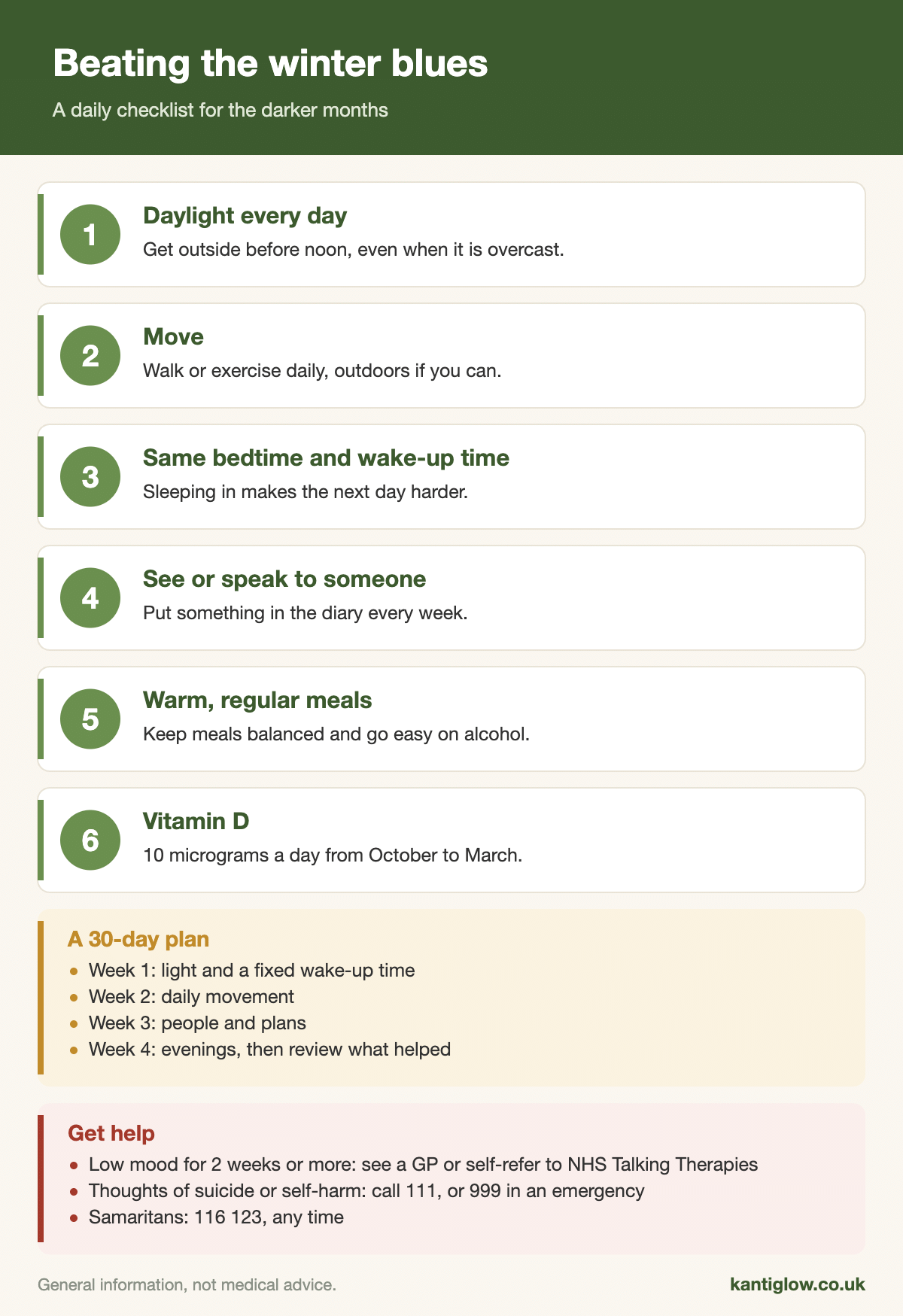
1. Daylight, every day. Get outside within a couple of hours of waking, even when it is overcast. Outdoor light on a grey day is still many times brighter than indoor lighting. Sit near windows, and take a walk at lunchtime.
2. Exercise. Regular activity is one of the most effective things for low mood. Outdoors gives you light as well.
3. Regular hours. Go to bed and get up at the same times, and avoid screens just before bed. Sleeping in feels good and makes the next day worse.
4. People. Stay connected. Put something in the diary each week, and say yes even when you would sooner stay in.
5. Keep routines for meals, work and chores. Structure carries you when motivation does not.
6. Food and drink. Eat regular, warming meals with vegetables and protein. Winter cravings for stodgy and sweet food are part of the picture; do not fight them with a diet, but keep meals balanced. Limit alcohol, which lowers mood.
7. Vitamin D. Take 10 micrograms a day from October to March, as advised for everyone in the UK. It has not been shown to treat low mood, but most people are short of it by late winter.
8. Plan things to look forward to between now and March.
9. Talk about it. To a friend, a relative or a professional.
Treatments a GP can offer for SAD
- Talking therapy, such as CBT.
- Light therapy. A bright lamp used for a set time each morning. It is not usually available on the NHS. Speak to a GP first, and if you buy a lamp, choose one of about 10,000 lux that is UV-free and carries a UKCA or CE mark.
- Antidepressants.
Many people with SAD need treatment each winter, and starting early in the autumn helps.
A 30-day routine
Week 1: light and wake-up time. Fix your wake-up time. Open the curtains at once and get outside before noon every day.
Week 2: movement. Add 20 to 30 minutes of walking or other exercise daily, outdoors where possible.
Week 3: people and plans. Arrange two social things this week and put three things to look forward to in the calendar for the coming months.
Week 4: evenings and review. Set a wind-down hour and a regular bedtime. Then look back: which changes helped? Keep those through to spring.
If your mood has not lifted by the end of the month, or it gets worse at any point, see a GP.
The Ayurvedic seasonal routine
Ayurveda describes a seasonal routine, ritucharya, for the move into the cold months: warm, cooked, lightly spiced food; regular meal and sleep times; warm oil massage; gentle daily exercise; and early nights. Soups, dal, stewed fruit, ginger and warm milk with spices are the classic foods. These habits are comforting and fit well with the steps above, particularly the emphasis on routine. They are not a treatment for depression.
Herbs and supplements: what to know
| Product | What we know |
|---|---|
| Vitamin D | Advised for everyone in winter. Not shown to treat low mood |
| St John’s wort | Has evidence for mild depression, but interacts with many medicines, including the contraceptive pill, antidepressants and blood thinners. Do not take it without speaking to a pharmacist or GP |
| Ashwagandha | Small trials suggest less stress. Not a treatment for depression. Not suitable for everyone |
| Saffron | A few small trials in low mood. Not established |
| Omega-3 | Mixed results |
| Tulsi, brahmi, chyawanprash | Traditional tonics with limited research |
Never stop or replace a prescribed antidepressant with a herbal product, and tell your GP about anything you take.
When to get help
See a GP or self-refer to NHS Talking Therapies if your low mood has lasted two weeks or more, you are struggling to cope, things you have tried are not working, or you think you may have SAD.
Get urgent help if you are having thoughts of suicide or of harming yourself. Call 111 or ask for an urgent GP appointment. Call 999 or go to A&E if you are in immediate danger. Samaritans are available on 116 123 at any time, day or night.
Winter blues: frequently asked questions
What are the winter blues?
A mild dip in mood and energy in the darker months.
What is SAD?
Seasonal affective disorder: depression that returns each winter.
How do I know if I have SAD?
If low mood lasts two weeks or more, affects your life and returns each winter. A GP can assess you.
When does SAD start?
Usually in autumn as the days shorten, easing in spring.
What causes SAD?
It is thought to be linked to reduced daylight.
Why do I sleep more in winter?
Dark mornings delay your body clock.
Why do I crave carbs in winter?
Increased appetite is a recognised symptom.
Does daylight really help?
Yes. Daily daylight is one of the main recommendations.
What if it is dark when I leave and return from work?
Go out at lunchtime, and sit near a window.
Do SAD lamps work?
Light therapy helps some people. Speak to a GP first.
Which SAD lamp should I buy?
One of about 10,000 lux, UV-free, with a UKCA or CE mark.
Are SAD lamps available on the NHS?
Not usually.
Does exercise help low mood?
Yes.
Does vitamin D help SAD?
It is advised in winter for everyone, but has not been shown to treat low mood.
How much vitamin D should I take?
10 micrograms a day.
Does alcohol make it worse?
Yes.
Does diet affect mood?
Regular, balanced meals help keep energy and mood steadier.
Can I take St John’s wort?
Only after checking with a pharmacist or GP, because of interactions.
Does ashwagandha help low mood?
It may reduce stress. It is not a treatment for depression.
Does saffron help?
A few small trials suggest it might. It is not established.
Do omega-3 supplements help?
Results are mixed.
Is talking therapy available for SAD?
Yes. CBT is one of the treatments.
Can I refer myself for therapy?
Yes, to NHS Talking Therapies if you are 18 or over, or 16 in some areas.
Will I need antidepressants?
A GP will discuss whether they are right for you.
Do I need treatment every winter?
Many people with SAD do.
Can children get SAD?
Yes. See a GP.
Can SAD happen in summer?
Yes, but it is much less common.
Is it SAD or just tiredness?
Tiredness lasting weeks should be checked. Low thyroid, anaemia and low vitamin D can look similar.
Does a winter holiday help?
A week of sun lifts many people for a while.
Does a dawn-simulating alarm help?
Some people find waking easier with one.
What is ritucharya?
The Ayurvedic practice of adjusting routine to the season.
What should I eat in autumn according to Ayurveda?
Warm, cooked, lightly spiced food such as soups, dal and stewed fruit.
Does oil massage help mood?
It is relaxing. There is little research.
Does golden milk help?
It is a comforting warm drink. No effect on mood has been shown.
Is chyawanprash a winter tonic?
Traditionally, yes. It is high in sugar and research is limited.
How long before I feel better?
Many people notice a lift within two weeks of daily daylight and exercise.
What if nothing helps?
See a GP.
Should I tell my employer?
If it affects your work, yes. Adjustments such as a desk by a window can help.
How can I help someone with SAD?
Suggest walks in daylight, keep inviting them, and encourage them to see a GP.
Is low mood the same as depression?
No. Low mood usually lifts within days or weeks.
How long is too long to feel low?
Two weeks or more.
Does stopping scrolling at night help?
Avoiding screens before bed supports sleep.
When does it get lighter again?
Days lengthen from late December, with a noticeable change by February.
Where can I get urgent help?
Call 111, or 999 in an emergency. Samaritans are on 116 123.
Sources
- NHS: Seasonal affective disorder (SAD)
- NHS: Low mood, sadness and depression
- NHS: NHS Talking Therapies
- NHS: Vitamin D
- NHS: Herbal medicines
Shop this plan at KantiGlow
- The Winter Kit (chyawanprash + giloy + tulsi)
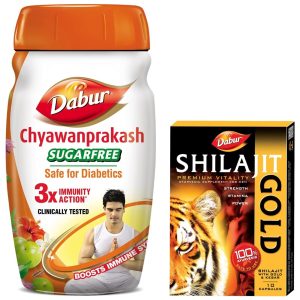
- Dabur Chyawanprakash Sugar Free
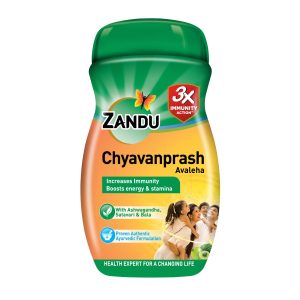
- Zandu Chyawanprash Avaleha
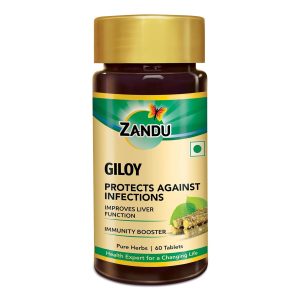
- Zandu Giloy Tablets
- Jiva Giloy Capsules
- Himalaya Tulasi (Holy Basil)
All products are authentic Indian and UK-labelled brands, sourced directly from India and dispatched within 24–72 hours (UK delivery typically 5–7 working days).
Related guides
Shop the products in this guide
- Zandu Giloy (Guduchi) Tablets 60 — £4.99
- Sitaram Chyawanprash Tablets — £8.99
- Himalaya Tulsi Tablets 60 — £7.99
- Dry Ginger Powder 100g — £4.99
Lab-tested, vegetarian, shipped from India. Food supplements should not replace a varied diet.
This guide is general information, not medical advice. Herbal products and food supplements are not intended to diagnose, treat or cure any condition, including depression. If your mood has been low for two weeks or more, speak to a GP.
Pingback: Ayurvedic Winter Warm-Up Plan (UK, Nov–Feb) | KantiGlow
Pingback: Vata Daily Routine Plan (UK Ayurveda Guide) | KantiGlow