Quick answer: Up to about 400 mg of caffeine a day, roughly four mugs of instant coffee or five of tea, suits most adults, and the limit in pregnancy is 200 mg. If you feel jittery, anxious, have palpitations or sleep badly, you are probably over your own limit, which may be lower. Cutting down suddenly brings headaches and tiredness for a few days, so step down gradually: drop one caffeinated drink every three or four days and stop caffeine after midday. Caffeine-free herbal teas make the switch easier. Tulsi, or holy basil, is the classic Indian choice: a pleasant daily tea with a long tradition, limited research, and a few people who should avoid it, including in pregnancy.
Key facts
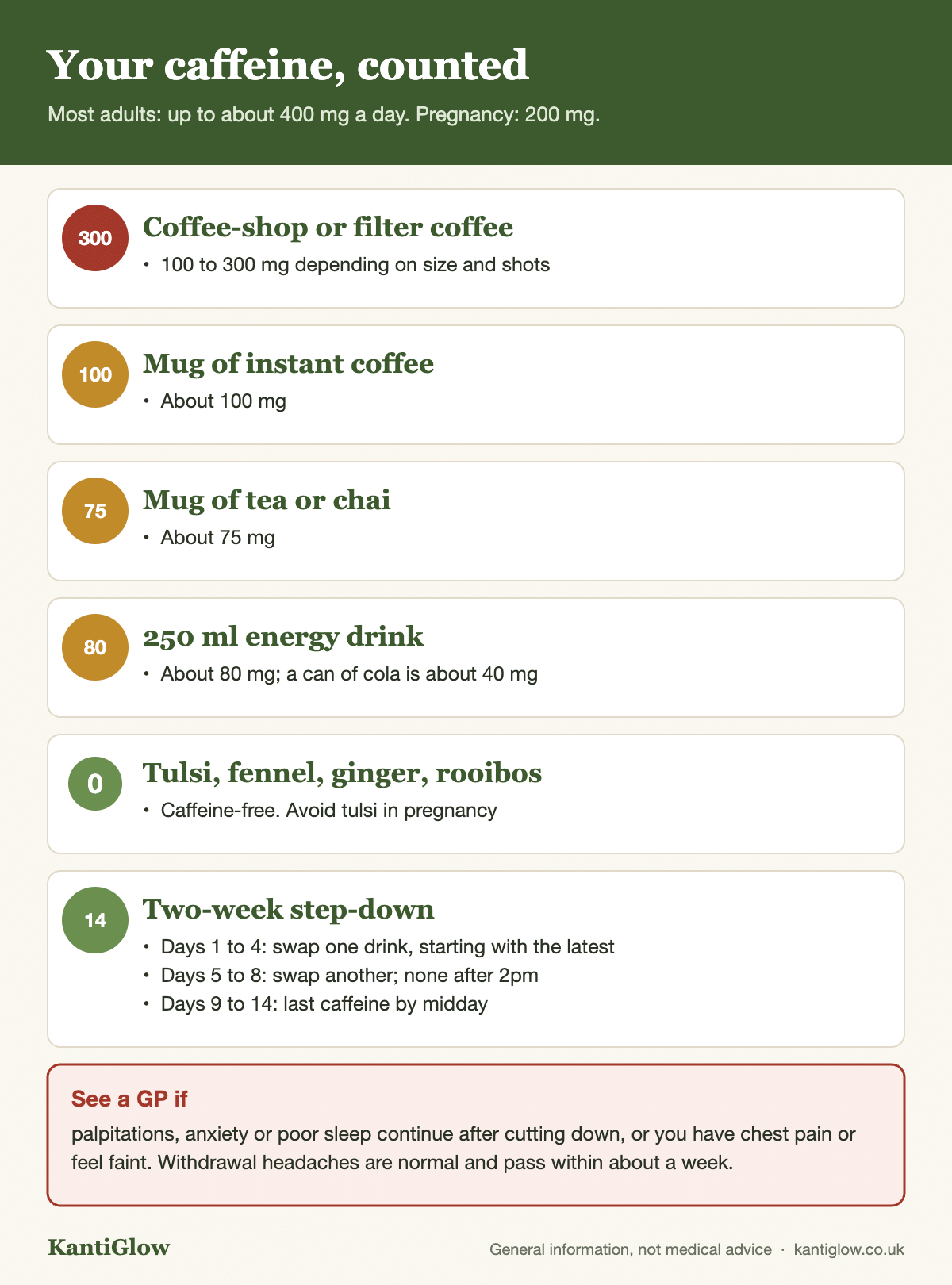
- A mug of instant coffee has about 100 mg of caffeine, a mug of tea about 75 mg, a can of cola about 40 mg and a 250 ml energy drink about 80 mg. Filter and coffee-shop coffee can have much more.
- Pregnant women should have no more than 200 mg a day.
- Caffeine can still affect sleep six hours or more after you drink it.
- The NHS advises limiting caffeine if you have high blood pressure.
- Withdrawal headaches usually start within a day and ease within a week.
- In pregnancy, limit herbal teas to four cups a day and avoid teas containing liquorice root.
Signs you may be having too much
- Feeling shaky, restless or on edge
- A racing or fluttering heartbeat
- Trouble falling asleep, or waking in the night
- Anxiety that eases on low-caffeine days
- Heartburn or an upset stomach
- Needing to pass urine often
- Headaches when you miss your usual cup
- Needing more to get the same lift
People vary a lot. Some are jittery after one cup, and sensitivity rises with age, in pregnancy, with some medicines and with anxiety.
How much caffeine am I having?
| Drink | Approximate caffeine |
|---|---|
| Coffee-shop or filter coffee | 100 to 300 mg, depending on size and shots |
| Mug of instant coffee | 100 mg |
| Mug of tea, including masala chai | 75 mg |
| Green tea | 30 to 50 mg |
| 250 ml energy drink | 80 mg |
| Can of cola | 40 mg |
| 50 g bar of plain dark chocolate | Under 25 mg |
| Decaffeinated tea or coffee | 2 to 5 mg |
| Tulsi, fennel, ginger, rooibos and most herbal teas | 0 mg |
Write down everything you drink for two days and add it up. Many people are surprised: six mugs of tea is about 450 mg. Check labels on energy drinks, pre-workout powders and some cold remedies and painkillers, which also contain caffeine.
A two-week step-down plan
Days 1 to 4. Replace one caffeinated drink a day, starting with the latest one, with a caffeine-free alternative.
Days 5 to 8. Replace a second. Have no caffeine after 2pm.
Days 9 to 14. Replace a third if you need to, and bring your last caffeine forward to midday.
After that. Settle at a level where you sleep well and feel steady. For many people that is one or two cups in the morning.
Tips
- Keep the ritual and change the contents: same mug, same break, different drink.
- Mix regular and decaf half and half for a week as a bridge.
- Drink a glass of water with each cup.
- Expect a dull headache and tiredness for two or three days at each step. They pass. Paracetamol helps, but check the label, because some headache tablets contain caffeine.
- Do not replace coffee with energy drinks or cola.
- If you are pregnant, get under 200 mg now, not gradually.
Caffeine-free swaps
| Drink | Notes |
|---|---|
| Decaf tea or coffee | The closest in taste |
| Tulsi tea | Warm, slightly peppery. See below |
| Cumin, coriander and fennel tea | A traditional after-meal drink |
| Fresh ginger tea | Warming. Large amounts can cause heartburn |
| Fennel tea | Sweet and mild |
| Rooibos | Tastes closest to black tea and takes milk |
| Chicory or barley drinks | Coffee-like and caffeine-free |
| Peppermint or chamomile | Widely available |
| Warm milk with turmeric or cardamom | A bedtime option |
| Hot water with lemon | Simple. Rinse your mouth afterwards |
Avoid herbal blends containing liquorice if you have high blood pressure or are pregnant.
Where tulsi tea fits
What it is. Tulsi (Ocimum tenuiflorum or Ocimum sanctum) is holy basil, a different plant from the basil used in cooking. It is grown in many Indian homes, and its leaves are drunk as a tea, often with ginger. Rama, Krishna and Vana are the three common varieties, and teas often blend them.
What research shows. A number of small trials, mostly short and from India, report lower stress scores and small improvements in blood sugar and blood pressure in people taking tulsi extracts. The studies are small and vary in quality, and tea contains less than the extracts tested. Tulsi has no authorised health claims in the UK, so it cannot be sold as relieving stress, boosting immunity or aiding sleep.
What it is good for. It is caffeine-free and tastes good, which is all a replacement for your fourth cup of tea needs to be.
Who should avoid it or check first.
- Avoid in pregnancy and when trying to conceive. Animal studies suggest effects on fertility, and safety in pregnancy is not established.
- Check with a pharmacist if you take blood thinners or are having surgery, because it may slow clotting.
- Check if you take diabetes medicines, because it may lower blood sugar slightly.
- Check if you have an underactive thyroid.
- Tea is safer than concentrated capsules and extracts. Follow the label on any supplement.
How to make it. Steep a teabag or a teaspoon of dried leaf in freshly boiled water for five minutes. Add fresh ginger or a little honey if you like. Two or three cups a day is a typical amount.
When to see a GP
See a GP if palpitations, anxiety or poor sleep continue after you have cut down, if you have chest pain or feel faint, or if you rely on caffeine to get through the day because you are exhausted. Call 999 for chest pain that spreads to your arm, neck or jaw.
How to cut down on caffeine: frequently asked questions
How much caffeine is too much?
More than about 400 mg a day for most adults, less if you are sensitive.
How much caffeine can I have in pregnancy?
No more than 200 mg a day.
How much caffeine is in a cup of tea?
About 75 mg a mug.
How much caffeine is in coffee?
About 100 mg in a mug of instant, often more in filter and coffee-shop drinks.
Does green tea have caffeine?
Yes, about 30 to 50 mg a cup.
Does chai have caffeine?
Yes, the same as the black tea it is made with.
Does decaf have any caffeine?
A few milligrams.
What are the symptoms of too much caffeine?
Jitters, a racing heart, anxiety, poor sleep and stomach upset.
Can caffeine cause anxiety?
Yes, and it can worsen existing anxiety.
Can caffeine cause palpitations?
Yes. See a GP if they continue after cutting down.
How long does caffeine stay in your system?
Half is still there after about five to six hours, longer in pregnancy.
What time should I stop drinking caffeine?
By early afternoon. Midday if you are a poor sleeper.
Does caffeine raise blood pressure?
It causes a short-term rise. The NHS advises limiting it if your blood pressure is high.
Does caffeine dehydrate you?
Not in moderate amounts. Tea and coffee count towards fluids.
What are caffeine withdrawal symptoms?
Headache, tiredness, low mood and poor concentration.
How long does caffeine withdrawal last?
Usually two to nine days.
Should I quit caffeine cold turkey?
Stepping down gradually avoids the worst headaches.
Do I have to give up caffeine completely?
No. Most people do well on one or two cups in the morning.
Is decaf coffee healthy?
Yes. It keeps most of coffee’s other compounds.
Are energy drinks worse than coffee?
They often add a lot of sugar and are drunk quickly. They are not recommended for under-16s.
What can I drink instead of tea and coffee?
Decaf, tulsi, rooibos, fennel, ginger or chicory drinks.
What is tulsi?
Holy basil, a herb native to India.
Does tulsi tea have caffeine?
No.
What does tulsi tea taste like?
Warm and slightly peppery, with clove notes.
How many cups of tulsi tea can I drink?
Two or three a day is typical.
Is tulsi tea safe every day?
For most adults, yes.
Is tulsi safe in pregnancy?
Avoid it. Safety is not established.
Can I drink tulsi while trying to conceive?
It is best avoided.
Does tulsi reduce stress?
Small trials suggest it may. It cannot be sold on that basis.
Does tulsi help you sleep?
There is no good evidence. Being caffeine-free helps.
Does tulsi boost immunity?
That claim cannot be made.
Can tulsi lower blood sugar?
Slightly, in small studies. Check if you take diabetes medicine.
Can I take tulsi with blood thinners?
Check with a pharmacist.
Tulsi tea or capsules?
Tea is the gentler, traditional form.
What is the difference between Rama, Krishna and Vana tulsi?
They are varieties with slightly different flavours. Blends are common.
Is tulsi the same as basil?
No. It is a related but different plant.
Can children drink tulsi tea?
Small amounts of weak tea are traditionally given. Ask a health visitor or GP first.
Is rooibos caffeine-free?
Yes.
Are herbal teas safe in pregnancy?
Limit them to four cups a day and avoid liquorice root.
Does liquorice tea raise blood pressure?
Yes, with regular use.
Will cutting caffeine improve my sleep?
For many people, within a week or two.
Will I have less energy without caffeine?
For a few days. Energy usually evens out afterwards.
Does caffeine cause headaches or cure them?
Both. Regular use leads to withdrawal headaches.
When should I see a GP?
If palpitations, anxiety or poor sleep continue after cutting down.
Sources
- NHS: Water, drinks and hydration
- NHS: Pregnancy, foods to avoid
- NHS: High blood pressure
- NHS: Insomnia
- NHS: Herbal medicines
Shop the products in this guide
- Baidyanath Tulsi Tablets 60 — £4.99
- Himalaya Tulsi Tablets 60 — £7.99
- Foresta Organics Tulsi, Amla & Curcumin Capsules — £7.99
- Dabur Tulsi Tablets 80 — £7.99
Lab-tested, vegetarian, shipped from India. Food supplements should not replace a varied diet.
This guide is general information, not medical advice. Herbal products are not intended to diagnose, treat or cure any condition. Speak to a GP about palpitations or anxiety that persist, and to a pharmacist before taking herbal products if you are pregnant or take medication.
Pingback: Chyawanprash UK Guide: What It Is & How to Eat It | KantiGlow