Quick answer: A well-planned vegetarian or vegan diet can provide almost everything you need. The nutrients that take deliberate attention are vitamin B12, iron, calcium, vitamin D, omega-3 fats, iodine and selenium. Vegans need a reliable source of B12 from fortified foods or a supplement, because plants do not supply it, and everyone in the UK is advised to consider vitamin D in autumn and winter. Moringa leaf powder is a nutritious green that adds useful amounts of iron, calcium and vitamin A in a spoonful, but it contains no B12, vitamin D or iodine, so it cannot be your safety net. Fortified foods and one or two targeted supplements do that job. See a GP if you are persistently tired, pale or have numb or tingling hands and feet.
Key facts
- Vegan sources of vitamin B12 are limited to fortified foods such as breakfast cereals, unsweetened soya drinks, yeast extract and nutritional yeast, so a B12 supplement may be needed.
- Calcium is found in fortified plant drinks, calcium-set tofu, sesame seeds and tahini, pulses, bread, and leafy greens such as broccoli, cabbage and okra. Spinach is not a good source, because the body cannot absorb all of its calcium.
- Plant iron is better absorbed with vitamin C, and tea or coffee with meals reduces absorption.
- Vegan sources of omega-3 include ground linseed, rapeseed oil, chia seeds, shelled hemp seeds and walnuts.
- Iodine and selenium are harder to get from a vegan diet; fortified foods or supplements are suggested.
- Everyone should consider a daily vitamin D supplement during autumn and winter.
Vegetarian or vegan: what changes
| If you cut out | You lose the main source of | Replace with |
|---|---|---|
| Meat | Iron, zinc, B12 (partly), protein | Pulses, tofu, nuts, seeds, eggs and dairy if you eat them |
| Fish | Long-chain omega-3, iodine, vitamin D | Linseed, chia, walnuts; an algae-based omega-3 if you wish; iodine from dairy or a supplement |
| Dairy | Calcium, iodine, B12, protein | Fortified plant drinks and yoghurts, calcium-set tofu, sesame |
| Eggs | B12, protein, vitamin D | Fortified foods, a B12 supplement |
Vegetarians who eat dairy and eggs daily usually meet B12, calcium and iodine needs from food. Iron is the one to watch. Vegans need a plan for all of the list below.
The nutrients to watch, one by one
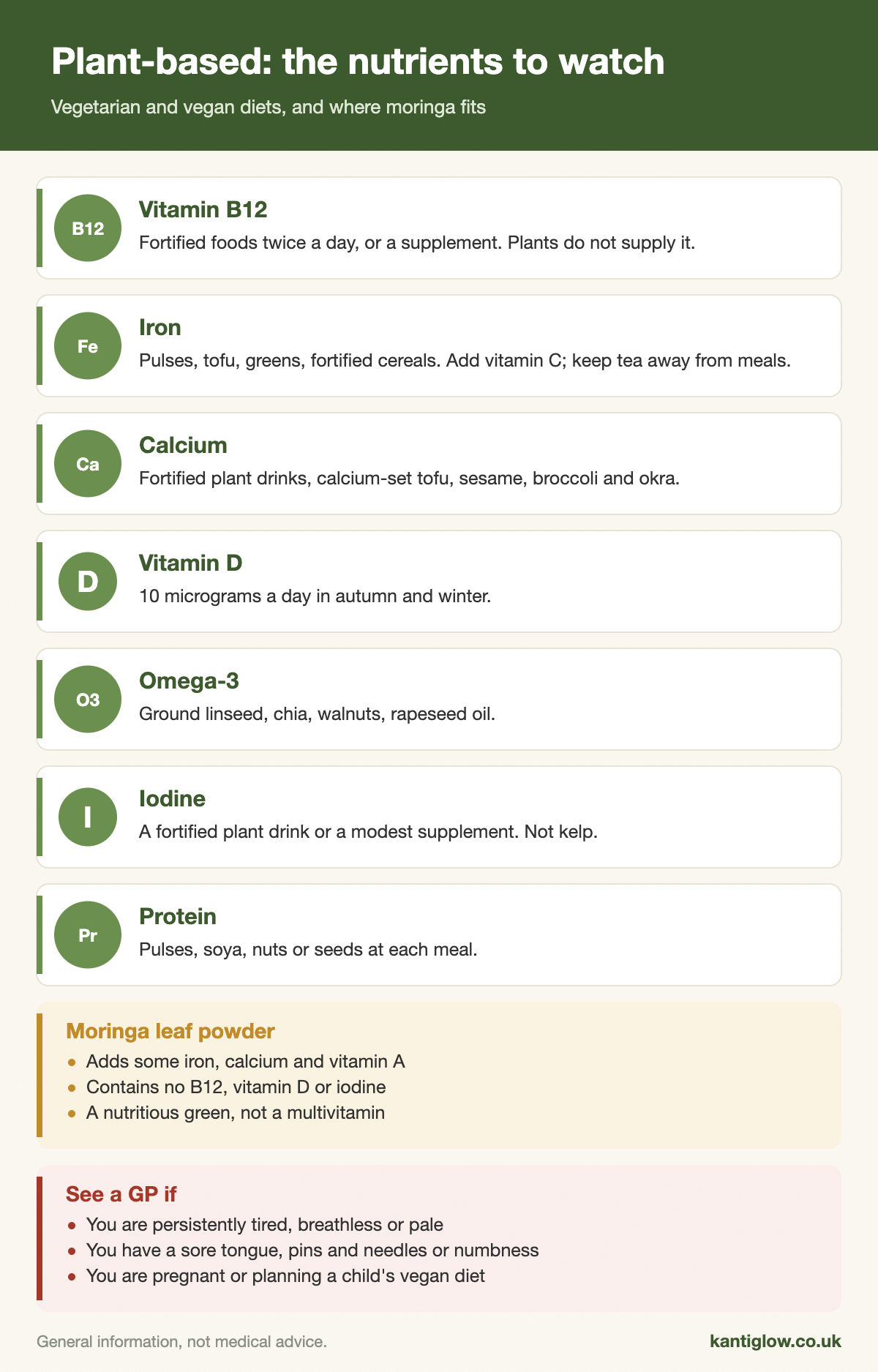
Vitamin B12. Needed for nerves and blood. Have fortified foods at least twice a day, or take a supplement. Deficiency develops slowly and can cause tiredness, a sore tongue, pins and needles, and memory problems.
Iron. Eat pulses, tofu, wholemeal bread, fortified cereals, dark-green leafy vegetables, nuts and dried fruit daily. Add vitamin C to the meal, such as lemon, tomatoes or peppers, and keep tea and coffee away from mealtimes.
Calcium. Aim for two to three portions a day of fortified plant drink or yoghurt, calcium-set tofu, or tahini, plus greens such as broccoli, kale and okra. Check that your plant drink is fortified; organic versions often are not.
Vitamin D. Take 10 micrograms a day in autumn and winter. Vegan D3 is made from lichen; D2 is always suitable for vegans.
Omega-3. Have a tablespoon of ground linseed or chia, or a small handful of walnuts, most days, and cook with rapeseed oil. Algae-based supplements provide the long-chain forms found in fish.
Iodine. Dairy is the main UK source, so vegans can run low. Choose a plant drink fortified with iodine, or take a supplement providing no more than 150 micrograms. Avoid kelp supplements, which can contain far too much.
Selenium. Two Brazil nuts a day cover it.
Zinc. Pulses, wholegrains, nuts and seeds. Soaking and sprouting beans improves absorption.
Protein. Not usually a problem if you eat pulses, soya, nuts, seeds or grains at every meal. Variety across the day gives you all the amino acids.
A day that covers it
- Breakfast: fortified cereal or porridge made with fortified soya drink, ground linseed and berries.
- Lunch: dal or chana with wholemeal roti, salad with lemon, an orange.
- Snack: a handful of nuts and two Brazil nuts.
- Dinner: tofu or rajma with vegetables and rice, greens on the side.
- Daily: B12 from fortified foods or a supplement, and vitamin D in autumn and winter.
A traditional Indian vegetarian diet built on dal, vegetables, grains, yoghurt and nuts does much of this already. The usual gaps are B12, vitamin D and, without dairy, iodine and calcium.
Where moringa fits
What it is. Moringa (Moringa oleifera), the drumstick tree, is eaten as a vegetable across South Asia and Africa. The dried leaf is sold as powder, capsules and tea.
What a spoonful provides. Dried moringa leaf is rich in iron, calcium, vitamin A as carotenoids, and protein by weight. The catch is the serving size. A teaspoon is about 3 g, so it adds a helpful top-up, not a day’s supply, and the iron and calcium in leaves are less well absorbed than the figures on a label suggest.
What it does not provide. No vitamin B12, no vitamin D and no meaningful iodine. Claims that it “contains every nutrient” are marketing.
How to use it. Stir a teaspoon into dal, soup, a smoothie or chapati dough. It has a strong green taste, so start with half a teaspoon. Powder is better value than capsules, which hold only about half a gram each.
Choosing one. Look for leaf only (not seed or root), a batch number and best-before date, and a UK seller who can show testing for heavy metals and microbes, because leaf powders can carry contamination.
Cautions.
- Avoid moringa root, bark and their extracts, especially in pregnancy.
- Leaf in food amounts is widely eaten, but ask your midwife before taking supplements in pregnancy or while breastfeeding.
- It may lower blood sugar and blood pressure slightly. Check with a pharmacist if you take medicines for either, or for thyroid problems.
- Large amounts can cause loose stools.
Supplements worth considering
| Supplement | Who | Notes |
|---|---|---|
| Vitamin B12 | All vegans; vegetarians who eat little dairy or egg | Daily or weekly, as the label directs |
| Vitamin D | Everyone in autumn and winter | 10 micrograms a day |
| Iodine | Vegans without a fortified plant drink | No more than 150 micrograms. Not kelp |
| Algae omega-3 | Optional | Especially in pregnancy; ask your midwife |
| Iron | Only if a blood test shows you need it | Too much is harmful |
| A vegan multivitamin | A simple way to cover B12, D, iodine and selenium together | Check the amounts |
Pregnancy, children and older adults
Vegetarian and vegan diets can be suitable at every age with planning. In pregnancy, take folic acid and vitamin D as advised and tell your midwife what you eat so B12, iodine and iron can be covered. Children on vegan diets need particular care with energy, B12, calcium, iodine and vitamin D, so speak to a health visitor or dietitian. Older adults absorb B12 less well and may need a supplement whatever they eat.
When to see a GP
See a GP if you have ongoing tiredness, breathlessness, pale skin, a sore red tongue, mouth ulcers, pins and needles, numbness, or problems with memory or balance. These can point to low iron or B12, which a blood test will show. Ask for a referral to a dietitian if you have a medical condition, are pregnant, or are feeding a young child a vegan diet.
Vegan nutrients: frequently asked questions
Is a vegetarian diet healthy?
Yes, when it is varied and planned.
Is a vegan diet healthy?
Yes, with attention to B12, iodine, calcium, vitamin D, iron and omega-3.
What nutrients do vegans lack most often?
Vitamin B12, iodine, vitamin D and calcium.
Do vegans need B12 supplements?
They need a reliable source: fortified foods or a supplement.
Do vegetarians need B12 supplements?
Not usually, if they eat dairy and eggs regularly.
What are the signs of low B12?
Tiredness, a sore tongue, pins and needles, and memory problems.
Which plant foods contain B12?
Only fortified ones, such as cereals, soya drinks, yeast extract and nutritional yeast.
Do spirulina or seaweed provide B12?
Not reliably. They contain forms the body cannot use.
How do vegetarians get enough iron?
Pulses, greens, fortified cereals, nuts and dried fruit, with vitamin C.
Does tea affect iron?
Yes. Keep it away from meals.
How do vegans get calcium?
Fortified drinks and yoghurts, calcium-set tofu, sesame, pulses and greens.
Is spinach a good source of calcium?
No. Little of it is absorbed.
Are all plant milks fortified?
No. Check the label, especially on organic ones.
How do vegans get omega-3?
Linseed, chia, hemp seeds, walnuts and rapeseed oil.
Do I need an algae oil supplement?
It is optional. It supplies the same omega-3 found in fish.
How do vegans get iodine?
A fortified plant drink or a modest supplement.
Is kelp a good iodine source?
No. It can contain excessive amounts.
How do I get selenium?
Two Brazil nuts a day.
Do vegans get enough protein?
Yes, with pulses, soya, nuts, seeds and grains across the day.
Do I need to combine proteins at each meal?
No. Variety over the day is enough.
Should I take vitamin D?
Yes, 10 micrograms a day in autumn and winter.
Is vitamin D3 vegan?
Some is, made from lichen. Check the label.
Should I take a multivitamin?
A vegan one is a simple way to cover B12, D, iodine and selenium.
What is moringa?
The leaf of the drumstick tree, eaten as a vegetable and sold as powder.
Is moringa a complete multivitamin?
No.
Does moringa contain B12?
No.
Is moringa high in iron?
By weight, yes. A teaspoon adds a modest amount.
Is moringa high in calcium?
By weight, yes. A teaspoon is a top-up, not a main source.
Is moringa high in protein?
The leaf is, by weight. A teaspoon provides under a gram.
How much moringa should I take?
Follow the label. A teaspoon of powder a day is typical.
How do I use moringa powder?
Stir it into dal, soup, smoothies or dough.
Powder or capsules?
Powder is better value. Capsules avoid the taste.
What does moringa taste like?
Green and slightly bitter, like strong spinach.
Is moringa safe?
Leaf in food amounts is widely eaten. Avoid root and bark.
Is moringa safe in pregnancy?
Avoid root and bark. Ask your midwife before taking leaf supplements.
Does moringa interact with medicines?
It may add to diabetes, blood pressure or thyroid medicines. Ask a pharmacist.
Can children have moringa?
As a vegetable in food, yes. Ask before giving supplements.
Can a vegan diet be safe in pregnancy?
Yes, with planning and your midwife’s advice.
Should I have a blood test?
If you have symptoms, or have been vegan for some years without B12.
When should I see a GP?
For ongoing tiredness, paleness, or numbness and tingling.
Sources
- NHS: The vegan diet
- NHS: Vitamins and minerals, iron
- NHS: Iron deficiency anaemia
- NHS: Vitamin D
- NHS: Herbal medicines
Shop the products in this guide
- Baidyanath Moringa Tablets 60 — £4.99
- Pure Nutrition Moringa 1200mg Tablets 60 — £5.99
- The Good Source Moringa Powder 100% Pure Powder 200g — £7.99
- Jiva Moringa Powder 200g — £8.99
Lab-tested, vegetarian, shipped from India. Food supplements should not replace a varied diet.
This guide is general information, not medical advice. Food supplements are not intended to diagnose, treat or cure any condition and are not a substitute for a varied diet. Speak to a GP or dietitian if you have symptoms, are pregnant or are planning a child’s diet.
Pingback: Moringa vs Spirulina vs Wheatgrass vs Sea Moss (UK) | KantiGlow