Quick answer: The concern is real, and it applies to a specific part of Ayurveda. Some traditional formulas, known as rasa shastra or bhasma preparations, are made with metals and minerals on purpose, and others have been contaminated through poor-quality raw materials. The UK medicines regulator has warned several times about unlicensed Ayurvedic and other traditional medicines containing lead, mercury and arsenic. Plain single-herb products from manufacturers that test every batch are a different category, but you cannot tell by looking. Protect yourself by taking metal- or mineral-based formulas only under the supervision of a qualified practitioner, buying only fully labelled products with batch test results, and never buying from informal sellers. If you have taken a product you are unsure about and feel unwell, stop it and ask your GP about a blood lead test.
Key facts
- Lead, mercury and arsenic are the metals of concern. They build up in the body, and children and unborn babies are most at risk.
- A US study that bought Ayurvedic products online found about one in five contained detectable lead, mercury or arsenic. Metal-based (rasa shastra) products were the most likely to.
- The NHS advises against buying unlicensed herbal medicines online.
- A THR mark with an MHRA product code shows a herbal medicine is registered in the UK and meets safety and quality standards.
- Most Ayurvedic products in the UK are sold as food supplements under food law. They are not assessed before sale.
- “Natural” does not mean safe. Herbs can cause side effects and interact with medicines.
Where the heavy metals come from
1. Deliberate ingredients. A branch of Ayurveda called rasa shastra uses processed metals and minerals, including mercury, lead, arsenic compounds, copper, iron and zinc. The products are called bhasmas (ashes) or rasas, and traditional texts hold that correct processing makes them safe. Laboratory testing does not support that: these products are the ones most often found with high metal levels. Names to watch for include anything ending in “bhasma” or “ras/rasa”, “parad” (mercury), “naga” (lead), “vanga” (tin), “hartal” or “manashila” (arsenic), “makaradhwaj”, and “mahayograj guggulu” (the classical formula contains several bhasmas).
2. Contamination. Plants take up metals from polluted soil and water, and contamination can occur during grinding and manufacture. Good manufacturers test raw materials and finished batches against set limits.
3. Adulteration. Some products sold informally have been found to contain undeclared pharmaceutical drugs, such as steroids or erectile dysfunction medicines.
How big is the risk?
It depends almost entirely on what you buy and where.
| Lower risk | Higher risk |
|---|---|
| Single herbs and simple blends (for example amla, triphala, tulsi, ashwagandha root, isabgol) | Rasa shastra, bhasma and “herbo-mineral” formulas |
| Made by an established manufacturer with batch testing | Unbranded, home-made or practitioner-mixed powders and pills |
| Full English label with ingredients, batch number and best-before date | No label, or a label you cannot read |
| Bought from a UK business you can contact | Bought on social media, from abroad, or brought back in a suitcase |
| Sold as a food supplement with no medical claims, or carrying a THR mark | Claims to cure diabetes, arthritis, infertility, cancer or sexual problems |
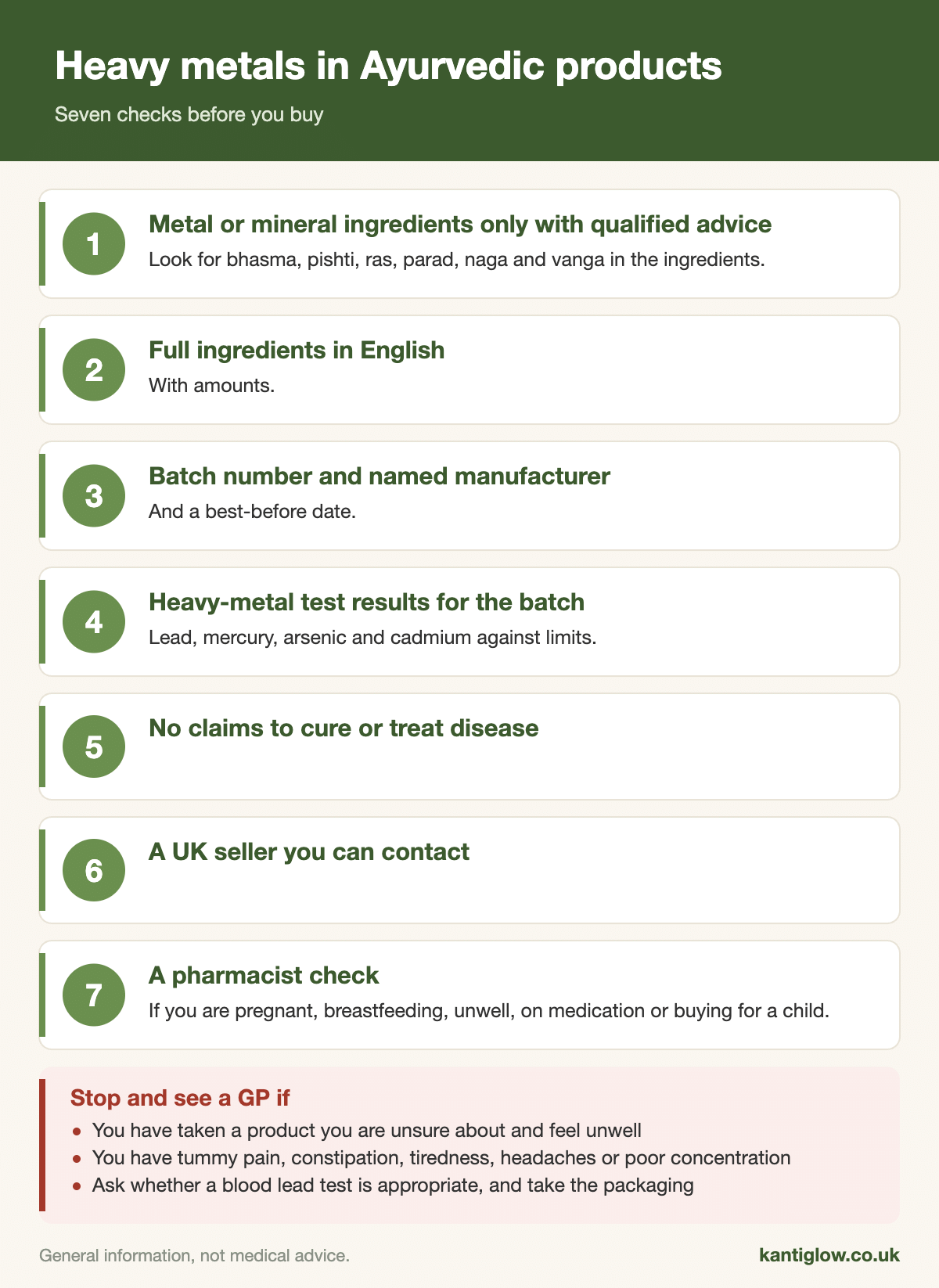
Seven checks before you buy
- Metal or mineral ingredients only with qualified advice. Read the ingredients for the names listed above. Classical mineral preparations are meant to be taken under a qualified Ayurvedic practitioner or doctor, not chosen off the shelf. If you are unsure of an ingredient, ask.
- A full ingredients list in English, with amounts.
- A batch or lot number, a best-before date and a named manufacturer with an address.
- Heavy-metal test results for that batch. A reputable seller can supply a certificate of analysis showing lead, mercury, arsenic and cadmium against limits. Ask any seller for it.
- No claims to treat or cure a disease. Those are illegal for supplements and a sign of a careless seller.
- A UK seller you can contact, with a returns address.
- A pharmacist check if you are pregnant, breastfeeding, buying for a child, have kidney or liver problems, or take medication.
Does KantiGlow sell bhasma or mineral products?
Yes. Alongside single herbs and herbal blends, we stock a small number of classical preparations that contain mineral or metal-based ingredients, such as bhasmas, pishtis and some “gold” formulas, for customers who have been advised to take them by a qualified practitioner. Their product pages say so. We do not recommend choosing them for yourself, and they are not suitable in pregnancy or breastfeeding or for children.
What UK law does and does not do
- Food supplements. Most Ayurvedic products sold in the UK are food supplements. They must be safe, correctly labelled and free of medical claims, and there are legal limits for lead, cadmium and mercury in supplements. They are not tested or approved by a regulator before sale. Responsibility lies with the business, with Trading Standards enforcing.
- Registered herbal medicines. A product with a THR mark and number has been registered by the MHRA on the basis of quality, safety and traditional use. Only a small number of Ayurvedic herbs are sold this way.
- Unlicensed medicines. Products making medicinal claims without a licence or registration are illegal to sell.
- Novel foods. An ingredient with no history of consumption in the UK or EU before May 1997 needs authorisation before it can be sold as food. Ashwagandha is accepted in food supplements, though not in other foods, and the Food Standards Agency has been reviewing its safety after reports of effects on the thyroid, blood sugar and liver.
- “AYUSH”, “GMP” and “FSSAI” on a label are Indian approvals and standards. They are useful signs of a legitimate manufacturer but are not UK approval.
Who should not take herbal products without advice
The NHS lists children, people who are pregnant or breastfeeding, people with kidney or liver problems, and people taking prescription or pharmacy medicines. Herbal medicines can interact with statins, antidepressants, metformin, ramipril, warfarin and the combined pill, among others. Tell your surgical team about anything you take before an operation.
I’m worried about something I have taken
Stop taking it and keep the packaging. See your GP, say what you took and for how long, and ask whether a blood lead test is appropriate. Symptoms of lead poisoning can be vague: tummy pain, constipation, tiredness, headaches, irritability, poor concentration, aching muscles and joints, and anaemia. In children it can affect development. Get urgent advice from 111 for severe tummy pain with vomiting, confusion or seizures.
You can report a suspected side effect or a suspect product to the MHRA through the Yellow Card scheme. This helps regulators find unsafe products.
Other safety points people miss
- Liver. Rare cases of liver injury have been reported with ashwagandha, giloy and high-absorption turmeric extracts. Stop and seek advice if you develop yellow skin or eyes, dark urine or itching.
- Liquorice (mulethi) raises blood pressure with regular use.
- Neem by mouth should be avoided in pregnancy and when trying to conceive.
- Guggulu products can affect thyroid function and interact with medicines.
- Skin-lightening creams and kajal/surma bought informally can contain mercury, steroids or lead. These are a separate and serious risk.
- More is not better. Keep to the label amount.
Heavy metals in Ayurvedic products: frequently asked questions
Is Ayurveda safe?
The lifestyle advice is. Herbal products vary, and metal-based formulas carry real risk.
Do Ayurvedic products contain heavy metals?
Some do, either deliberately or through contamination. Tested single-herb products are much less likely to.
Which heavy metals are the concern?
Lead, mercury and arsenic, and sometimes cadmium.
Why would a medicine contain mercury or lead on purpose?
A traditional branch called rasa shastra uses processed metals as ingredients.
What is bhasma?
A powder made by repeatedly heating a metal or mineral with herbs.
Are bhasmas safe if properly prepared?
Traditional texts say so. Laboratory tests frequently find high metal levels, so take them only under a qualified practitioner’s supervision.
How do I spot a metal-based product?
Look for “bhasma”, “ras” or “rasa”, “parad”, “naga”, “vanga” or “makaradhwaj” in the name or ingredients.
Is mahayograj guggulu safe?
The classical formula contains several bhasmas and has been linked to lead poisoning. Take it only under a qualified practitioner’s supervision.
Are plain herbs like amla or triphala risky?
The risk is much lower, provided the manufacturer tests for contaminants.
Can herbs absorb metals from soil?
Yes. That is why batch testing matters.
What is a certificate of analysis?
A laboratory report for a specific batch showing test results against limits.
Should I ask a seller for test results?
Yes. A responsible seller will provide them.
What are the legal limits for metals in supplements?
UK law sets maximum levels for lead, cadmium and mercury in food supplements.
Are Ayurvedic products regulated in the UK?
Most are regulated as food supplements. They are not approved before sale.
What is the THR mark?
A registration showing a herbal medicine meets UK standards for quality and safety.
Does a THR mark mean the product works?
No. Registration is based on traditional use, not proof of effectiveness.
What does AYUSH approval mean?
It is an Indian licence. It is not UK approval.
What does GMP mean?
Good manufacturing practice: a standard for how a product is made.
Is it safe to buy Ayurvedic products online?
From an identifiable UK business with full labelling, yes. The NHS advises against buying unlicensed herbal medicines online.
Is it safe to bring products back from India?
You lose UK consumer protection, and labels may be incomplete. Do not bring back metal-based formulas.
Are products from a practitioner safe?
Ask exactly what is in them. Avoid anything unlabelled.
What are the symptoms of lead poisoning?
Tummy pain, constipation, tiredness, headaches, poor concentration, aching and anaemia.
What are the symptoms of mercury poisoning?
Tremor, numbness, mood changes, and kidney problems.
How is lead poisoning diagnosed?
With a blood test arranged by your GP.
What should I do if I have taken a suspect product?
Stop it, keep the packaging and see your GP.
Can I report an unsafe product?
Yes, to the MHRA through the Yellow Card scheme, or to Trading Standards.
Are Ayurvedic products safe in pregnancy?
Do not take herbal products in pregnancy without advice. Heavy metals harm the unborn baby.
Are they safe for children?
Not without medical advice.
Can herbs damage the liver?
Rarely. Ashwagandha, giloy and some turmeric extracts have been linked to cases.
Can herbs damage the kidneys?
People with kidney problems should avoid herbal medicines unless a doctor agrees.
Can I take Ayurvedic products with my medicines?
Check with a pharmacist. Interactions are possible.
Is ashwagandha legal in the UK?
Yes, in food supplements. The Food Standards Agency has been reviewing its safety.
What is a novel food?
A food not eaten to a significant degree in the UK or EU before May 1997, which needs authorisation.
Is shilajit safe?
Only purified, tested shilajit. Raw shilajit can contain heavy metals.
Is chyawanprash safe?
Mainstream brands are herbal. “Special” versions with added gold, silver or other bhasmas should be taken only with qualified advice.
What about swarna (gold) or silver products?
These are metal-based. Take them only under a qualified practitioner’s supervision.
Do Ayurvedic products contain steroids?
Some informally sold products have been found to. Fast, dramatic effects are a warning sign.
Is kajal or surma safe?
Traditional versions can contain lead. Do not use them on children.
Does “natural” or “herbal” mean safe?
No.
Does “lab tested” on a label prove anything?
Only if the seller can show the results for your batch.
How long is it safe to take a herb?
Most trials last up to three months. Take breaks and review regularly.
What dose is safe?
The label amount. Do not exceed it.
Should I tell my GP what I take?
Yes, always.
What is the safest way to try Ayurveda?
Start with daily habits and kitchen spices, then one tested single-herb product at a time.
Sources
- NHS: Herbal medicines
- MHRA: Herbal medicines granted a traditional herbal registration
- MHRA: Yellow Card scheme
- Food Standards Agency: Call for evidence on ashwagandha
- Food Standards Agency: Novel foods authorisation guidance
- Saper RB et al., JAMA 2008: Lead, mercury and arsenic in Ayurvedic medicines sold via the internet
Shop related products at KantiGlow
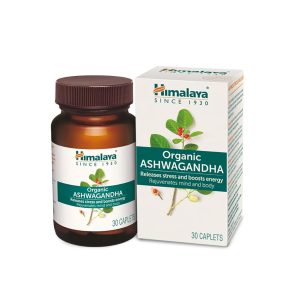
- Himalaya Organic Ashwagandha 670mg
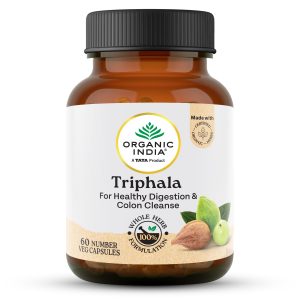
- Organic India Triphala Capsules
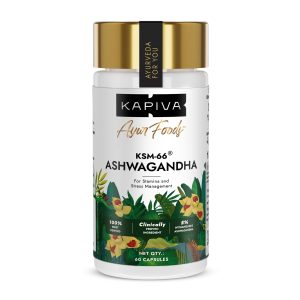
- Kapiva KSM-66 Ashwagandha Capsules
- Dabur Chyawanprakash Sugar Free
All products are authentic Indian brands, sourced directly from India and dispatched within 24–72 hours (UK delivery typically 5–7 working days).
Related guides
Shop the products in this guide
- Dabur Ashwagandha Capsules 20 — £3.99
- Dabur Triphala Churna Powder 120g — £3.99
Lab-tested, vegetarian, shipped from India. Food supplements should not replace a varied diet.
This guide is general information, not medical advice. Herbal products and food supplements are not intended to diagnose, treat or cure any condition. If you are worried about a product you have taken, stop it and speak to your GP.
Pingback: Ashwagandha vs Magnesium – Which Should You Take? UK | KantiGlow
Pingback: Budget Ayurveda: Full Routine for £25/Month (UK) | KantiGlow