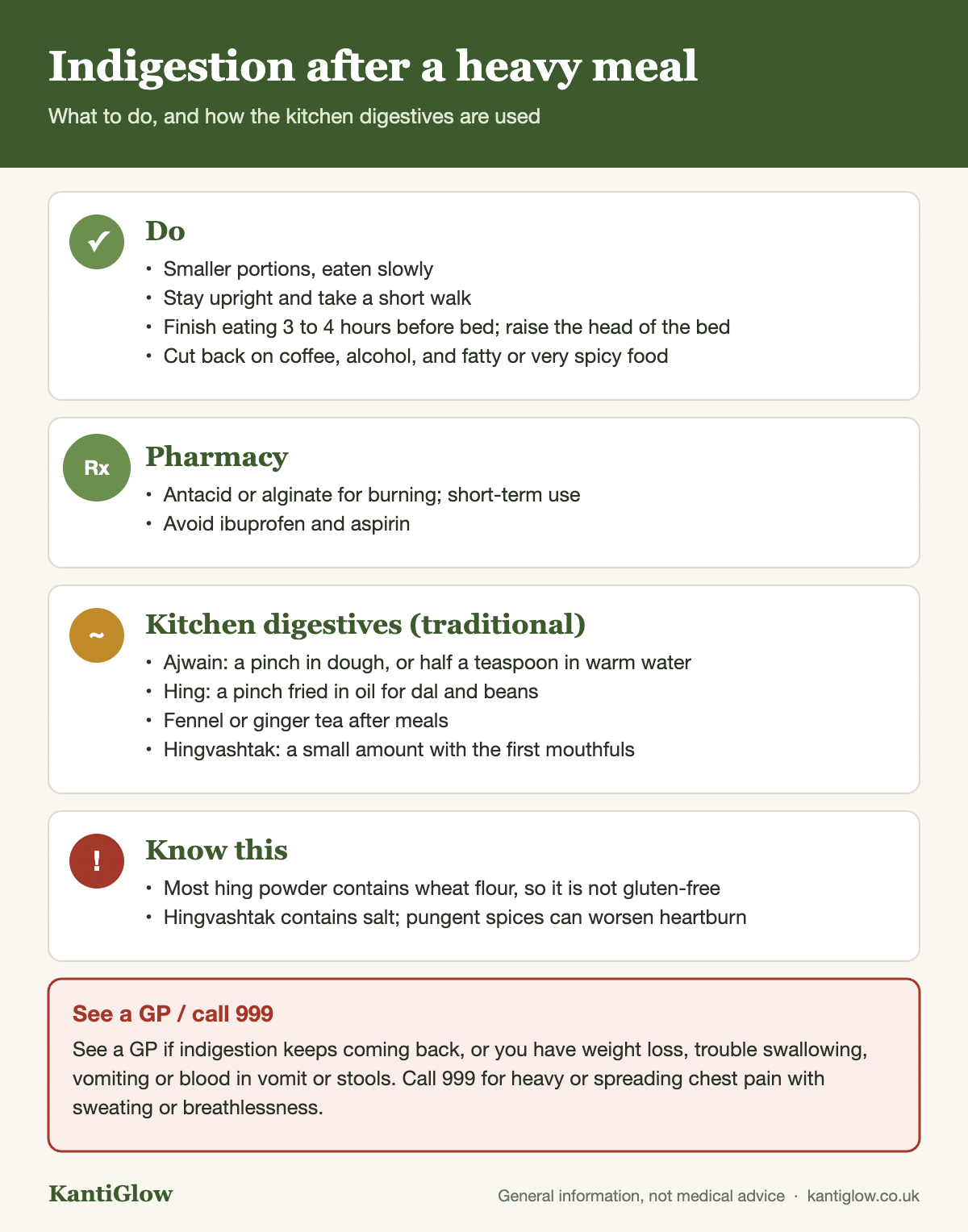
Quick answer: Indigestion after a large, rich or late meal is very common and usually settles within a few hours. It helps to eat smaller portions more slowly, stay upright and take a short walk afterwards, finish eating three to four hours before bed, and cut back on coffee, alcohol, and fatty or very spicy food. A pharmacist can suggest an antacid or alginate for the burning. Ajwain, hing and hingvashtak are the traditional Indian kitchen digestives, used in cooking and after meals for wind and heaviness. They are safe in food amounts for most people, though research on them is limited, and they are not a treatment for ongoing symptoms. See a GP if you keep getting indigestion, and call 999 for chest pain that could be your heart.
Key facts
- Indigestion can cause heartburn, feeling full or bloated, feeling sick, burping and wind, and bringing up food or bitter fluid.
- Common triggers are coffee, tomatoes, alcohol, chocolate, and fatty or spicy foods.
- Do not eat within 3 to 4 hours of going to bed.
- Ibuprofen and aspirin can make indigestion worse.
- Antacids and alginates are for short-term relief, not regular long-term use.
- Most hing (asafoetida) powder sold in shops is mixed with wheat flour, so it is not gluten-free.
Why do I get indigestion after a big meal?
- Volume. A very full stomach stretches and pushes acid up into the food pipe.
- Fat. Rich, fried and creamy food slows the stomach emptying, so the full, heavy feeling lasts longer.
- Speed. Eating fast means swallowing air and overshooting fullness.
- Lying down or slumping after eating lets acid travel upwards.
- Triggers. Chilli, tomatoes, onions, coffee, chocolate, mint, fizzy drinks and alcohol relax the valve at the top of the stomach or irritate the lining in some people.
- Fermentable foods. Chickpeas, kidney beans, lentils, cabbage, onions and garlic produce gas a few hours later.
- Weight, pregnancy and tight waistbands raise pressure on the stomach.
- Smoking, stress and some medicines, especially anti-inflammatory painkillers.
Occasional indigestion is normal. Frequent indigestion can be caused by acid reflux disease, a hiatus hernia, a stomach ulcer or a stomach infection, and needs a GP.
What helps straight away
- Stay upright. Do not lie down or slump on the sofa.
- Take a gentle 10 to 15 minute walk.
- Loosen your waistband.
- Sip warm water or a plain herbal tea. Avoid coffee, alcohol and fizzy drinks.
- Antacid or alginate from a pharmacy for burning, taken with or soon after food.
- Do not take ibuprofen or aspirin for the discomfort.
How to stop it happening
- Eat smaller portions, and take 20 minutes over a meal.
- Finish eating three to four hours before bed.
- Raise the head of your bed by 10 to 20 cm with blocks under the legs or mattress. Extra pillows do not work as well.
- Cut down on your personal triggers. Keep a note for two weeks to find them.
- Go easier on oil, ghee, cream and fried starters, which do more harm than the spices.
- Soak and rinse dried beans and lentils, and cook them thoroughly.
- Lose weight if you are overweight, and stop smoking.
- Find ways to relax. Stress makes symptoms worse.
Ajwain, hing and hingvashtak
These are cooking spices first. Indian kitchens add them to exactly the foods that cause wind: pulses, fried breads and heavy doughs.
| What it is | How it is used | Evidence | Cautions | |
|---|---|---|---|---|
| Ajwain (carom seeds) | Small seeds tasting of thyme | A pinch in paratha or puri dough, pakora batter and dal; or half a teaspoon chewed or steeped in warm water after a meal | Traditional. Laboratory studies only; very little human research | Food amounts are fine. Avoid larger, medicinal amounts in pregnancy. Can aggravate heartburn in some people |
| Hing (asafoetida) | Dried resin with a strong onion-garlic smell | A pinch fried briefly in hot oil at the start of cooking dal, beans and vegetables | Traditional. One or two small trials in indigestion; not strong | Shop-bought powder is usually bulked with wheat flour, so it is not suitable for coeliac disease unless labelled gluten-free. Avoid medicinal amounts in pregnancy and breastfeeding, and do not give to babies. May add to the effect of blood thinners and blood pressure medicines |
| Hingvashtak churna | A classical powder of hing with ginger, black pepper, long pepper, ajwain, cumin, black cumin and rock salt | Traditionally a small amount with ghee and the first mouthfuls of rice, or with warm water after eating | Traditional. Almost no clinical research | Contains salt, so count it if you have high blood pressure, heart or kidney disease. Pungent: can worsen heartburn and ulcers. Avoid in pregnancy |
| Fennel seeds (saunf) | Sweet aniseed-tasting seeds | Chewed after meals, or as tea | Traditional. Limited evidence | Safe as food |
| Ginger | Fresh root | In cooking or as tea | Reasonable evidence for nausea | Large amounts can cause heartburn |
Wind or acid? The kitchen digestives are traditionally for wind, heaviness and bloating. They are warming and pungent, and for some people they make burning worse. If your main symptom is heartburn, the measures in the sections above, and an alginate from the pharmacy, are the better choice.
Baking soda and fruit salts. Products such as Eno are antacids. They work quickly but are high in sodium, so they are for occasional use only and are not advised if you have high blood pressure or heart or kidney disease.
Follow the label on any packaged product, keep to the stated amount, and check with a pharmacist if you take regular medicines.
When to see a GP
See a GP if you keep getting indigestion, have heartburn most days, or pharmacy medicines are not helping. Also go if you are in severe pain, have lost weight without trying, have difficulty swallowing or food sticking, keep being sick, have iron deficiency anaemia, feel a lump in your tummy, or have blood in your vomit or stools.
Call 999 for chest pain that feels tight or heavy, spreads to your arm, neck, jaw or back, or comes with sweating, breathlessness or feeling sick. Heart pain is often mistaken for indigestion.
Indigestion after eating: frequently asked questions
What is indigestion?
Discomfort after eating, including heartburn, fullness, burping and feeling sick.
Why do I get indigestion after every big meal?
A full stomach pushes acid upwards, and rich food empties slowly.
How long does indigestion last?
Usually a few hours.
What is the fastest way to relieve indigestion?
Stay upright, walk gently and take an antacid or alginate.
What is the difference between indigestion and heartburn?
Heartburn is the burning in the chest. It is one symptom of indigestion.
What is acid reflux?
Stomach acid travelling up into the food pipe.
Does spicy food cause indigestion?
It is a trigger for some people.
Is it the spices or the oil?
Often the fat. Fried and creamy dishes slow the stomach.
Why do dal and beans give me wind?
They contain carbohydrates that gut bacteria ferment into gas.
How can I make beans less gassy?
Soak, rinse and cook them thoroughly, and add hing, ginger or ajwain.
Should I lie down after eating?
No. Stay upright for a few hours.
Does walking after a meal help?
Yes. A short gentle walk helps the stomach empty.
Does drinking water with meals cause indigestion?
No. Fizzy drinks can.
Does milk help heartburn?
It may soothe briefly, but fat in milk can stimulate more acid.
Does tea or coffee make it worse?
Often, yes.
What is ajwain?
Carom seeds, a spice used in Indian breads and fried foods.
Does ajwain help with gas?
It is the traditional remedy. Human research is very limited.
How do I take ajwain?
A pinch in cooking, or half a teaspoon in warm water after a meal.
Is ajwain water safe every day?
In small food amounts for most adults. Avoid medicinal amounts in pregnancy.
Can ajwain cause acidity?
It can in some people, because it is pungent.
What is hing?
Asafoetida, a strong-smelling resin used in tiny amounts in cooking.
Does hing help digestion?
It is traditionally added to pulses for this. Evidence is limited.
How much hing should I use?
A pinch, about an eighth of a teaspoon, for a dish serving four.
Is hing gluten-free?
Usually not. Most powders contain wheat flour. Look for one labelled gluten-free.
Is hing safe in pregnancy?
Small amounts in food are generally considered fine. Avoid supplements and tablets.
Can I give hing to a baby for colic?
No. Speak to your health visitor or GP.
What are hing goli?
Small digestive tablets made with hing and spices. Follow the label, and check the salt and sugar content.
What is hingvashtak churna?
A classical Ayurvedic powder of hing with seven other spices and rock salt.
How do you take hingvashtak?
Traditionally a small amount with the first mouthfuls of a meal, or with warm water after.
Is hingvashtak safe?
In small amounts for most adults. It contains salt and can aggravate heartburn.
Can I take hingvashtak with high blood pressure?
Check with a pharmacist, because of the salt.
Does fennel help after meals?
It is a traditional mouth freshener and digestive. Evidence is limited.
Does ginger help indigestion?
It helps nausea. Evidence for indigestion is weaker.
Does jeera water help?
It is a soothing warm drink. There is little research.
Is Eno safe?
For occasional use. It is high in sodium.
Does baking soda help?
It neutralises acid briefly, but is high in sodium and not for regular use.
Are antacids safe to take every day?
They are for short-term relief. See a GP if you need them regularly.
What is omeprazole?
A medicine that reduces stomach acid. Short courses are sold in pharmacies.
Can I take herbs with omeprazole?
Check with a pharmacist.
Is indigestion common in pregnancy?
Very, especially from around 27 weeks. Ask a pharmacist what is suitable.
Can stress cause indigestion?
Yes.
Could it be an ulcer?
Possibly, if pain is frequent or severe. See a GP.
How do I tell indigestion from a heart attack?
You may not be able to. Call 999 for chest pain that is heavy, spreading or comes with sweating or breathlessness.
When should I see a GP?
If indigestion keeps coming back or you have any of the warning signs.
Sources
Shop the products in this guide
- Patanjali Divya Hingvashtak Churna 100g — £3.99
- Baidyanath Hingwashtak Churna 100g — £3.99
- Krishna’s Ajmodadi Churna — £3.99
- Baidyanath Ajmodadi Churna 100g — £4.99
- Dabur Lavan Bhaskar Churna 500g — £8.99
- Baidyanath Avipattikar Churna — £10.99
- Dabur Hingoli Digestive (120) — £3.99
- Hing Goli Asafoetida Digestive Tablets — £3.99
Batch lab-tested, shipped from India. Food supplements should not replace a varied, balanced diet and a healthy lifestyle.
This guide is general information, not medical advice. Herbal products and spices are not intended to diagnose, treat or cure any condition. Speak to a pharmacist or GP about indigestion that keeps coming back, and call 999 for chest pain that could be your heart.