Walk into any UK health shop and ashwagandha comes in three very different forms: traditional root powder, the branded root extract KSM-66®, and the branded root-and-leaf extract Sensoril®. They are not interchangeable, prices differ three-fold, and labels rarely explain why. This FAQ sets out the facts so you can choose the right one.
Key facts
- Root powder (churna): whole dried root, traditional Ayurvedic form, ~1–2% withanolides
- KSM-66®: full-spectrum root-only extract (Ixoreal Biomed), standardised to ≥5% withanolides, typical 300–600mg/day
- Sensoril®: root + leaf extract (Natreon), standardised to ≥10% withanolides, typical 125–250mg/day
- All three: Withania somnifera; none has an authorised GB health claim
Quick answers
- What is KSM-66 ashwagandha?
- What is Sensoril ashwagandha?
- What is the difference between KSM-66 and Sensoril?
- Is plain ashwagandha root powder as good as an extract?
- How do I tell what I am buying from the label?
- How much ashwagandha should I take per day?
- Which ashwagandha brands can I buy in the UK from KantiGlow?
What is KSM-66 ashwagandha?
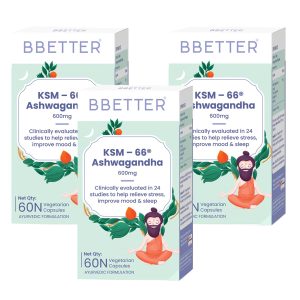
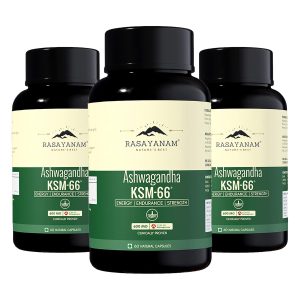
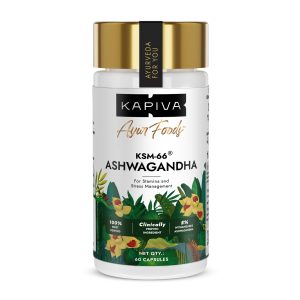
KSM-66® is a branded, full-spectrum extract made only from ashwagandha root, produced by Ixoreal Biomed in India. ‘Full-spectrum’ means the extraction aims to keep the root’s natural balance of constituents rather than isolating one, and it is standardised to at least 5% withanolides (the compounds usually used as the quality marker). The typical labelled dose is 300mg twice daily or 600mg once daily. It is the most widely used ashwagandha extract in UK products, including those from Kapiva, Himalaya, bbetter and Rasayanam.
What is Sensoril ashwagandha?
Sensoril® is a branded extract from Natreon that uses both the root and the leaves of the plant and is standardised to a higher withanolide percentage (10% or more). Because it is more concentrated, the typical dose is smaller — 125mg to 250mg a day. It is common in American products and in sports-nutrition blends, less so in Indian Ayurvedic brands, because classical Ayurveda uses the root rather than the leaf.
What is the difference between KSM-66 and Sensoril?
Three practical differences: plant part (KSM-66 is root-only, Sensoril is root plus leaf); concentration (Sensoril has roughly twice the withanolide percentage, so doses are smaller); and tradition (root-only aligns with the classical Ayurvedic use). Both are extracts of the same species. Neither has an authorised health claim in the UK, so ignore any seller who says one ‘works better’ for a health outcome — that is not a claim they are allowed to make.
Is plain ashwagandha root powder as good as an extract?
Root powder is the form used in Ayurveda for thousands of years: the whole dried root, ground. It contains everything the root contains, but at natural concentration (around 1–2% withanolides), which is why traditional servings are larger — usually 3–6g, or a teaspoon, stirred into warm milk. Tablets from brands such as Himalaya and Dabur are typically compressed root powder at 500–670mg each. If you want the authentic Ayurvedic experience and lower cost per gram, choose powder; if you want a small, standardised daily capsule, choose an extract.
How do I tell what I am buying from the label?
Look for: the Latin name Withania somnifera; the plant part (‘root’ or ‘root and leaf’); the word ‘extract’ and a ratio or withanolide percentage, or ‘powder’ for whole root; the KSM-66® or Sensoril® trademark if it is a branded extract; milligrams per capsule; and a batch number. Beware of products that list a large milligram figure that turns out to be ‘equivalent’ to root rather than actual extract.
How much ashwagandha should I take per day?
Follow the pack. As a rule of thumb, UK-labelled products give 300–600mg/day of KSM-66, 125–250mg/day of Sensoril, or 1,000–2,000mg/day of root powder in tablets. Ashwagandha is traditionally taken in the evening with warm milk. Do not take during pregnancy; consult a doctor if you have a thyroid condition or take medication.
Which ashwagandha brands can I buy in the UK from KantiGlow?
For KSM-66: Kapiva, Himalaya (gummies), Rasayanam and bbetter. For traditional root powder and root tablets: Himalaya Organic Ashwagandha, Dabur Ashwagandha capsules and Himalayan Organics. All are authentic Indian brands, dispatched directly from India.
Shop related products at KantiGlow
- Kapiva KSM-66 Ashwagandha Capsules
- Rasayanam KSM-66 Ashwagandha
- bbetter KSM-66 Ashwagandha 600mg
- Himalaya KSM-66 Ashwagandha Gummies
- Himalaya Organic Ashwagandha 670mg (root powder)
- Dabur Ashwagandha Capsules (root)
All products are authentic Indian brands, sourced directly from India and dispatched within 24–72 hours (UK delivery typically 5–7 working days).
Related guides
Food supplements are not a substitute for a varied, balanced diet and a healthy lifestyle. Do not exceed the recommended daily dose. Keep out of reach of young children. If you are pregnant, breastfeeding, taking medication or under medical supervision, consult a healthcare professional before use. This guide describes traditional Ayurvedic use and UK labelling rules; it is not medical advice.
Shop the products in this guide
- Dabur Ashwagandha Capsules 20 — £3.99
- Ashwagandha Gummies 30 — £8.99
- Himalaya Ashwagandha Tablets 60 — £11.99
- Kapiva Ashwagandha Gold Capsules 60 — £13.99
Lab-tested, vegetarian, shipped from India. Food supplements should not replace a varied diet.
Pingback: Magnesium + Ashwagandha Evening Wind-Down Plan (UK) | KantiGlow
Pingback: Ashwagandha vs Magnesium – Which Should You Take? UK | KantiGlow