Quick answer: Hay fever is an allergy to pollen, and it can be controlled well in most people with two things: keeping pollen off you and out of your home, and using the right pharmacy treatment regularly, not only on bad days. A steroid nasal spray used every day is the most effective single treatment for a blocked, runny nose, and antihistamines help sneezing and itching. If those do not work, a GP can offer stronger treatment and, for severe cases, immunotherapy. Kalonji, or black seed, has a few small trials suggesting it may ease nasal symptoms, but the evidence is thin and it does not replace antihistamines or steroid sprays. Wheezing or breathlessness with hay fever needs medical attention.
Key facts
- Hay fever season usually runs from late March to September.
- Symptoms are worst on warm, humid, windy days when the pollen count is high.
- Pharmacy treatments include antihistamine tablets, drops and nasal sprays, and steroid nasal sprays.
- See a GP if symptoms are getting worse or do not improve with pharmacy medicines.
- Immunotherapy, for severe hay fever, is usually started a few months before the season.
- Kalonji is a food spice and supplement in the UK. It cannot be sold as treating allergies.
Is it hay fever?
Typical symptoms are sneezing and coughing, a runny or blocked nose, itchy, red or watery eyes, an itchy throat, mouth, nose and ears, loss of smell, pain around the forehead and temples, headache and tiredness. Unlike a cold, hay fever lasts for weeks or months, does not cause a fever, and comes back at the same time each year.
Which pollen you react to decides when you suffer: tree pollen from late March to mid-May, grass pollen from mid-May to July, which affects most people, and weed pollen from late June to September. Symptoms all year round point to house dust mites, pets or mould instead.
If you have asthma, hay fever can make it worse. A tight chest, wheezing or shortness of breath should be discussed with your GP or asthma nurse.
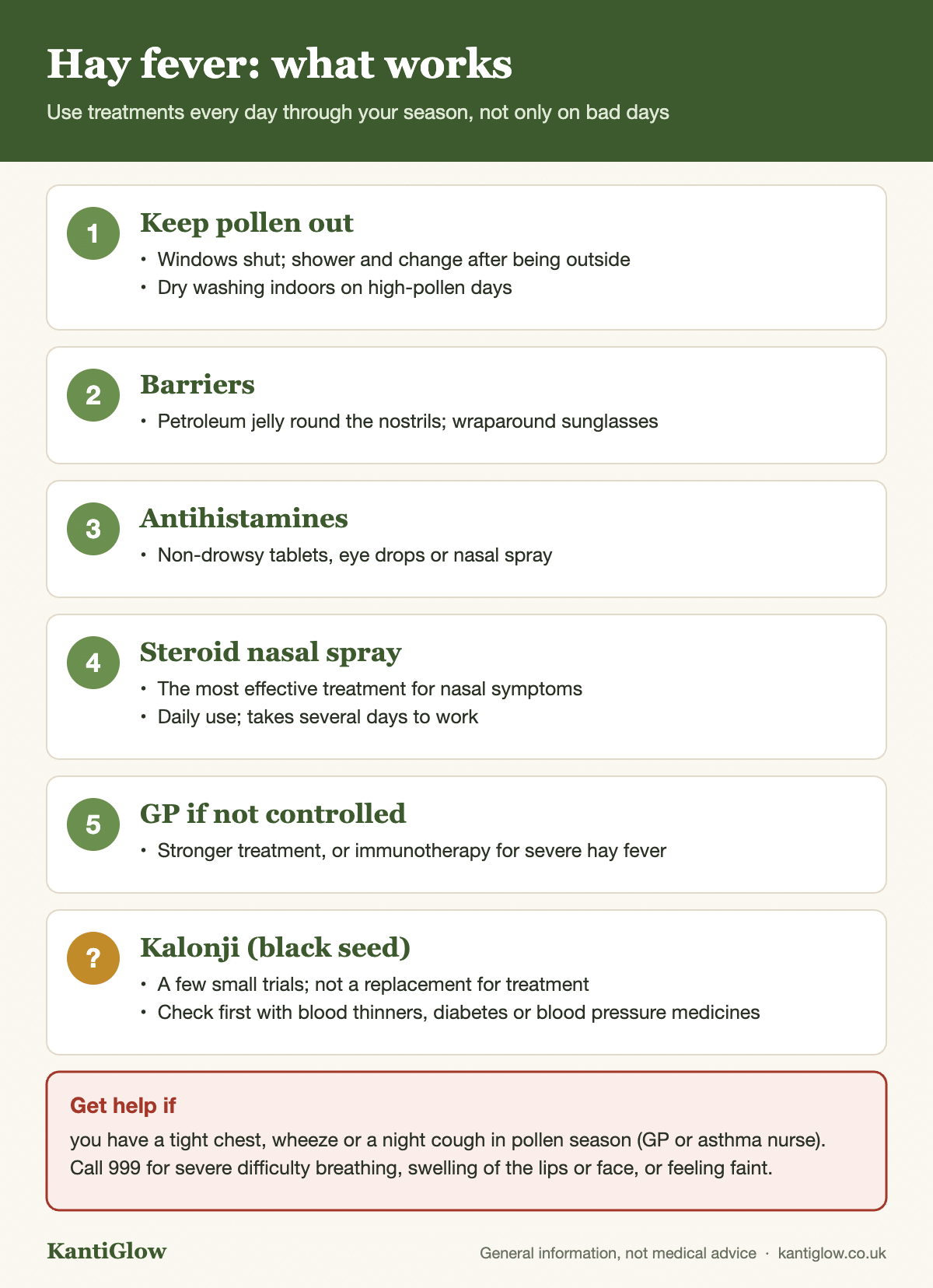
What works, step by step
1. Keep pollen away
- Keep windows and doors shut as much as possible, especially early morning and evening.
- Shower and change your clothes after being outside.
- Do not dry washing outdoors on high-pollen days.
- Wear wraparound sunglasses, and a hat or mask if it helps.
- Put a little petroleum jelly around your nostrils to trap pollen.
- Vacuum regularly and dust with a damp cloth.
- Avoid cutting grass or walking on it, and do not keep fresh flowers indoors.
- Do not smoke, and wipe pets down when they come in.
- Check the pollen forecast and plan outdoor exercise for lower-count times.
2. Antihistamines
Non-drowsy antihistamine tablets such as cetirizine, loratadine or fexofenadine help sneezing, itching and a runny nose. Antihistamine eye drops and nasal sprays act faster on those areas. Take tablets daily through your season, not only when symptoms are bad.
3. A steroid nasal spray
This is the most effective treatment for nasal symptoms, particularly a blocked nose, and it helps the eyes too. It must be used every day and takes several days to reach full effect, so start one to two weeks before your season if you can. Aim the nozzle slightly outwards, away from the middle of the nose.
4. Combine them if one alone is not enough. A pharmacist can advise.
5. Saline rinses wash pollen out of the nose and are safe to use alongside sprays.
6. See a GP if you are still struggling. They can prescribe stronger sprays or other treatment, and refer you for immunotherapy if hay fever is severe.
Does kalonji (black seed) help?
What it is. Kalonji is the seed of Nigella sativa, used as a spice on naan and in pickles and tempering, and as a traditional remedy across South Asia and the Middle East. It is sold as whole seeds, powder, capsules and oil.
What trials show. A handful of small trials, mostly from the Middle East and lasting a few weeks, gave people with allergic rhinitis black seed oil or capsules, by mouth or as nasal drops. Several reported less sneezing, itching and congestion than with placebo. The trials were small and of variable quality, and none compared it properly with a steroid spray. Reviews describe the results as promising but insufficient.
What it cannot do. It does not stop an allergic reaction quickly, it is not a substitute for an inhaler or adrenaline, and it does not cure hay fever. Sweeping claims that black seed treats almost everything have no basis.
Cautions.
- It may lower blood pressure and blood sugar. Check with a pharmacist if you take medicines for either.
- It may slow blood clotting. Avoid supplements with blood thinners, and stop two weeks before surgery.
- Seeds in food are fine in pregnancy, but avoid supplements and oil in medicinal amounts.
- It can cause stomach upset, and the oil can cause a rash on the skin in some people.
- Rare cases of kidney and liver problems have been reported at high doses.
- Do not give supplements to children without medical advice.
If you try it. Keep taking your usual hay fever treatment. Use one product at the label amount for four to six weeks during your season, and judge honestly whether your symptoms were better than last year on the same treatment.
Other remedies people ask about
| Remedy | What we know |
|---|---|
| Local honey | Trials have not shown that it helps hay fever |
| Vitamin C, quercetin | Little evidence |
| Butterbur | Some evidence, but raw products contain liver-toxic compounds. Not recommended |
| Probiotics | Mixed results |
| Nettle tea | Little evidence |
| Tulsi or ginger tea | Soothing warm drinks. No good evidence for allergy |
| Neti pot or saline rinse | Helpful for washing out pollen. Use sterile or boiled, cooled water |
| Giloy | One small trial in allergic rhinitis. Liver injury has been reported |
When to get help
See a GP if your symptoms are getting worse or have not improved after taking medicines from the pharmacy.
See a GP or asthma nurse soon if you have a tight chest, wheezing or a cough at night during the pollen season.
Call 999 if you have severe difficulty breathing, your lips or face swell, or you feel faint. These are signs of a severe allergic reaction or asthma attack.
Hay fever relief: frequently asked questions
What is hay fever?
An allergy to pollen.
When is hay fever season?
Usually late March to September.
Why is my hay fever worse this year?
Pollen levels vary with the weather, and warm, windy days are worst.
Is it hay fever or a cold?
Hay fever causes itching, lasts weeks and brings no fever.
Can you develop hay fever as an adult?
Yes, at any age.
Which pollen am I allergic to?
Tree pollen in spring, grass in early summer, weeds in late summer.
What time of day is pollen highest?
Early morning and early evening.
Does rain help?
Light rain washes pollen out of the air. Thunderstorms can make symptoms worse.
Which antihistamine is best?
Non-drowsy ones such as cetirizine, loratadine or fexofenadine. People respond differently.
Can I take antihistamines every day?
Yes, through your season, as the leaflet directs.
Do antihistamines make you drowsy?
Older ones do. Newer ones usually do not.
Do steroid nasal sprays work?
Yes. They are the most effective treatment for nasal symptoms.
How long do nasal sprays take to work?
Several days of daily use.
Are steroid nasal sprays safe?
Yes, for long-term seasonal use as directed.
Can I use a spray and tablets together?
Yes.
What helps itchy eyes?
Antihistamine or sodium cromoglicate eye drops, and wraparound sunglasses.
Does petroleum jelly work?
It traps some pollen at the nostrils.
Do air purifiers help?
A HEPA filter can reduce indoor pollen.
Does a saline rinse help?
Yes, it washes pollen from the nose.
Does local honey help hay fever?
Trials have not shown a benefit.
Can hay fever cause tiredness?
Yes.
Can hay fever cause a cough?
Yes, from mucus dripping down the throat. Wheeze needs checking.
Can hay fever trigger asthma?
Yes. Keep your preventer inhaler going.
What is immunotherapy?
Regular small doses of pollen to build tolerance, for severe hay fever.
Is the hay fever injection available?
The steroid injection is not recommended on the NHS because of side effects.
What can I take in pregnancy?
Ask a pharmacist. Some sprays and antihistamines are suitable.
What can children take?
Ask a pharmacist for age-appropriate options.
What is kalonji?
The seed of Nigella sativa, also called black seed or black cumin.
Is kalonji the same as black cumin or onion seed?
It is often called both, but it is unrelated to cumin and onion.
Does kalonji help hay fever?
A few small trials suggest it may ease symptoms. Evidence is limited.
How was kalonji used in trials?
As oil or capsules by mouth, or as nasal drops, for several weeks.
How much kalonji should I take?
There is no established dose. Follow the product label.
Can I eat kalonji seeds instead?
Yes, as a spice. Food amounts are much smaller than trial doses.
Is kalonji safe?
In food amounts, yes. Supplements have cautions.
Who should avoid kalonji supplements?
Pregnant women, and people on blood thinners, diabetes or blood pressure medicines without advice.
Can I take kalonji with antihistamines?
There is no known interaction. Tell your pharmacist.
Does kalonji help asthma?
Small studies exist. It must never replace inhalers.
Does kalonji boost immunity?
That claim cannot be made.
Is black seed oil better than seeds?
Oil is more concentrated. Evidence does not show which is better.
Does kalonji help with weight or blood sugar?
Small trials show modest effects. It is not a treatment.
Does tulsi tea help allergies?
There is no good evidence.
Does turmeric help hay fever?
One or two small trials. Not established.
Can hay fever be cured?
Not cured, but immunotherapy can reduce it for years.
When should I see a GP?
If pharmacy treatments have not controlled your symptoms.
Sources
Related guides
- Giloy (Guduchi): A UK Guide
- Methi (Fenugreek): A UK Guide
- Bhumi Amla: A UK Guide
- Shilajit vs Ashwagandha: How to Choose
Shop the products in this guide
- Kalonji Powder 250g — £7.99
- Nature Sure Kalonji Tablets 90 — £7.99
- Holyco Black Seed Softgels 30 — £11.99
- Sushrut Kalonji (Black Seed) Capsules 500mg 60 — £8.99
Lab-tested, vegetarian, shipped from India. Food supplements should not replace a varied diet.
This guide is general information, not medical advice. Food supplements and herbal products are not intended to diagnose, treat or cure any condition. Speak to a pharmacist or GP about hay fever that is not controlled, and seek urgent help for breathing difficulty.