Quick answer: The most effective way to prevent another kidney stone is to drink enough to keep your urine pale all day, which for most adults means up to 3 litres of fluid. Adding fresh lemon juice to water, cutting down on salt, keeping up your calcium from food and limiting fizzy drinks all help. Do not make big changes to your diet until your doctor has told you what type of stone you had. Bhumi amla, sold as “stone breaker” or chanca piedra, has a few small trials suggesting it may help small stones pass or reduce their number, but the evidence is weak and it is not a treatment. Severe pain, or pain with a fever or shivering, needs urgent medical help, not a herbal remedy.
Key facts
- Kidney stones form when chemicals in the urine build up into hard lumps.
- Small stones often pass on their own. Larger ones cause severe pain in the side or back that can spread to the groin.
- Adults should aim for 2.5 to 3 litres of fluid a day to prevent stones. Tea, coffee and fruit juice count, but water is best.
- Keep salt under 6 g a day, and get enough calcium.
- Stones can come back, especially if you drink too little, eat a high-protein, low-fibre diet, are inactive, or have a family history.
- Get urgent help for severe pain, or for suspected stones with a high temperature or shivering.
Why did I get a kidney stone?
About four in five stones contain calcium, most often as calcium oxalate. Others are made of uric acid or, after infections, struvite. They form when urine is too concentrated or contains too much of a stone-forming substance.
You are more likely to get one if you:
- do not drink enough, work in a hot environment or sweat heavily
- eat a lot of salt or animal protein and little fibre
- are overweight or have metabolic syndrome, diabetes or gout
- are inactive or confined to bed
- have repeated kidney or urine infections
- have a close relative who has had stones
- take certain medicines, including some diuretics, antacids and high-dose vitamin C or vitamin D
- have had a stone before
If you pass a stone, try to catch it and take it to your GP. Knowing what it is made of decides the dietary advice.
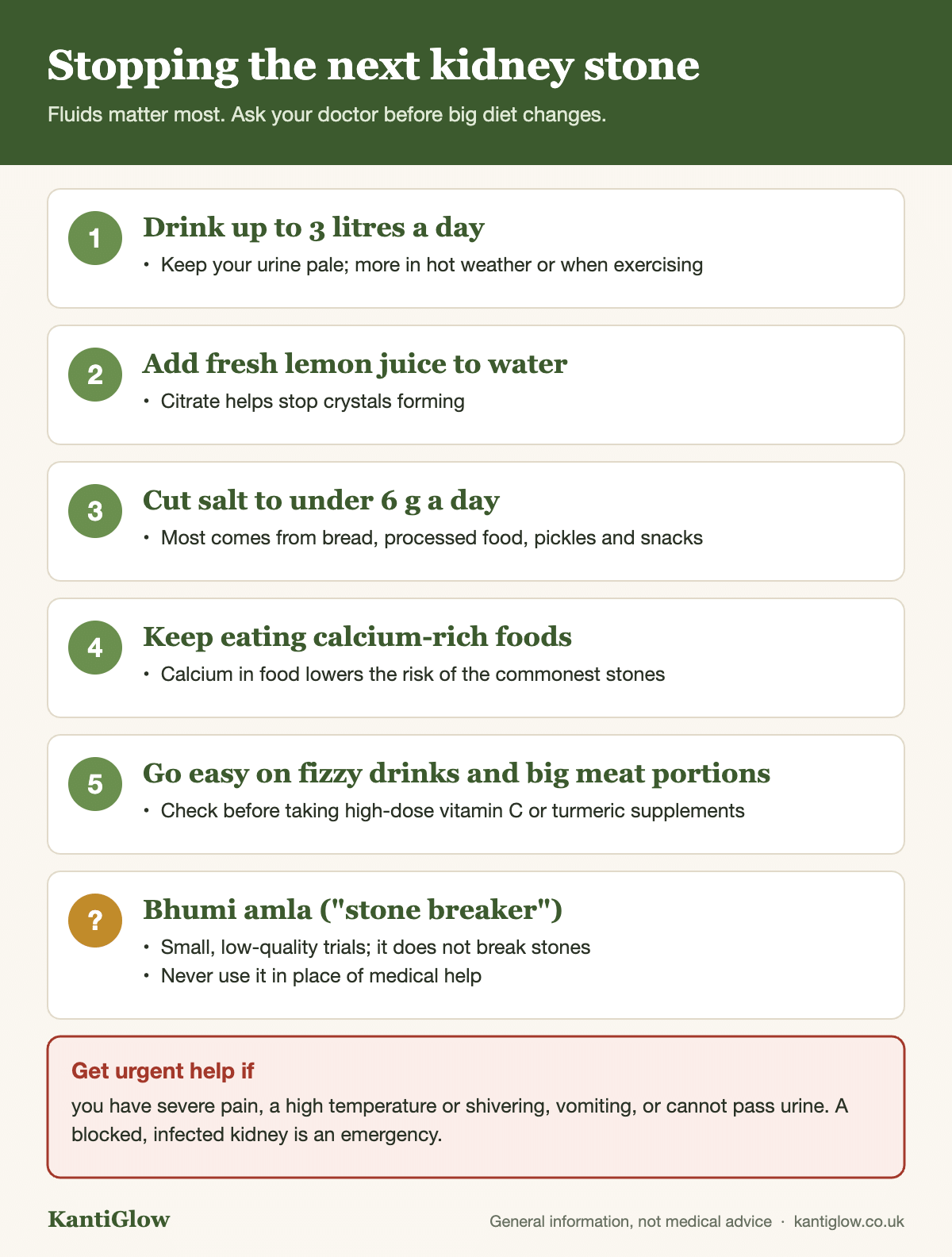
How to stop another stone
1. Drink more. Up to 3 litres of fluid spread through the day, and more in hot weather or when you exercise. Check your urine: it should be pale. Dark yellow first thing in the morning is normal.
2. Add lemon. Squeeze fresh lemon juice into your water. The citrate in lemon helps stop calcium crystals forming.
3. Cut salt. Keep it under 6 g a day, about a teaspoon. Salt makes the kidneys pass more calcium into the urine. Most salt comes from bread, processed and takeaway food, pickles, papad and savoury snacks.
4. Keep eating calcium. Two to three portions of dairy or fortified alternatives a day. This surprises people, but calcium in food binds oxalate in the gut and lowers the risk of the commonest stones. Cutting out dairy makes things worse. Calcium supplements are different: take them only if prescribed.
5. Limit fizzy drinks. Especially colas.
6. Go easy on animal protein. Large portions of meat, fish and eggs every day raise the risk of calcium and uric acid stones. Keep to moderate portions.
7. Stay active and keep to a healthy weight.
8. Be careful with supplements. High-dose vitamin C (1 g or more a day) and concentrated turmeric supplements both increase oxalate in the urine. Check with your doctor before taking them.
9. Ask before restricting foods. If your stones were calcium oxalate and your doctor advises it, you may be told to cut down on high-oxalate foods such as spinach, beetroot, rhubarb, nuts, chocolate and strong black tea. Do not do this on your own: the NHS advises speaking to your doctor before making changes to your diet.
10. Medicines. People who keep forming stones may be offered medication after urine and blood tests.
Bhumi amla: what the evidence says
What it is. Bhumi amla (Phyllanthus niruri) is a small tropical herb, unrelated to amla despite the name. In South America it is called chanca piedra, “stone breaker”. In Ayurveda it is used mainly for the liver and urinary system.
What trials show.
- A few small studies, mostly from Brazil and India, gave Phyllanthus extract or tea to people with small kidney stones for one to three months. Some reported fewer or smaller stones, or better clearance of fragments after shock wave treatment.
- The studies were small, short and of low quality, and some had no comparison group.
- It does not “break” or dissolve stones. The suggested effect is on crystal formation and on relaxing the urinary tract.
- It is not recommended in UK guidance on kidney stones.
Cautions.
- It may lower blood sugar and blood pressure, and increase urine output. Check with a pharmacist if you take medicines for diabetes or blood pressure, diuretics, lithium or blood thinners.
- Avoid it in pregnancy, when trying to conceive and while breastfeeding.
- Avoid it before surgery.
- People with kidney disease should not take herbal products without their kidney team’s agreement.
When not to use it. Never try to manage a stone at home with a herb if you have severe pain, a temperature, shivering, vomiting, or cannot pass urine. A blocked, infected kidney is an emergency.
If you try it for prevention, tell your GP, use one product at the label amount, and keep doing the things above. Drinking enough has far better evidence than any herb.
Other traditional remedies. Kulthi (horse gram) dal, barley water, coconut water and varuna bark are all used in India for stones. Barley water and coconut water add fluid, which helps. The rest have little research.
When to get help
Urgent GP appointment or 111: if you think you have a kidney stone and are in severe pain, or you have a high temperature or feel hot, cold or shivery.
999 or A&E: if the pain is unbearable, you are vomiting and cannot keep fluids down, you cannot pass urine, or there is a lot of blood in your urine.
See a GP about blood in your urine, even once, and to discuss prevention if you have had more than one stone.
Prevent kidney stones: frequently asked questions
What causes kidney stones?
Chemicals in concentrated urine forming hard lumps. Not drinking enough is the commonest factor.
What are the symptoms of a kidney stone?
Severe pain in the side or back spreading to the groin, feeling sick, and needing to pee often.
How long does a kidney stone take to pass?
Small ones can take a few days to a few weeks.
Will a kidney stone pass on its own?
Small stones usually do. Larger ones may need hospital treatment.
How likely am I to get another?
Stones often come back. Studies suggest around half of people have another within ten years without changes.
How much water should I drink?
Up to 3 litres of fluid a day.
How do I know if I am drinking enough?
Your urine should be pale.
Does lemon juice help?
Yes. Fresh lemon juice in water is recommended.
Does apple cider vinegar dissolve stones?
There is no good evidence that it does.
Do tea and coffee count as fluid?
Yes, though water is the healthiest choice.
Is tea bad for kidney stones?
Strong black tea is high in oxalate. Ask your doctor if you form oxalate stones.
Are fizzy drinks bad?
Limit them, especially colas.
Does alcohol cause kidney stones?
It dehydrates you. Beer and spirits also raise uric acid.
Should I cut out calcium?
No. Calcium from food lowers the risk of the commonest stones.
Can I drink milk?
Yes.
Are calcium supplements safe?
Take them only if prescribed.
Why does salt matter?
It increases calcium in the urine.
Which foods are high in oxalate?
Spinach, beetroot, rhubarb, nuts, chocolate and strong tea.
Should I avoid spinach and tomatoes?
Only if your doctor advises it. Tomatoes are not especially high in oxalate.
Does meat cause kidney stones?
Large amounts of animal protein raise the risk.
Are vegetarians less likely to get stones?
High-fibre, lower-meat diets are linked with lower risk.
Does vitamin C cause stones?
High-dose supplements can.
Does turmeric cause kidney stones?
Turmeric supplements are high in oxalate. Food amounts are fine.
Does vitamin D cause stones?
Normal doses do not. Very high doses can.
Do protein shakes cause stones?
Very high protein intakes may raise the risk. Drink plenty.
What is bhumi amla?
Phyllanthus niruri, a tropical herb also called chanca piedra or stone breaker.
Is bhumi amla the same as amla?
No. They are unrelated plants.
Does bhumi amla break kidney stones?
No. Small studies suggest it may help prevent or pass small stones, but evidence is weak.
How is bhumi amla taken?
As tablets, powder or tea. Follow the label.
How long was it used in studies?
One to three months.
Is bhumi amla safe?
It appears well tolerated short term. It can interact with medicines.
Who should not take bhumi amla?
Pregnant or breastfeeding women, people with kidney disease, and those on diabetes, blood pressure or lithium medicines without advice.
Can I take bhumi amla with tamsulosin?
Check with your pharmacist or urologist.
Does bhumi amla help the liver?
That is a traditional use. Human evidence is limited.
Does kulthi dal dissolve stones?
It is a traditional remedy with little research.
Does barley water help?
It adds fluid, which helps.
Does coconut water help?
It counts towards your fluids. Evidence beyond that is thin.
Do cranberry products prevent stones?
No. They may increase oxalate.
Can I exercise with a kidney stone?
Gentle movement may help a small stone pass. Stop if the pain is severe.
What painkillers can I take?
Follow your doctor’s advice. Anti-inflammatory painkillers are often used.
What is shock wave treatment?
Sound waves used to break a stone into smaller pieces.
Should I keep the stone?
Yes. It can be analysed to guide prevention.
Can children get kidney stones?
Yes, though rarely. See a GP.
When is a kidney stone an emergency?
With severe pain, a fever or shivering, vomiting, or inability to pass urine.
Sources
- NHS: Kidney stones
- NHS: Kidney stones prevention
- NHS: Vitamin C
- NHS: Herbal medicines
- NHS: Dehydration
Related guides
- Kalonji (Black Seed): A UK Guide
- Giloy (Guduchi): A UK Guide
- Methi (Fenugreek): A UK Guide
- Ashwagandha in the UK: KSM-66, Forms & How to Take
Shop the products in this guide
- Neotea Bhumi Amla Powder — £9.99
- Merlion Naturals Bhumi Amla 500mg Tablets 120 — £10.99
- KantiGlow Selection Tulsi Amla Giloy Ayurvedic Immunity Wellness Capsules 60 — £18.99
- Dabur Amla Churna Powder — £2.99
Lab-tested, vegetarian, shipped from India. Food supplements should not replace a varied diet.
This guide is general information, not medical advice. Herbal products are not intended to diagnose, treat or cure any condition. Get urgent medical help for severe pain or a fever with a suspected kidney stone, and speak to your doctor before changing your diet or taking a herbal product.
Pingback: Amla UK Guide: Powder vs Juice vs Tablets | KantiGlow
Pingback: Milk Thistle & Kutki UK Guide: How to Take Them | KantiGlow
Pingback: Liv.52 Explained: Ingredients & DS | KantiGlow