
Quick answer: Winter tiredness is usually a mix of less daylight, worse sleep, less movement and heavier food. Vitamin D is worth taking: the UK does not get enough sunlight to make it from October to early March, and the NHS advises everyone to consider 10 micrograms (400 IU) a day in autumn and winter. It will only lift your energy if you were low to begin with. You do not need vitamin K2 with a standard dose of vitamin D, and you should not take K2 if you are on warfarin. If you have been tired for a few weeks with no clear reason, ask a GP for blood tests, because anaemia, thyroid problems and diabetes are common, treatable causes.
Key facts
- From October to early March, UK sunlight is too weak for skin to make vitamin D.
- Adults and children over 1 need 10 micrograms (400 IU) a day.
- People with dark skin, who cover up outdoors, or who are rarely outside should consider taking it all year.
- Do not take more than 100 micrograms (4,000 IU) a day. Too much over time can harm bones, kidneys and the heart.
- Vitamin D contributes to normal bones, muscle function and immune function. It is not an energy supplement.
- See a GP if tiredness has lasted a few weeks and you do not know why.
Why am I so tired in winter?
- Less daylight. Light sets your body clock. Dark mornings make it harder to wake and dark afternoons bring sleepiness on early.
- Worse sleep. Later nights, more screens, heating on high and alcohol all chip away at sleep quality.
- Less movement. Activity drops in cold weather, and low activity lowers energy.
- Food. Heavier meals, more sugar, fewer vegetables.
- Low vitamin D. Common by late winter, especially in people of South Asian, African and Caribbean heritage.
- Low iron. Common in women with heavy periods and in vegetarians.
- Colds and viruses. Tiredness can linger for weeks afterwards.
- Low mood. Some people get a seasonal pattern of low mood, sleeping more and craving carbohydrates. If that describes you, speak to a GP.
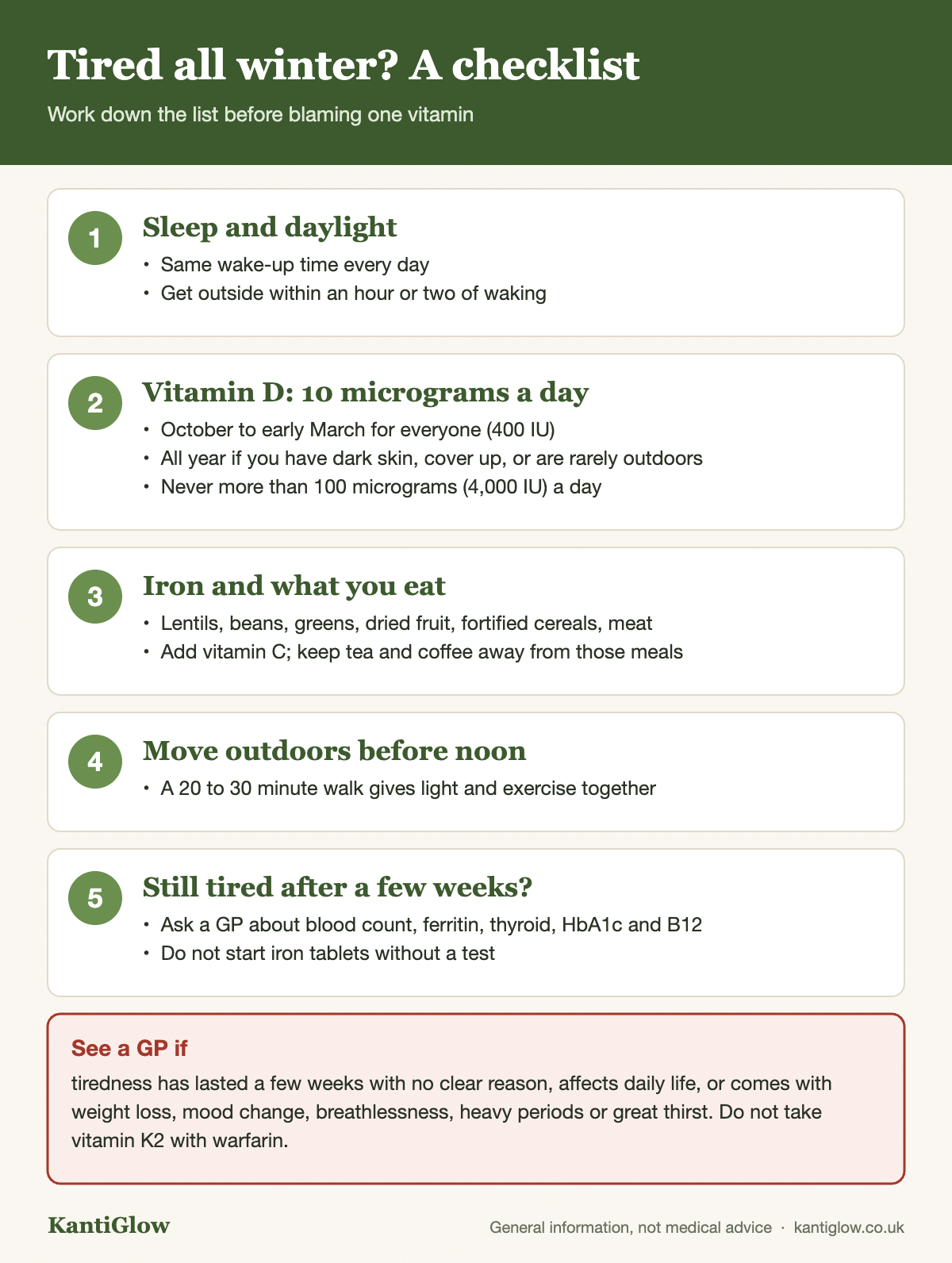
A winter energy checklist
1. Sleep and daylight. Keep the same wake-up time every day. Get outside within an hour or two of waking, even if it is grey: outdoor light is far brighter than indoor light. Our guide Can’t Sleep or Waking at 3am? covers the sleep side.
2. Vitamin D. Take 10 micrograms a day from October to March.
3. Iron and food. Eat iron-rich foods daily: lentils, chickpeas, beans, dark green vegetables, dried apricots, fortified cereals, and meat if you eat it. Have them with vitamin C (lemon, tomatoes, peppers, orange juice). Keep tea and coffee away from those meals, because they reduce iron absorption.
4. Move outdoors before noon. A 20 to 30 minute walk gives you light and exercise together.
5. Caffeine and alcohol. Stop caffeine after lunch and keep alcohol low. Both cost more sleep than people expect.
6. Still tired after a few weeks? See the blood tests section below.
Ayurveda treats winter as a season for warm, cooked, spiced food, oil massage, steady exercise and regular hours. That routine suits the checklist well.
Vitamin D: how much, which kind
| Question | Answer |
|---|---|
| How much? | 10 micrograms (400 IU) a day for adults and children over 1 |
| When? | October to early March for everyone; all year if you have dark skin, cover up, or are rarely outdoors |
| D2 or D3? | Both work. D3 raises blood levels a little more effectively. D3 from lichen is vegan |
| With food? | Yes, with a meal that contains some fat |
| Upper limit | 100 micrograms (4,000 IU) a day for adults |
| Higher doses | Only if a doctor prescribes them after a blood test |
Many products sold online contain 1,000 to 4,000 IU. That is within the safe limit, but more is not better. Check whether your multivitamin or cod liver oil already contains vitamin D, so you do not double up. Cod liver oil also contains vitamin A and should be avoided in pregnancy.
Do I need K2 with my D3?
Vitamin K helps blood clot, and there is some evidence it plays a part in bone health. Adults need about 1 microgram per kilogram of body weight a day, which a varied diet provides. Green leafy vegetables are the main source.
The idea behind D3 + K2 products is that vitamin D increases calcium absorption and K2 helps direct calcium into bone. That is plausible, but good trials showing that adding K2 to a normal dose of vitamin D improves bone or heart health are lacking. At 10 micrograms of vitamin D a day, you do not need K2.
Important: vitamin K works against warfarin. If you take warfarin or a similar anticoagulant, do not take a K2 supplement unless your anticoagulant clinic agrees. The NHS says 1 mg or less of vitamin K a day from supplements is unlikely to cause harm in people not on these medicines.
Blood tests worth asking about
If you are still tired after a few weeks, a GP may check:
- Full blood count and ferritin, for anaemia and iron stores
- Thyroid function
- HbA1c, for diabetes
- Vitamin B12 and folate, especially if you are vegetarian or vegan or take metformin
- Vitamin D, if you are at higher risk of deficiency or have bone or muscle pain
Do not start iron tablets without a test. They cause side effects, too much iron is harmful, and they must be kept away from children.
When to see a GP
See a GP if you have been tired for a few weeks and do not know why, if it is affecting your daily life, or if you also have weight loss, a change in mood, breathlessness, palpitations, heavy periods, great thirst, or you have been told you gasp or stop breathing in your sleep.
Tired all the time: frequently asked questions
Why am I more tired in winter?
Less daylight, poorer sleep, less activity and sometimes low vitamin D or iron.
Is it normal to need more sleep in winter?
Slightly more is common. Sleeping far more than usual and still feeling exhausted is worth checking.
Does low vitamin D make you tired?
Deficiency can cause tiredness, muscle weakness and bone pain. Topping up normal levels does not boost energy.
How much vitamin D should I take in winter?
10 micrograms (400 IU) a day.
Is 1,000 IU too much?
No, it is within the safe limit for adults. It is more than the NHS advises you need.
Is 4,000 IU safe?
That is the upper limit for adults. Do not exceed it, and do not take that much long term without medical advice.
What happens if I take too much vitamin D?
Calcium builds up in the body, which can weaken bones and damage kidneys and the heart.
When should I start and stop?
Start in October and continue to the end of March.
Should I take vitamin D all year?
Yes if you have dark skin, cover most of your skin outdoors, or are rarely outside.
Do people with brown or black skin need more?
They make less vitamin D from the same sunlight, so year-round 10 micrograms is advised.
Can I get vitamin D from food?
Some: oily fish, egg yolks, red meat and fortified foods. It is hard to get enough from food alone in winter.
Is UK milk fortified with vitamin D?
Generally not. Some plant milks, spreads and cereals are.
What is the difference between D2 and D3?
D3 is the form skin makes and is slightly better at raising levels. D2 comes from plants and fungi.
Is there a vegan vitamin D3?
Yes, made from lichen.
When is the best time to take vitamin D?
Any time, with a meal containing some fat.
How long before I feel a difference?
If you were deficient, a few weeks to three months.
Should I have a vitamin D blood test?
It is not routine. GPs test people with symptoms or risk factors.
Can a sunbed or winter sun top up vitamin D?
Sunbeds are not recommended because of skin cancer risk. A winter holiday in strong sun helps for a few weeks.
Does vitamin D help immunity?
It contributes to the normal function of the immune system. It has not been shown to prevent colds in people with adequate levels.
What is vitamin K2?
A form of vitamin K found in fermented foods, cheese and egg yolks.
Do I need K2 with D3?
Not at standard vitamin D doses.
What does K2 do?
Vitamin K helps blood clot and may support bone health.
Can I take K2 with warfarin?
No, not without your anticoagulant clinic’s agreement.
Is K2 safe with newer blood thinners such as apixaban?
These do not work through vitamin K, but check with your pharmacist first.
MK-4 or MK-7?
MK-7 stays in the blood longer and is the usual supplement form. Neither has strong outcome evidence.
Can I take vitamin D with calcium?
Yes. Many people get enough calcium from food.
Can I take vitamin D with magnesium?
Yes, there is no problem combining them.
Can I take vitamin D in pregnancy?
Yes, 10 micrograms a day is advised. Avoid cod liver oil.
Should children take vitamin D?
Children aged 1 to 4 should have a daily supplement all year, and older children in winter.
Could my tiredness be low iron?
Possibly, especially with heavy periods or a vegetarian diet. A blood test will tell.
What are the signs of low iron?
Tiredness, breathlessness, palpitations, pale skin and headaches.
Could it be my thyroid?
An underactive thyroid causes tiredness, feeling cold, weight gain and low mood. It is found with a blood test.
Could it be B12?
Low B12 causes tiredness and pins and needles. Vegans and people on metformin are at higher risk.
What is seasonal affective disorder?
Low mood that follows a seasonal pattern, usually worse in winter. See a GP if you think you have it.
Do light boxes work?
Some people with winter low mood find them helpful. Evidence is mixed.
Does exercise help when I am exhausted?
Usually yes. Start with a short daily walk.
Does chyawanprash help in winter?
It is a traditional Indian winter tonic. There is little trial evidence, and it is high in sugar.
Does ashwagandha help with tiredness?
Small studies report less fatigue in stressed adults. It is not suitable for everyone.
Do multivitamins help tiredness?
Only if they correct a shortfall. Check they do not duplicate your vitamin D.
Does coffee help or hurt?
It helps briefly. After lunch it harms the next night’s sleep.
Why am I tired after a cold or flu?
Post-viral tiredness can last a few weeks. See a GP if it goes on longer.
When should I worry about tiredness?
When it lasts more than a few weeks, affects daily life, or comes with other symptoms.
Sources
- NHS: Tiredness and fatigue
- NHS: Vitamin D
- NHS: Vitamin K
- NHS: Iron deficiency anaemia
- NHS: Insomnia
- Great Britain nutrition and health claims register
Shop the products in this guide
- Carbamide Forte Vitamin D3 + K2 (MK-7), 120 — £13.99
- Zanskar Calcium + D3 + K2 — £13.99
- Pure Nutrition Calcium Citrate + D3 + K2 — £11.99
- Health Veda Vitamin K2 — £13.99
- ZeroHarm Calcium + D3 + K2 + Magnesium — £17.99
- Neuherbs True Calcium + D3 + Magnesium, 60 — £10.99
Batch lab-tested, shipped from India. Food supplements should not replace a varied, balanced diet and a healthy lifestyle.
This guide is general information, not medical advice. Food supplements are not intended to diagnose, treat or cure any condition and are not a substitute for a varied diet. Speak to a GP about tiredness that persists, and to a pharmacist before taking supplements if you are pregnant or take medication.