
Quick answer: The thing that fixes most long-running sleep problems is not a supplement. It is a fixed wake-up time, less time lying awake in bed, and a wind-down hour, which together form the core of CBT for insomnia, the treatment the NHS and NICE put first. Magnesium and ashwagandha can be part of an evening routine, and small studies suggest they may help some people a little, but neither is a proven insomnia treatment. If you have slept badly for three months or more, or it is affecting your days, see a GP.
Key facts
- Most adults need 7 to 9 hours.
- Insomnia lasting under 3 months is short-term. Three months or more is long-term.
- CBT for insomnia (CBT-I) is the first-line treatment. NICE has recommended the Sleepio programme as an option in primary care, though whether it is free depends on where you live.
- Sleeping pills are rarely prescribed now, and only for a few days.
- Caffeine can still affect sleep 6 hours after you drink it.
- Magnesium has no authorised UK health claim for sleep. Up to 400 mg a day from supplements is unlikely to cause harm, according to the NHS.
Why can’t I sleep?
Sleep problems usually have a trigger and then a habit that keeps them going. The trigger might be stress, a new baby, shift work, pain, menopause, illness or a bereavement. What keeps it going is the natural response to a bad night: going to bed early, lying in, napping, and spending hours in bed awake. Those habits weaken your sleep drive and teach your brain that bed is a place for worrying.
Other common causes are caffeine, alcohol and nicotine, a warm or noisy bedroom, screens late at night, some medicines, anxiety and low mood, and conditions such as sleep apnoea and restless legs.
Why do I wake at 3am?
Sleep gets lighter in the second half of the night, so brief waking is normal. It turns into a problem when you become alert. Alcohol is a frequent cause because it wears off about then. So are a full bladder, a warm room, hot flushes, pain and worry. Looking at the clock makes it worse.
The 20-minute rule: if you are still awake after what feels like 20 minutes, get up, go to another room, keep the lights low and do something dull until you feel sleepy. Then go back to bed. Do not check the time.
The plan that works: five steps
- Fix your wake-up time. Get up at the same time every day, weekends included, whatever the night was like. This is the single most useful change.
- Go to bed only when sleepy. Not at a set time because you “should”.
- Use the bed for sleep. No work, scrolling or television in bed.
- Do not nap or lie in after a bad night. It steals sleep from the next one.
- Protect the last hour. Dim the lights, put the phone in another room and do the same quiet things in the same order each night.
Expect to feel worse for the first week. Most people see a real change in two to four weeks.
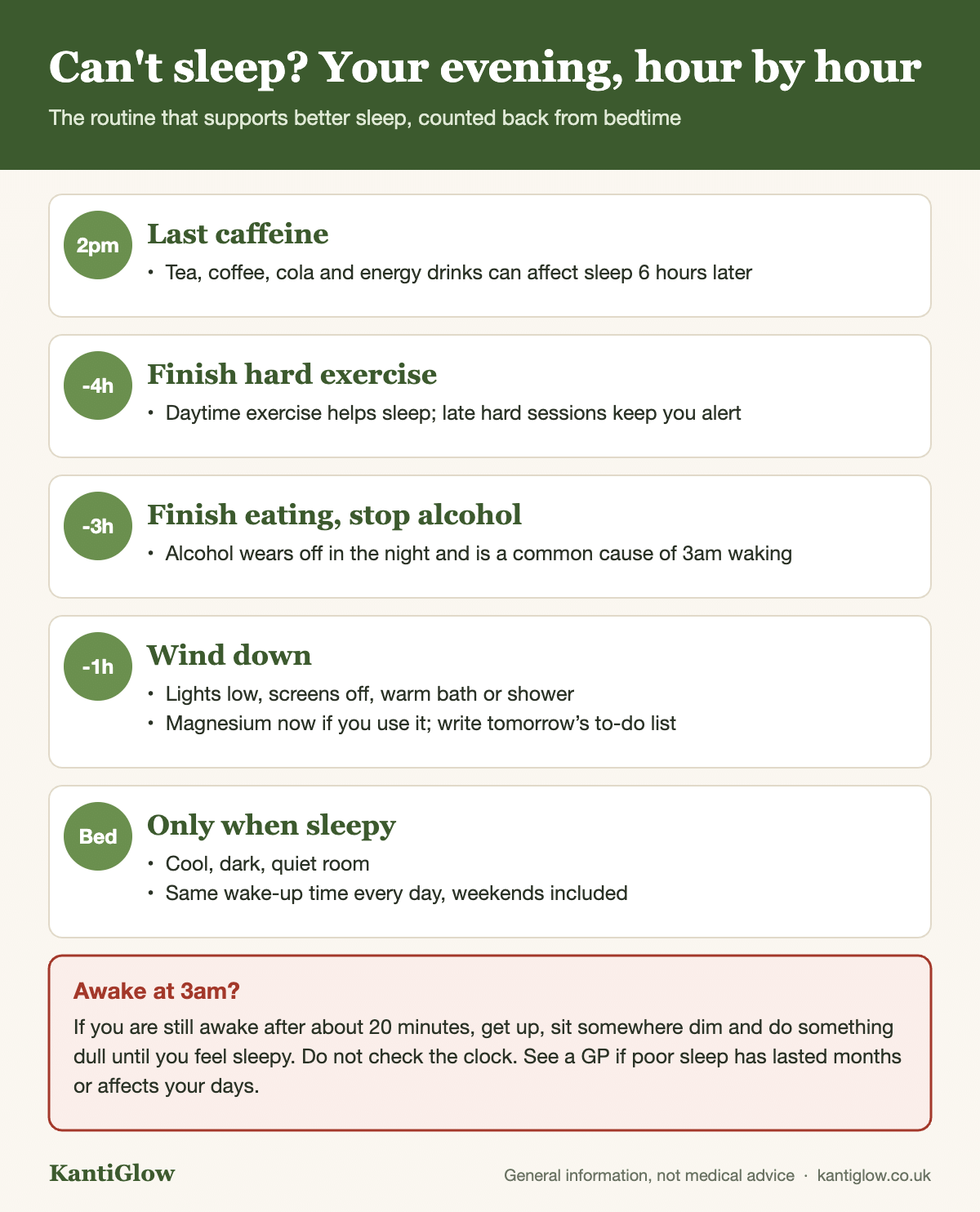
An evening routine to copy
| When | What to do |
|---|---|
| By 2pm | Last tea, coffee, cola or energy drink |
| 4 hours before bed | Finish hard exercise |
| 3 hours before bed | Finish your evening meal. Stop alcohol, or skip it |
| 1 hour before bed | Lights low, screens off, warm bath or shower |
| 30 to 60 minutes before bed | Magnesium, if you use it. Write tomorrow’s to-do list so it is out of your head |
| Bedtime | Only when sleepy. Cool, dark, quiet room |
Ayurveda’s evening advice lines up closely with this: a light early supper, warm milk or a caffeine-free drink, oil massage of the feet, and bed before the late-evening “second wind”.
Magnesium for sleep: what we know
Magnesium is a mineral the nervous system and muscles need. In the UK it may be described as contributing to normal functioning of the nervous system, normal psychological function, and a reduction in tiredness and fatigue. It has no authorised claim for sleep.
The research on sleep is small and mixed. A few trials, mostly in older adults, found people fell asleep slightly faster. Others found nothing. It is most likely to help if your diet is low in magnesium.
If you try it: glycinate or citrate are the usual choices; citrate can loosen the bowels. Keep to 400 mg or less a day from supplements. Speak to a GP first if you have kidney disease. Take it two to three hours apart from thyroid tablets, some antibiotics and osteoporosis medicines.
Ashwagandha for sleep: what we know
Ashwagandha is a root long used in Ayurveda as an evening tonic. Several small trials lasting 6 to 12 weeks suggest a modest improvement in sleep quality and stress scores. The trials are short, many were funded by manufacturers, and long-term safety data is limited. It has no authorised health claim in the UK.
Do not take it if you are pregnant or breastfeeding. Speak to a GP or pharmacist first if you have a thyroid condition, liver disease or an autoimmune condition, or take sedatives, thyroid medicine, diabetes or blood pressure medicine, or immunosuppressants. Stop and seek advice if you notice yellowing skin, dark urine or itching. Our guide Is Ashwagandha Safe? covers this in full.
Can I take both?
There is no known interaction between the two. If you want to try them, start one at a time, two weeks apart, so you can tell which is doing what. Judge after four to eight weeks, and stop if you see no difference.
When to see a GP
See a GP if changing your habits has not worked, you have had trouble sleeping for months, or it is affecting your work, mood or driving. Also go if you snore loudly and stop breathing or gasp in your sleep, if you have an urge to move your legs at night, or if low mood or anxiety is part of the picture. Never drive when you feel sleepy.
Waking at 3am: frequently asked questions
How much sleep do I need?
Most adults need 7 to 9 hours. What matters is how you feel in the day.
Why can’t I sleep even though I’m tired?
Being tired is not the same as being sleepy. A racing mind, caffeine and time spent awake in bed all keep the brain alert.
Why do I wake at 3am every night?
Sleep is lighter then, and alcohol, a warm room, a full bladder or worry is enough to wake you fully.
How do I get back to sleep at 3am?
If you are awake for about 20 minutes, get up, sit somewhere dim and do something boring until sleepy. Do not look at the clock.
Is waking at night normal?
Yes. Everyone wakes briefly several times a night and most people do not remember it.
What is insomnia?
It is regular trouble falling asleep, staying asleep or waking too early, with tiredness in the day.
How long does insomnia last?
Short-term insomnia lasts under three months and often clears. Beyond three months it usually needs CBT-I.
What is CBT-I?
It is a structured programme that changes the habits and thoughts that keep insomnia going. It is the first-line treatment.
Can I get CBT-I on the NHS?
Ask your GP or self-refer to NHS Talking Therapies in England. Availability varies by area.
Is Sleepio free?
NICE has recommended it as an option in primary care, but whether it is funded depends on where you live. Ask your GP surgery.
Will my GP give me sleeping pills?
Rarely, and only for a few days. They can cause dependence and do not treat the cause.
Does melatonin work, and can I buy it in the UK?
Melatonin is prescription-only in the UK. It is mainly prescribed short-term for people over 55 and for jet lag.
Does magnesium help you sleep?
Possibly a little, for some people. The trials are small and mixed.
Which magnesium is best for sleep?
Glycinate is popular because it is gentle on the stomach. No form has been shown to be clearly better for sleep.
When should I take magnesium?
Thirty to sixty minutes before bed is the usual choice. Timing has not been well studied.
How much magnesium is safe?
The NHS says 400 mg or less a day from supplements is unlikely to cause harm.
What are the side effects of magnesium?
Loose stools and stomach cramps, mostly with citrate and oxide at higher doses.
Can I take magnesium every night?
Yes, within the label amount, unless you have kidney disease.
Does ashwagandha help you sleep?
Small trials suggest a modest benefit over 6 to 12 weeks. It is not a proven treatment.
How long does ashwagandha take to work?
Studies that found an effect usually reported it after four to eight weeks.
Is ashwagandha safe?
Most healthy adults tolerate it short term, but there are groups who should avoid it, and rare reports of liver injury.
Who should not take ashwagandha?
Pregnant or breastfeeding women, and anyone with thyroid, liver or autoimmune conditions without medical advice.
Can I take magnesium and ashwagandha together?
There is no known interaction. Introduce them one at a time.
Can I take ashwagandha with antidepressants?
Speak to your GP or pharmacist first. Do not combine without advice.
Does warm milk help you sleep?
The evidence is weak, but a warm caffeine-free drink as part of a routine can help you wind down.
Does haldi doodh (golden milk) help sleep?
There is no good evidence that turmeric aids sleep. As a warm bedtime ritual it is harmless for most people.
Does chamomile tea work?
Evidence is modest at best. It is caffeine-free, which is the main advantage.
How late can I drink tea or coffee?
Stop at least six hours before bed. Many people need to stop by lunchtime.
Does alcohol help sleep?
It helps you drop off and then fragments the second half of the night. It is a common cause of 3am waking.
Does exercise help?
Yes, regular daytime exercise improves sleep. Finish hard sessions at least four hours before bed.
Should I nap?
Not while you are fixing insomnia. Naps reduce your sleep drive.
Are phones really that bad?
The light matters less than the stimulation. News, messages and scrolling keep the brain alert.
What temperature should my bedroom be?
Cool is better. Around 16 to 18°C suits most people.
Can menopause cause insomnia?
Yes, through night sweats and hormone changes. A GP can discuss HRT and CBT-I.
Could it be sleep apnoea?
Loud snoring, pauses in breathing and waking unrefreshed suggest it. See a GP.
Can anxiety cause insomnia?
Yes, and poor sleep worsens anxiety. Treating both together works best.
Do sleep trackers help?
They can make things worse by increasing worry about sleep. Go by how you feel.
Is it bad to lie in at weekends?
A long lie-in shifts your body clock and makes Sunday night harder. Keep within an hour of your usual time.
I work shifts. What can I do?
Keep the same routine before each sleep, use blackout blinds and earplugs, and avoid caffeine in the second half of a shift.
What is Ayurveda’s advice for sleep?
A light early supper, a regular bedtime, warm milk, and oil massage of the feet and scalp. These are routines, not treatments.
Does a foot massage with oil help?
There is little research, but relaxing rituals before bed are part of good sleep practice.
Do weighted blankets work?
Evidence is limited. Some people find them calming.
Can children take magnesium or ashwagandha for sleep?
No, not without medical advice. See a GP or health visitor about a child’s sleep.
When should I give up on a supplement?
If you see no change after eight weeks, stop. Keep the routine.
Sources
- NHS: Insomnia
- NICE HTG624: Sleepio to treat insomnia and insomnia symptoms
- NHS: Vitamins and minerals, others (magnesium)
- NHS: Sleep apnoea
- Great Britain nutrition and health claims register
Shop this plan at KantiGlow
- Triple Magnesium Complex Tablets
- Himalaya Organic Ashwagandha 670mg
- Kapiva KSM-66 Ashwagandha Capsules
- The Evening Wind-Down Kit
- Dabur Ashwagandha Capsules
All products are authentic Indian and UK-labelled brands, sourced directly from India and dispatched within 24–72 hours (UK delivery typically 5–7 working days).
Related guides
Shop the products in this guide
- Triple Magnesium Complex 120 Tablets — £15.99
- Dabur Ashwagandha Capsules 20 — £3.99
- KantiGlow Selection Hing Goli — £3.99
- Himalaya Methi (Fenugreek) Tablets 60 — £7.99
Lab-tested, vegetarian, shipped from India. Food supplements should not replace a varied diet.
This guide is general information, not medical advice. Food supplements are not intended to diagnose, treat or cure any condition and are not a substitute for a varied diet. Speak to a GP or pharmacist before taking a supplement if you are pregnant, breastfeeding, have a medical condition or take medication.
Pingback: Ayurvedic Focus Routine for Exams & Deadlines (UK) | KantiGlow