
Quick answer: Feeling groggy for the first 15 to 30 minutes after waking is normal. Feeling that way all morning usually comes from too little sleep, a wake-up time that changes from day to day, the snooze button, or alcohol and screens the night before. The fix starts the evening before and rests on three things: a fixed wake-up time seven days a week, daylight as soon as you are up, and a few minutes of movement. The Ayurvedic morning routine, dinacharya, is built on the same foundations, with tongue scraping, oil massage and warm water added. You do not need the full classical version. A 20-minute routine you repeat daily works better than an hour-long one you abandon in a week.
Key facts
- Most adults need 7 to 9 hours of sleep.
- Morning grogginess (sleep inertia) normally clears within about half an hour.
- A fixed wake-up time is the most effective single habit for better sleep and easier mornings.
- Daylight soon after waking sets your body clock and makes it easier to fall asleep that night.
- Aim for 6 to 8 drinks a day. Tea and coffee count.
- See a GP if you have been tired for a few weeks with no clear reason, or you snore loudly and wake unrefreshed.
Why are mornings so hard?
- Not enough sleep. The commonest reason, and no routine fixes it.
- An irregular wake-up time. Getting up at 6.30 on weekdays and 10 at weekends gives you jet lag every Monday.
- The snooze button. Dozing in short bursts leaves you groggier than getting up at the first alarm.
- Waking in the dark. Without light your body keeps producing the sleep hormone melatonin.
- Alcohol the night before, a late heavy meal, or late caffeine.
- Screens in bed, which push sleep later.
- Being a natural night owl on an early schedule.
- A medical cause: sleep apnoea, low iron, an underactive thyroid, depression, or medicines that cause drowsiness.
It starts the night before
- Set a bedtime that allows at least seven hours before your alarm.
- Have your last caffeine by early afternoon.
- Lay out clothes, pack your bag and decide breakfast.
- Put your phone or alarm across the room.
- Spend the last hour with lights low and screens off.
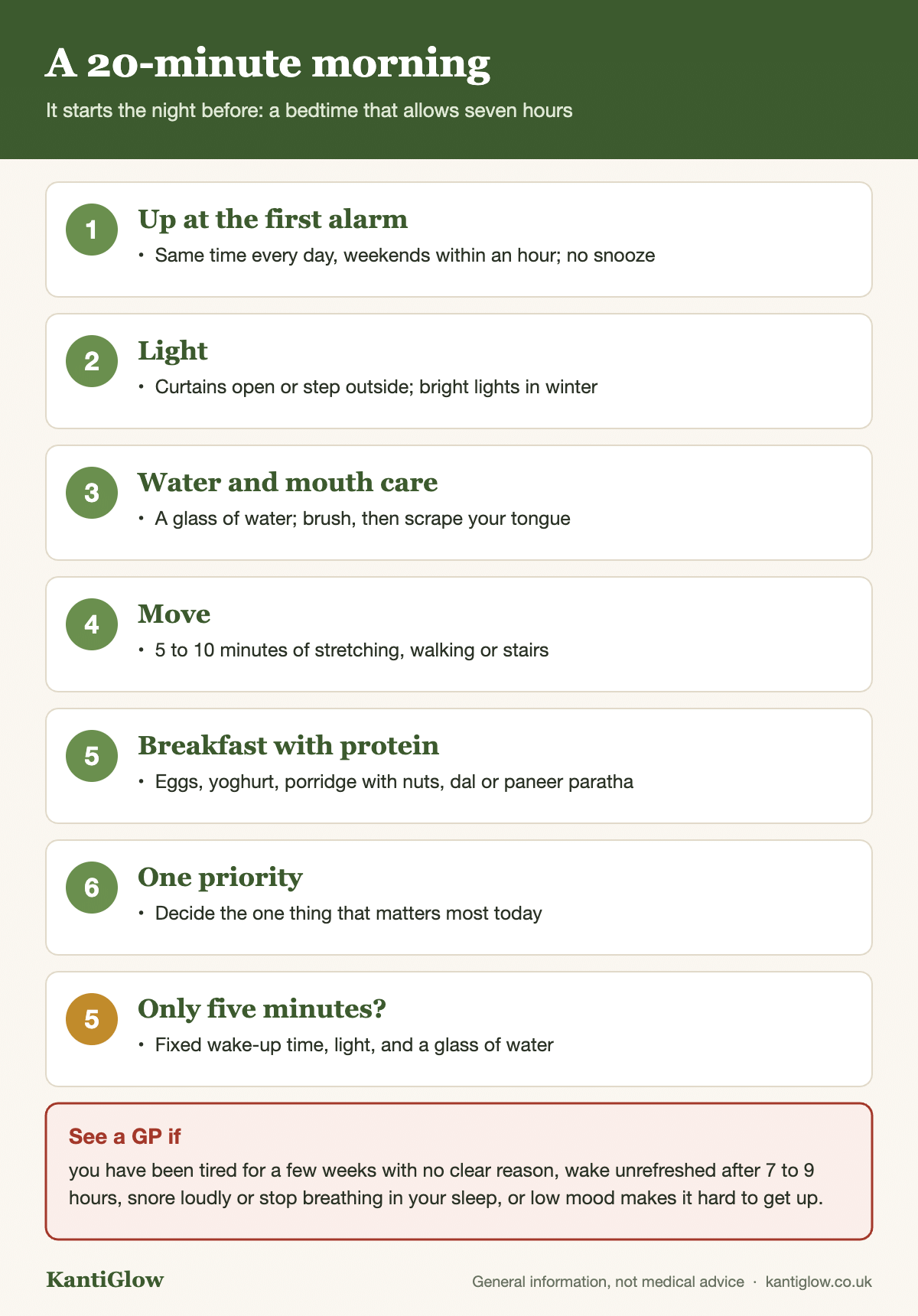
A 20-minute morning routine
1. Get up at the first alarm, at the same time every day. Weekends too, within an hour.
2. Light, 2 minutes. Open the curtains, or step outside. In winter, turn on bright lights and get outdoors as soon as it is light.
3. Water and mouth care, 3 minutes. Drink a glass of water, warm if you like. Brush your teeth, then draw a tongue scraper from back to front a few times.
4. Move, 5 to 10 minutes. Stretches, a few sun salutations, a short walk, or climbing the stairs a few times. The aim is to raise your heart rate slightly.
5. Wash. A warm shower, finished with a cooler rinse if you find it wakes you up.
6. Breakfast with protein. Eggs, yoghurt, porridge with nuts, dal or paneer paratha, or peanut butter on toast. If you are not hungry early, eat mid-morning.
7. One priority, 1 minute. Decide the one thing that matters most today.
Coffee or tea fits anywhere after the first glass of water.
Only five minutes?
Keep the three that matter most: the fixed wake-up time, light, and a glass of water. Add a minute of stretching while the kettle boils.
What is dinacharya, and what does the evidence say?
Dinacharya is the daily routine described in classical Ayurvedic texts. The morning section traditionally includes rising early, emptying the bowels, cleaning teeth and tongue, oil pulling, nasal oil, self-massage with oil, exercise, bathing and a light breakfast.
| Practice | What it is | What we know |
|---|---|---|
| Rising early at a fixed time | Traditionally before sunrise | Regular wake times have strong support. The exact hour matters less than consistency and enough sleep |
| Warm water on waking | A glass before anything else | Hydrating and gentle. No special effect beyond that |
| Tongue scraping | A metal or plastic scraper after brushing | Reduces tongue coating and bad breath. Does not replace brushing |
| Oil pulling | Swishing a spoon of oil for several minutes, then spitting into a bin | May slightly reduce plaque. Not a substitute for fluoride toothpaste. Spit into a bin, not the sink |
| Nasal oil (nasya) | A drop of oil in each nostril | Little research. Skip it if you have sinus problems |
| Self-massage with oil (abhyanga) | Warm sesame oil rubbed in before bathing | Pleasant, good for dry skin. Takes time, so many people keep it for weekends. Take care on wet floors |
| Exercise | To about half your capacity | Morning exercise is well supported for mood and alertness |
| Bathing, then a light breakfast | Sensible |
Ayurveda also suggests matching your routine to your constitution, or dosha. That framework is traditional and has not been validated, and the core routine is the same for everyone.
Making it stick
- Start with one habit and add another only when the first is automatic.
- Attach each step to something you already do: water while the kettle boils, stretches after brushing teeth.
- Do not aim for perfect. A missed morning does not matter. Two in a row is the signal to restart.
- Protect your bedtime. An earlier alarm without an earlier bedtime just means less sleep.
- Review after two weeks. Keep what helps and drop what does not.
When to see a GP
See a GP if you have been tired for a few weeks and do not know why, if you wake unrefreshed despite seven to nine hours in bed, if you snore loudly or have been told you stop breathing in your sleep, if you wake with headaches, or if low mood is making it hard to get up.
Wake up tired every morning: frequently asked questions
Why do I wake up tired every morning?
Usually too little sleep, an irregular wake-up time, or alcohol and screens the night before.
How long does morning grogginess last?
Normally about 15 to 30 minutes.
Is hitting snooze bad?
Yes. Fragmented dozing leaves you groggier.
What time should I wake up?
Whatever time you can keep every day while still getting seven to nine hours.
Should I get up at the same time at weekends?
Within an hour of your weekday time.
How do I become a morning person?
Shift your wake-up time earlier by 15 minutes every few days, with morning light and an earlier bedtime.
Does morning light really help?
Yes. It sets your body clock.
What about dark winter mornings?
Use bright indoor lights on waking and get outside once it is light.
Do sunrise alarm clocks work?
Some people find them easier to wake to. Evidence is limited.
Should I drink water first thing?
A glass is a good habit.
Is warm water better than cold?
There is no proven difference.
Does lemon water in the morning do anything?
It adds flavour and a little vitamin C. Rinse with plain water afterwards to protect your teeth.
Should I wait before having coffee?
There is no strong evidence that delaying helps. Have it when it suits you.
Is it bad to skip breakfast?
Not for everyone. Eat when you are hungry, and include protein.
What is a good breakfast for energy?
One with protein and fibre, such as eggs, porridge with nuts or yoghurt with fruit.
Should I exercise in the morning?
If it suits you. Even five minutes of movement helps alertness.
Is a cold shower good for you?
It wakes many people up. Evidence for other benefits is limited.
What is dinacharya?
The Ayurvedic daily routine.
What is brahma muhurta?
The period before sunrise, traditionally considered the best time to rise.
Do I have to wake before sunrise?
No. Consistency and enough sleep matter more.
What is tongue scraping?
Gently removing the coating on the tongue with a scraper.
Does tongue scraping work?
It reduces coating and bad breath.
Copper, steel or plastic scraper?
Any works. Stainless steel is easy to clean.
What is oil pulling?
Swishing oil around the mouth for several minutes, then spitting it out.
Does oil pulling whiten teeth or replace brushing?
No.
Which oil is used for oil pulling?
Traditionally sesame; coconut is also common.
What is abhyanga?
Self-massage with warm oil.
Do I have to do abhyanga every day?
No. Once or twice a week is fine.
What is nasya?
Putting a drop of oil in each nostril.
Should I meditate in the morning?
If you find it helpful. A few minutes of slow breathing is a start.
How long should a morning routine take?
As long as you can keep up daily. Twenty minutes is plenty.
What is the most important part?
The fixed wake-up time.
Should I check my phone first thing?
It tends to add stress and steal time. Leave it until after your routine.
How long does it take to form a habit?
It varies, often around two months.
What if I work shifts?
Keep the same sequence after each sleep, whatever the clock says.
What if I have young children?
Do the five-minute version, and prepare the night before.
Does the routine differ by dosha?
Traditionally yes, but the core habits are the same for everyone.
Does triphala at night help mornings?
It is traditionally taken for regularity. It has a mild laxative effect.
Is chyawanprash a good morning tonic?
It is a traditional one. It is high in sugar and research is limited.
Can supplements give me morning energy?
Not unless they correct a deficiency.
Could it be sleep apnoea?
Loud snoring and unrefreshing sleep suggest it. See a GP.
Could low iron be the cause?
Possibly, especially with heavy periods. A blood test will show it.
Why am I tired after eight hours’ sleep?
Poor sleep quality, alcohol, sleep apnoea or a medical cause. See a GP if it continues.
When should I see a GP?
If tiredness lasts a few weeks or you wake unrefreshed every day.
Sources
- NHS: Insomnia
- NHS: Tiredness and fatigue
- NHS: Sleep apnoea
- NHS: Water, drinks and hydration
- NHS: Physical activity guidelines for adults aged 19 to 64
Shop related products at KantiGlow
- The Morning Ritual Kit
- The Evening Wind-Down Kit
- Dabur Chyawanprakash Sugar Free
- Himalaya Triphala Capsules
- Organic India Brahmi Capsules
All products are authentic Indian brands, sourced directly from India and dispatched within 24–72 hours (UK delivery typically 5–7 working days).
Related guides
Shop the products in this guide
- Organic Soul White Sesame Seeds Capsules 250g — £4.99
- Dabur Triphala Churna Powder 120g — £3.99
- KantiGlow Selection Hing Goli — £3.99
- Dabur Ashwagandha Capsules 20 — £3.99
Lab-tested, vegetarian, shipped from India. Food supplements should not replace a varied diet.
This guide is general information, not medical advice. Food supplements and herbal products are not intended to diagnose, treat or cure any condition. Speak to a GP about tiredness that persists.
Pingback: Ayurveda 7-Day Starter Plan for UK Beginners | KantiGlow