Quick answer: Perimenopause is the run-up to the menopause, when hormone levels start to change and periods become irregular. It usually begins in the 40s. Common signs are changed periods, hot flushes, night sweats, poor sleep, mood swings and brain fog. Over 45, a GP can normally diagnose it from your symptoms without a blood test. HRT is the most effective treatment for most symptoms, and exercise, a cool bedroom, cutting back on alcohol and caffeine, and CBT all help. The NHS does not recommend herbal remedies for menopause symptoms and advises speaking to a doctor before taking one. Shatavari is a traditional Ayurvedic women’s tonic with very little clinical research, so treat it as a traditional food supplement, not a treatment.
Key facts
- Menopause is when periods have stopped for 12 months. The average age in the UK is 51. Perimenopause is the years leading up to it.
- Symptoms last around 7 to 9 years on average, and change over that time.
- You can still get pregnant during perimenopause, so keep using contraception.
- HRT relieves most symptoms. For most women the benefits outweigh the small risks.
- CBT can help with low mood, anxiety, sleep and hot flushes, and you can self-refer to NHS Talking Therapies.
- Bleeding after the menopause, or very heavy or irregular bleeding, should always be checked by a GP.
Is this perimenopause?
Symptoms the NHS lists include:
- Periods: irregular, heavier or lighter, closer together or further apart
- Hot flushes and night sweats: sudden heat in the face, neck and chest, sometimes with palpitations
- Sleep: trouble getting to sleep or waking in the night
- Mood and thinking: mood swings, low mood, anxiety, poor memory, brain fog
- Weight: gain around the middle
- Vaginal and bladder: dryness, discomfort during sex, more urinary infections, needing to pass urine more often
- Other: joint and muscle aches, headaches, palpitations, thinning hair, dry skin, lower sex drive
If you are over 45 with typical symptoms, a GP does not usually need to do a hormone blood test. Under 45, tests may be offered. Under 40, see a GP, because early menopause needs treatment to protect bones and heart.
Several other conditions can look similar, including thyroid problems, anaemia from heavy periods, and depression. Keep a note of your symptoms and periods for a month or two before your appointment.
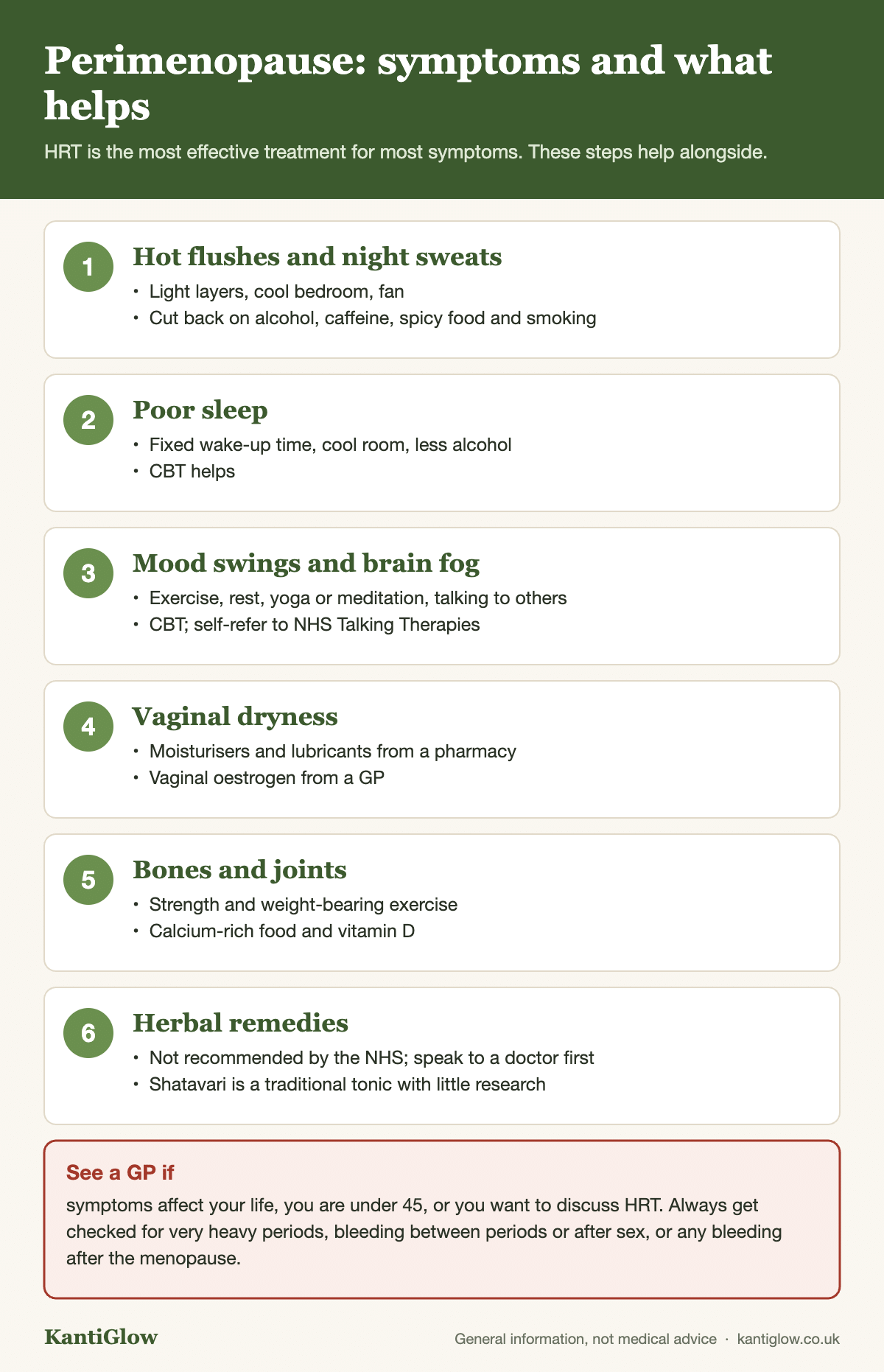
What helps, symptom by symptom
| Symptom | What you can do | What a GP can offer |
|---|---|---|
| Hot flushes, night sweats | Light layers, cool bedroom, fan, cold drink; cut back on spicy food, caffeine, alcohol and smoking; regular exercise | HRT; CBT; non-hormonal medicines if HRT is not suitable |
| Poor sleep | Fixed wake-up time, cool room, less alcohol and late caffeine | HRT if night sweats are the cause; CBT for insomnia |
| Mood swings, anxiety | Exercise, rest, yoga or meditation, talking to others | HRT; CBT; antidepressants only if depression or anxiety is diagnosed |
| Brain fog | Sleep, exercise, lists and reminders | HRT may help |
| Vaginal dryness | Vaginal moisturisers and lubricants from a pharmacy | Vaginal oestrogen, which can be used long term |
| Heavy or erratic periods | Track them; check iron intake | Tests and treatment, including a hormonal coil |
| Joint aches | Strength and weight-bearing exercise | HRT may help; assessment for other causes |
| Bone health | Weight-bearing exercise, calcium-rich food, vitamin D, no smoking, less alcohol | HRT lowers osteoporosis risk |
HRT in brief
HRT replaces the oestrogen your body is making less of. It comes as patches, gels, sprays or tablets. If you have a womb you also need a progestogen to protect its lining. A GP or practice nurse can explain the types and the small risks, which depend on your age, health and the kind of HRT. The NHS advises against compounded “bioidentical” hormones from private clinics, because they are not regulated. Regulated body-identical hormones are available on the NHS.
Where shatavari fits
Shatavari (Asparagus racemosus) is a root used in Ayurveda for centuries as a tonic for women at every life stage. Its name is often translated as “she who has a hundred husbands”.
What we know:
- A handful of small, short trials, mostly from India and often using multi-herb products, report fewer menopausal symptoms. They are not strong enough to draw conclusions.
- It has no authorised health claim in the UK and cannot be sold as helping with menopause, hormones or hot flushes.
- It contains plant compounds that may act weakly like oestrogen. If you have had breast, womb or ovarian cancer, endometriosis or fibroids, do not take it without your doctor’s agreement.
- It belongs to the asparagus family, so avoid it if you are allergic to asparagus.
- It is not a contraceptive and does not replace HRT.
- Tell your GP or pharmacist if you take it, especially alongside HRT, diuretics or diabetes medicine.
If you choose to use it, the traditional way is as a powder stirred into warm milk in the evening, or as tablets with food. Follow the label. Give it eight to twelve weeks, keep a symptom diary, and stop if nothing changes.
The NHS position is worth repeating: herbal remedies are not recommended for menopause symptoms, and red clover and black cohosh have no strong evidence behind them either.
An everyday routine that helps
- Move daily. Brisk walking plus strength work twice a week protects bones, mood, sleep and weight.
- Eat for bones and iron. Calcium from milk, yoghurt, paneer, ragi, sesame and fortified foods. Iron from dal, greens and dried fruit if periods are heavy.
- Take vitamin D in autumn and winter.
- Cut the triggers. Alcohol, caffeine and spicy food set off flushes in many women.
- Cool the bedroom and keep a fixed wake-up time.
- Rest and talk. Yoga, tai chi or meditation, and talking to friends going through the same thing.
Ayurveda’s advice for this stage of life is close to this: regular meals, cooling foods, oil massage, gentle exercise and enough rest.
When to see a GP
See a GP if symptoms are affecting your life, if you are under 45 and think you may be perimenopausal, or if you want to discuss HRT. Always get checked for bleeding after sex, bleeding between periods, very heavy periods, or any bleeding more than a year after your last period. Seek urgent help for chest pain, and speak to a GP or call 111 if low mood becomes severe.
Perimenopause symptoms: frequently asked questions
What is perimenopause?
The years before the menopause when hormone levels fluctuate and periods change.
What age does perimenopause start?
Usually in the 40s. It can start earlier.
What are the first signs?
Changes to your periods are often first, then sleep problems, mood changes and hot flushes.
How long does perimenopause last?
It varies widely. Symptoms last around 7 to 9 years on average.
How do I know if I am in perimenopause?
Over 45, a GP can usually tell from your symptoms.
Do I need a blood test?
Not usually if you are over 45. Tests are more often used under 45.
Can I be perimenopausal with regular periods?
Yes. Other symptoms can start before periods change.
Can I still get pregnant?
Yes. Use contraception until your GP advises you can stop.
What does a hot flush feel like?
A sudden wave of heat in the face, neck and chest, often with sweating and sometimes palpitations.
What triggers hot flushes?
Alcohol, caffeine, spicy food, hot drinks, smoking, stress and warm rooms.
How can I stop night sweats?
A cool bedroom, light bedding and nightwear, a fan, and less alcohol. HRT is the most effective treatment.
Why can’t I sleep?
Night sweats, hormone changes and anxiety all disturb sleep.
Why am I so anxious and irritable?
Hormone changes affect mood. Poor sleep makes it worse.
Is brain fog normal?
Yes, poor memory and concentration are common and usually improve.
Why am I gaining weight round my middle?
Hormone changes shift where fat is stored, and muscle mass falls with age. Strength exercise helps.
Why are my periods so heavy?
Hormone swings can cause heavy bleeding. See a GP, because it can lead to anaemia and has other causes.
Why do my joints ache?
Falling oestrogen is linked with joint and muscle aches. Exercise helps.
Is hair thinning part of it?
It can be. A GP can check iron and thyroid as well.
What is HRT?
Hormone replacement therapy, which replaces oestrogen, usually with a progestogen.
Is HRT safe?
For most women the benefits outweigh the small risks. Your GP can go through your own situation.
Can I take HRT while I still have periods?
Yes, it can be started in perimenopause.
What if I can’t or don’t want to take HRT?
CBT, lifestyle changes and some non-hormonal medicines can help.
Does CBT work for hot flushes?
It can reduce how much they bother you and improve sleep and mood.
Do herbal remedies work for menopause?
The NHS does not recommend them. Evidence is weak and some interact with medicines.
What is shatavari?
An Ayurvedic root traditionally used as a women’s tonic.
Does shatavari help with menopause symptoms?
A few small studies suggest it might. The evidence is not strong.
Is shatavari a phytoestrogen?
It contains plant compounds that may have weak oestrogen-like activity.
Who should not take shatavari?
Women with a history of hormone-sensitive cancer, endometriosis or fibroids unless their doctor agrees, and anyone allergic to asparagus.
Can I take shatavari with HRT?
Tell your GP or pharmacist first.
How do I take shatavari?
Traditionally as powder in warm milk, or as tablets. Follow the label.
How long does shatavari take to work?
Give it eight to twelve weeks. Stop if you notice no change.
Does shatavari cause weight gain?
There is no good evidence that it does.
Does shatavari balance hormones?
That claim cannot be made. There is no reliable evidence it changes hormone levels.
Does ashwagandha help in perimenopause?
One small trial reported fewer symptoms. It is not suitable for everyone.
Do black cohosh or red clover work?
The NHS says there is no strong evidence that they do.
Does soya help?
Soya foods contain isoflavones and are fine as part of a normal diet. Evidence for symptom relief is mixed.
Does magnesium help?
It may help if your diet is low in it. It is not a menopause treatment.
Should I take vitamin D and calcium?
Vitamin D in autumn and winter, and calcium from food. Supplements if your diet is short.
What exercise is best?
A mix of brisk walking or similar, plus strength training twice a week.
Does alcohol make symptoms worse?
Yes, for flushes, sleep and mood in many women.
What helps with vaginal dryness?
Pharmacy moisturisers and lubricants, and vaginal oestrogen from a GP.
When does perimenopause end?
When you have gone 12 months without a period.
Is bleeding after the menopause normal?
No. Always see a GP.
Do South Asian women go through menopause earlier?
Some studies suggest a slightly earlier average age. If symptoms start before 45, see a GP.
Sources
- NHS: Menopause symptoms
- NHS: Menopause, things you can do
- NHS: Menopause treatment
- NICE NG23: Menopause, identification and management
- NHS: NHS Talking Therapies
Shop this plan at KantiGlow
- The Women’s Foundation Kit
- Kapiva Organic Shatavari Powder
- Himalaya Organic Ashwagandha 670mg
- Iron Bisglycinate + Vitamin C
- Organic India Amla Powder
All products are authentic Indian and UK-labelled brands, sourced directly from India and dispatched within 24–72 hours (UK delivery typically 5–7 working days).
Related guides
Shop the products in this guide
- Kapiva Organic Shatavari Powder 100g — £6.99
- Ashwagandha Gummies 30 — £8.99
- Dry Ginger Powder 100g — £4.99
- Organic India Amalaki Capsules 60 — £7.99
Lab-tested, vegetarian, shipped from India. Food supplements should not replace a varied diet.
This guide is general information, not medical advice. Herbal products and food supplements are not intended to diagnose, treat or cure any condition. Speak to a GP about menopause symptoms and before taking a herbal supplement, especially if you take HRT or other medication.